Cupania americana
Linn.
Candle wood cupania, Wild ackee
iNaturalist· cc-by-nc
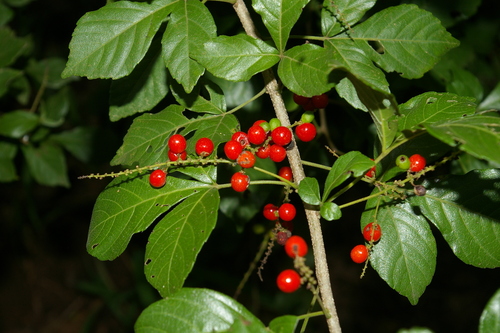
(c) Martin Reith, some rights reserved (CC BY-NC), uploaded by Martin Reith
iNaturalist· cc-by-nc
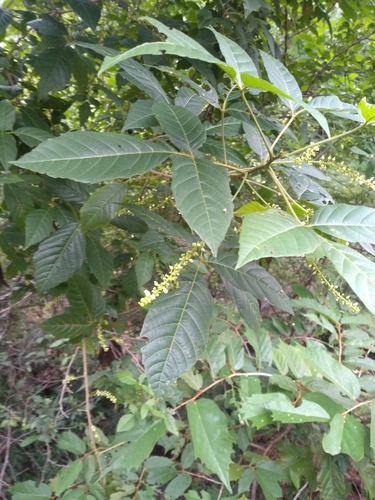
(c) curreabee, some rights reserved (CC BY-NC), uploaded by curreabee
iNaturalist· cc-by-nc
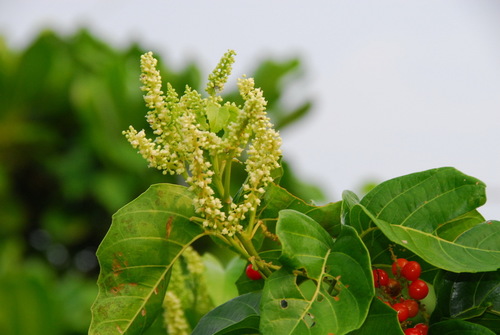
(c) Lisa Johnson, some rights reserved (CC BY-NC), uploaded by Lisa Johnson
Description
A small tree. It can be 20 m high. The leaves are compound with 2-4 pairs of leaflets. The flower panicles are 10-30 cm long. The fruit is a shallowly 3 lobed capsule. It is 2 cm long by 2 cm wide. It has yellow hairs. The seed is oval and 1 cm long. It is black and shiny. It has an aril of fleshy layer around it.
Edible Uses
The chestnut-like seeds are eaten and also used to make a fermented liquor. The fleshy aril around the seed is also consumed.
Traditional Uses
The chestnut like seeds are eaten. They are also used to make a fermented liquor.
This uses section is brief — help expand it
Medicinal Uses
The seeds and leaves are used medicinally. The grated root is used as a treatment for diarrhoea.
Distribution
A tropical plant. It grows in forests near rivers.
Where It Grows
Andes, Bolivia, Brazil, Central America, Colombia, Cuba, Dominican Republic, Ecuador, Guatemala, Guiana, Guianas, Haiti, Mexico, North America, Panama, Peru, Puerto Rico, South America, Suriname, Trinidad and Tobago, Venezuela, West Indies*,
Cultivation
The flowers can be male, female or bisexual.
Other Uses
The light brown wood is hard, of medium weigh, very susceptible to attack by dry-wood termites. It is used for construction, shipbuilding, posts and poles.
Synonyms
Also Known As
Gawetri, Guacharaco, Guamo matias, Guanara, Guara, Guirana, Maraquil
References (10)
- Ekman Herbarium records Haiti
- Grandtner, M. M. & Chevrette, J., 2013, Dictionary of Trees, Volume 2: South America: Nomenclature, Taxonomy and Ecology. Academic Press p 183
- Hedrick, U.P., 1919, (Ed.), Sturtevant's edible plants of the world. p 254
- Menninger, E.A., 1977, Edible Nuts of the World. Horticultural Books. Florida p 70
- Plants of Haiti Smithsonian Institute http://botany.si.edu/antilles/West Indies
Show all 10 references Hide references
- Roa, J. A. G. & Boada, D. S. G., 2018, Fundación para el Fortalecimiento de la Fruticultura y Plantas Alimenticias no Convencionales en Colombia.
- Segura, S., et al, 2018, The edible fruit species in Mexico. Genet Resour Crop Evol (2018) 65:1767–1793
- Sp. pl. 1:200. 1753
- van Roosmalen, M.G.M., 1985, Fruits of the Guianan Flora. Utrecht Univ. & Wageningen Univ. p 386
- Wickens, G.E., 1995, Edible Nuts. FAO Non-wood forest products. FAO, Rome. p150