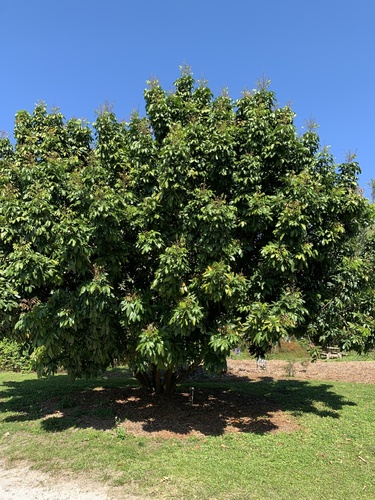
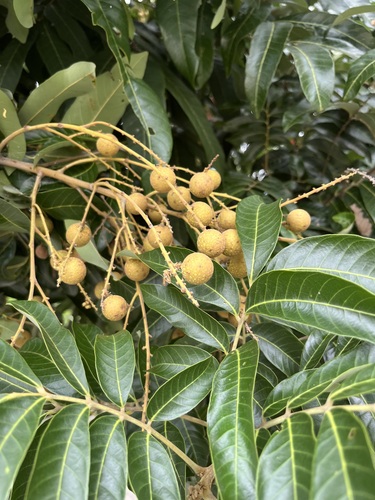
Chytranthus obliquinervis
Radlk. ex Engl.
gbif· cc-by-nc-sa
MBG
gbif· cc-by-nc-sa
MBG
gbif· cc-by
Royal Botanic Gardens, Kew
Description
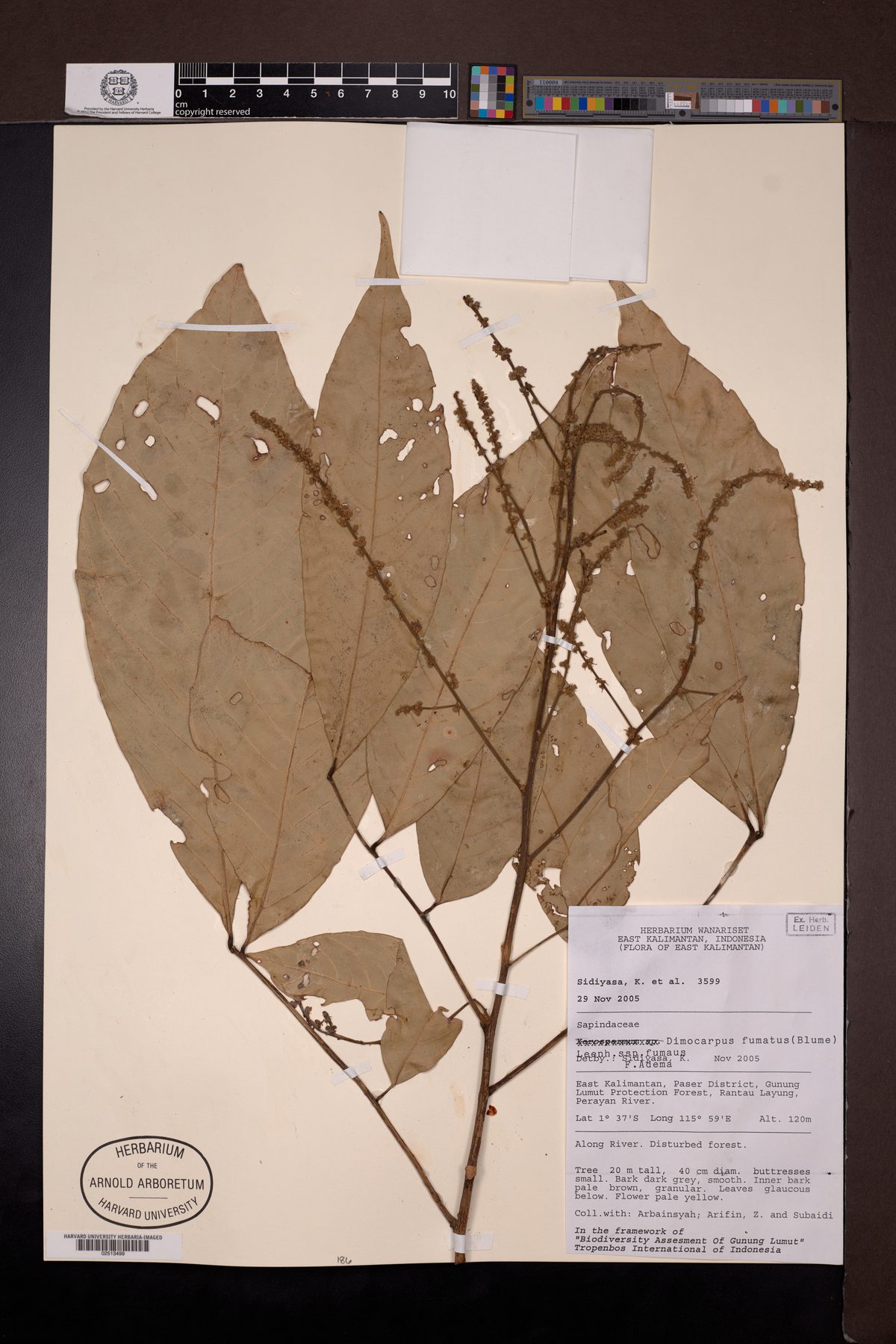
A small tree. It grows 15 m tall. The trunk has few branches but then a crown of very large leaves. The bark is grey to brown and smooth. The leaves have an odd number of leaflets. There are 7-12 pairs. The leaf stalk is 35-100 cm long. The lower leaflets are small and about 2 cm long while the upper leaflets can be 45 cm long. The flowers are on clusters on the trunk. They are 5-15 cm long. They are white to a yellow green. The fruit is fleshy and has 3 lobes. It is softly hairy when young.
Edible Uses
The ripe fruits are collected and eaten raw as a snack.
Traditional Uses
The ripe fruit are collected and eaten raw as a snack.
This uses section is brief — help expand it
Distribution
It is a tropical plant. It grows in lowland forest. It can be on sand or coral and along rivers. It grows from sea level to 900 m above sea level.
Where It Grows
Africa, East Africa, Kenya, Tanzania,
Cultivation
Plants can be grown from seed.
Other Uses
The wood is hard and tough. It is used for poles, snare traps, pegs etc. The wood is used for fuel and to make charcoal.
Production
Fruit are collected from May to June.
Notes
It is a rare species only occurring in a few places.
Also Known As
Mpwakapwaka
References (4)
- Lovett, J. C. et al, Field Guide to the Moist Forest Trees of Tanzania. p 153
- Mutie, F. M., et al, 2023, Important Medicinal and Food Taxa (Orders and Families) in Kenya, Based on Three Quantitative Approaches. Plants 2023, 12, 1145
- Ruffo, C. K., Birnie, A. & Tengnas, B., 2002, Edible Wild Plants of Tanzania. RELMA p 200
- World Checklist of Useful Plant Species 2020. Royal Botanic Gardens, Kew