Maesa lanceolata
Forssk.
False assegaai
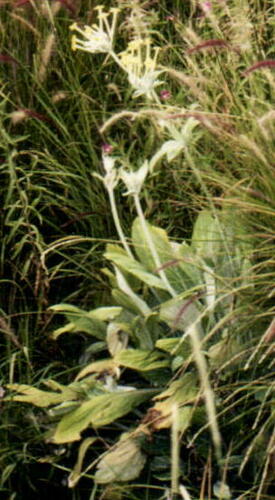
iNaturalist· cc-by-nc
(c) berthapi2, some rights reserved (CC BY-NC)
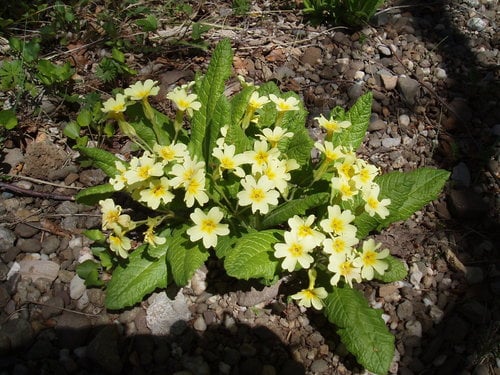
iNaturalist· cc-by-nc
(c) Kate Braun, some rights reserved (CC BY-NC), uploaded by Kate Braun
Summary
Source: WikipediaMaesa lanceolata, or the false assegai, is a tree species that is widespread in the Afrotropics, including Madagascar. It occurs from the southern Arabian Peninsula to the Eastern Cape of South Africa. It grows on stream verges, river banks and forest verges, where it is often a pioneer plant.
Description
A shrub or small tree. It has many branches. It grows 6 m tall. The leaves are narrowly oval and alternate. The leaves are large and 25 cm long by 12 cm wide. The flowers are white. They are in dense clusters in the axils of leaves. There are 2 subspecies. The fruit are cream coloured when ripe and are 6 mm across. See Maesa nuda
Edible Uses
The fruit are used for greasing baking dishes and are also eaten raw. The bark is used as a flavoring ingredient in a stimulant drink, and the seeds yield oil.
Traditional Uses
CAUTION: The fruit are poisonous. The fruit are used for greasing baking dishes. They are also recorded as being eaten raw. The bark is used as an ingredient in a stimulant drink.
Known Hazards
Though considered toxic to human the extracts of Maesa lanceolata have been used in different communities to treat various ailments. In East Africa root and fruit extracts are used by native healers in decoctions to treat cholera disease, tapeworm and sore throat.
Distribution
A tropical plant. In Swaziland it grows only in the high veld. It grows on the edge of forests and in mountain grassland. In Zimbabwe it grows between 900-2,000 m above sea level. It grows in higher rainfall areas.
Where It Grows
Africa, Angola, Cameroon, Central Africa, Congo DR, East Africa, Egypt, Eswatini, Ethiopia, Guinea, Guinée, Kenya, Madagascar, Malawi, Middle East, Mozambique, Nigeria, North Africa, Saudi Arabia, South Africa, Southern Africa, Swaziland, West Africa, Yemen, Zambia, Zimbabwe,
Production
A fruit weighs about 0.1 g.
Notes
Also put in the family Myrsinaceae. They are also put in the family Maesaceae.
Nutrition
| Part | Moisture | kJ | kcal | Protein | Vit A | Vit C | Iron | Zinc |
|---|---|---|---|---|---|---|---|---|
| Fruit | 67.2 | 539 | 129 | 3.7 | — | 6.9 | 2.4 | 1.4 |
Synonyms
Also Known As
Abayi, Asaboratsy, Chi:nhundo, Chinuni, Gowacho, Indende, Kelewa, Ligucu, Magucu, Mangachule, Mbhongozi, Mdenjele, Mnakakama, Mpari, Mubilishi, Mudovatova, Musangula, Musungwa, Mutendekwani, Mutibammela, Muunguri, Muvumba-ngoma, Namuinho, Phophopho, Radoko, Qelawa, Valsassegaai, Voarafy
References (25)
- Asfaw, Z. and Tadesse, M., 2001, Prospects for Sustainable Use and Development of Wild Food Plants in Ethiopia. Economic Botany, Vol. 55, No. 1, pp. 47-62
- Burkill, H. M., 1985, The useful plants of west tropical Africa, Vol. 5. Kew.
- Fl. aegypt.-arab. cvi, 66. 1775
- Fowler, D. G., 2007, Zambian Plants: Their Vernacular Names and Uses. Kew. p 44
- Grubben, G. J. H. and Denton, O. A. (eds), 2004, Plant Resources of Tropical Africa 2. Vegetables. PROTA, Wageningen, Netherlands. p 563
Show all 25 references Hide references
- Heywood, V.H., Brummitt, R.K., Culham, A., and Seberg, O. 2007, Flowering Plant Families of the World. Royal Botanical Gardens, Kew. p 198
- INFOODS:FAO/INFOODS Databases
- Long, C., 2005, Swaziland's Flora - siSwati names and Uses http://www.sntc.org.sz/flora/
- Magwede, K., van Wyk, B.-E., & van Wyk, A. E., 2019, An inventory of Vhavenḓa useful plants. South African Journal of Botany 122 (2019) 57–89
- Molla, A., Ethiopian Plant Names. http://www.ethiopic.com/aplants.htm
- Mutie, F. M., et al, 2023, Important Medicinal and Food Taxa (Orders and Families) in Kenya, Based on Three Quantitative Approaches. Plants 2023, 12, 1145
- PROTA
- Ruiters-Welcome, A. K., 2019, Food plants of southern Africa. Ph.D. thesis. Univ. of Johannesburg p 74
- Seyoum, Y., et al, 2015, Edible Wild Fruit Trees and Shrubs and Their Socioeconomic Significance in Central Ethiopia. Ethnobotany Research & Applications. 14:183-197
- Sina, B. & Degu, H. D., 2015, Knowledge and use of Wild Edible Plants in the Hula District of the Sidama Zone. International Journal of Bio-resource and Stress Management 6(3):352-365
- Styger, E., et al, 1999, Indigenous fruit trees of Madagascar: potential components of agroforestry systems to improve human nutrition and restore biological diversity. Agroforestry Systems 46: 289-310
- Swaziland's Flora Database http://www.sntc.org.sz/flora
- Terashima, H., et al, 1992, Ethnobotany of the Lega in the Tropical Rainforest of Eastern Zaire (Congo): Part Two, Zone de Walikale, African Study Monographs, Suppl. 19:1-60
- Wehmeyer, A. S, 1986, Edible Wild Plants of Southern Africa. Data on the Nutrient Contents of over 300 species
- Welcome, A. K. & Van Wyk, B.-E., 2019, An inventory and analysis of the food plants of southern Africa. South African Journal of Botany 122 (2019) 136–179
- White, F., Dowsett-Lemaire, F. and Chapman, J. D., 2001, Evergreen Forest Flora of Malawi. Kew. p 408
- Williamson, J., 2005, Useful Plants of Malawi. 3rd. Edition. Mdadzi Book Trust. p 159
- Wilson, A. L. & Downs, C. T., 2012, Fruit nutritional composition and non-nutritive traits of indigenous South African tree species. South African Journal of Botany. 78:30-36
- World Checklist of Useful Plant Species 2020. Royal Botanic Gardens, Kew
- www.zimbabweflora.co.zw 2011