Blighia sapida
Koenig
Akee
iNaturalist· cc-by-nc
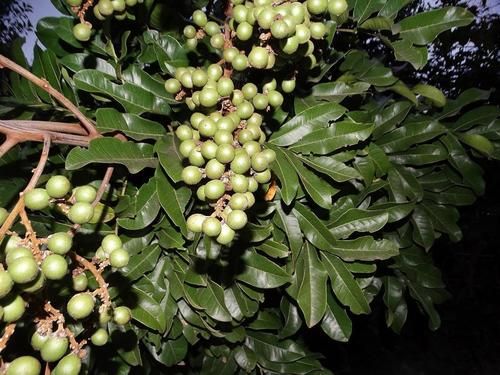
(c) Bart Wursten, some rights reserved (CC BY-NC), uploaded by Bart Wursten
iNaturalist· cc-by-nc
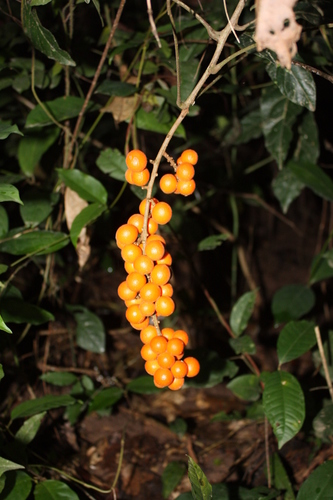
(c) May Bedoya, some rights reserved (CC BY-NC)
iNaturalist· cc-by-nc
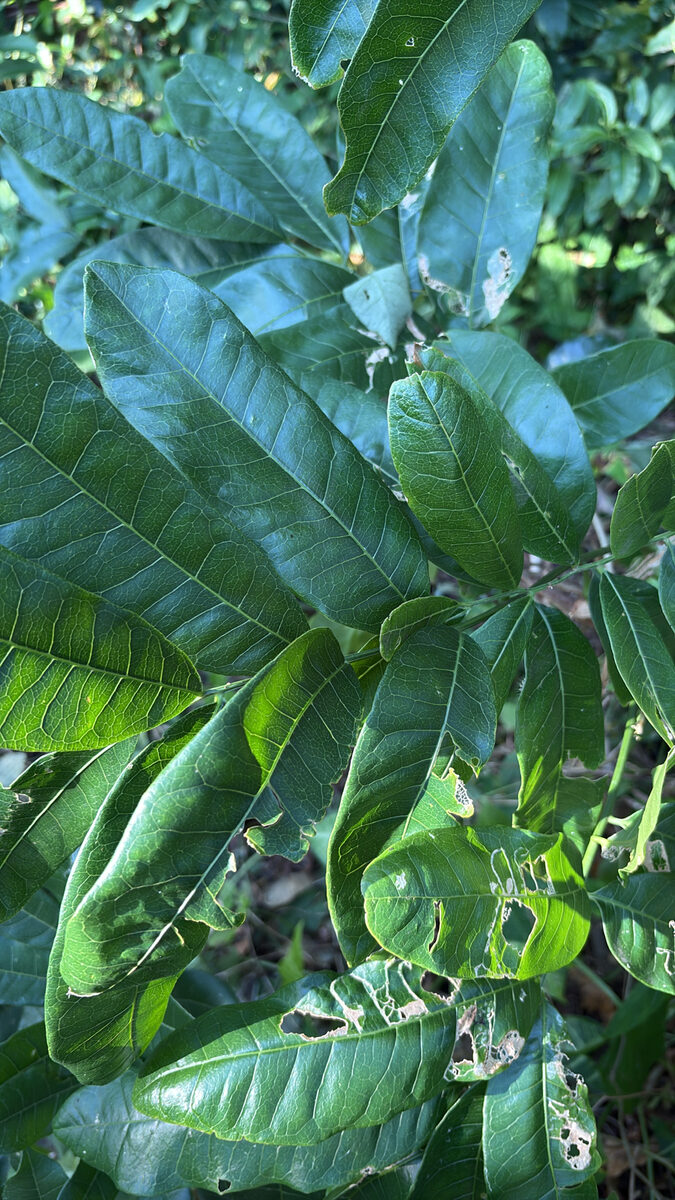
(c) May Bedoya, some rights reserved (CC BY-NC)
Summary
Source: WikipediaEvergreen tree growing 20m tall and wide at fast rate, hardy to UK zone 10. Bee-pollinated, not self-fertile. Noted for attracting wildlife. Grows in medium loamy and heavy clay soils, prefers well-drained conditions, tolerates nutritionally poor soil. Requires full sun. Tolerates drought but prefers moist soil.
Description
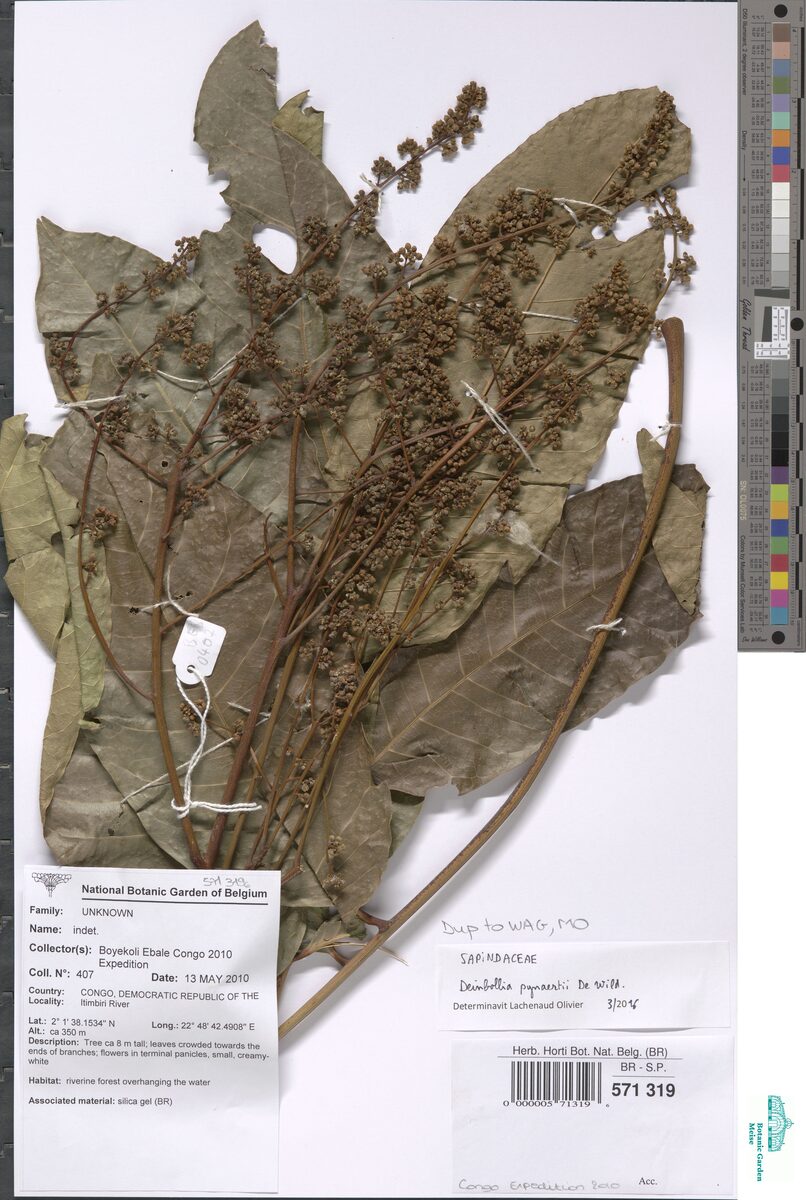
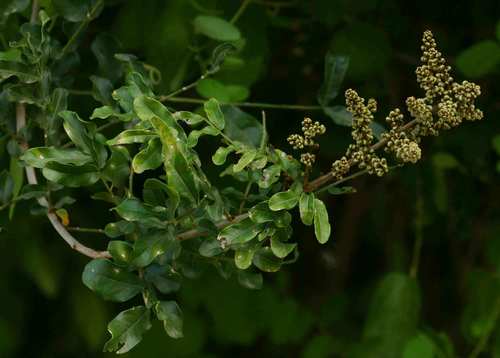
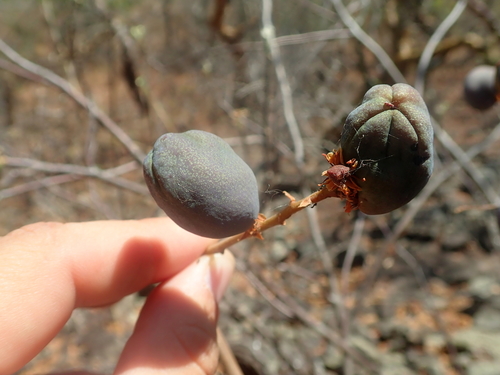
A small evergreen tree up to 9-13-20 m tall. It spreads to 3 m across. The stem is erect and branching. It has a spreading, open-textured crown. The leaves are dark green with 6, 8 or 10 curved leaflets. The flowers are greenish white in branched flowers stalks, in the axils of leaves. They extend upwards. The fruit are in clusters. The fruit is about 9 cm long and red when ripe. The fruit has five segments. It is roughly pear shaped. The fruit opens naturally when ripe and usually has 3 black seeds inside. These are covered with yellowish flesh called an aril. The aril is edible. The pink tissue is toxic. Unripe fruit are toxic.
Edible Uses
Edible Parts: Fruit Oil Edible Uses: Oil Fruit - eaten raw when fully ripe. The fleshy arils surrounding the seeds are firm and oily, with a nutty flavour, though they can soon become rancid. The fleshy fruit can also be curried, used in soups, stews, etc. The fruit is harvested when they have split open naturally, revealing four large glossy black seeds embedded in spongy, cream-coloured buttery arils. The pear-shaped fruit is about 75mm long, 45mm wide, and is produced in clumps of 3 - 10. The fruit must be allowed to open fully, or at least partly, before it is detached from the tree. Unripe or overripe arils, as well as the seeds, contain hypoglycin and its derivative - they are strongly toxic. The seeds yield a yellowish oil that is believed to be edible.
Traditional Uses
The fleshy white aril around the seeds is edible after the fruit opens naturally. It is often cooked by boiling in salt water. It looks like scrambled eggs after cooking. CAUTION The seeds are poisonous. The unripe aril is inedible. The pink tissue between the aril and seed is poisonous. The aril must be fully ripe before eating. It is light on the open jacket that destroys the poison. The flowers are used in the preparation of aromatic water. The young leaves are cooked and eaten.
Medicinal Uses
Antidiarrhoeal Antipruritic Diuretic Dysentery Epilepsy Febrifuge Laxative Ophthalmic Parasiticide Skin Stomachic The plant (part not specified) is used to treat anaemia and itching. In traditional medicine in Cote d?Ivoire, Blighia sapida is widely used for the treatment of yellow fever, epilepsy and oedema, and as a laxative and diuretic. Sap from terminal buds is instilled in the eyes to treat ophthalmia and conjunctivitis. The pulp of ground-up leafy twigs is rubbed on the forehead to treat migraine. The ground-up leaves, combined with plant salts, are applied as a paste to treat yaws and ulcers. The leaves are used in the treatment of fever and vertigo, and twigs to treat hepatitis, cirrhosis and amygdalitis. Bark and leaf decoctions are administered to treat oedema, intercostal pain, dysentery and diarrhoea. Decoctions of bark or fruit walls are applied to wounds. Pounded bark is administered as an antidote to snake and scorpion bites. The bark, ground-up with capsicum pepper (Capsicum annuum), is rubbed on the body as a stimulant. The seeds are taken to treat stomach complaints, including nausea and vomiting. Aqueous seed extracts are administered to expel parasites. The fruit pulp is used to treat whitlow. A water-soluble and heat-stable toxic compound, hypoglycin A, is present in the aril of unripe seeds, as well as in the seed and in the pinkish to reddish tissue at the base of the aril. The Jamaican vomiting sickness is associated with this compound and is characterized by vomiting, generalized weakness, altered consciousness and sometimes even death. Hypoglycaemia and depression of the central nervous system are common. The aril of fully ripe seeds after natural dehiscence of the fruit is nearly free of the toxic compound. The consumption of unripe seed arils has probably caused many cases of encephalopathy in children in Burkina Faso and other West African countries.
Known Hazards
The unripened aril and the inedible portions of the fruit contain hypoglycin toxins including hypoglycin A and hypoglycin B, known as "soapberry toxins". Hypoglycin A is found in both the seeds and the arils, while hypoglycin B is found only in the seeds. Minimal quantities of the toxin are found in the ripe arils. In the unripe fruit, depending on the season and exposure to the sun, the concentrations may be up to 10 to 100 times greater. These two molecules are converted in the body to methylenecyclopropylacetic acid (MCPA), and are toxic with potential lethality. MCPA and hypoglycin A inhibit several enzymes involved in the breakdown of acyl CoA compounds, often binding irreversibly to coenzyme A, carnitine and carnitine acyltransferase I and II, reducing their bioavailability and consequently inhibiting beta oxidation of fatty acids. Glucose stores are consequently depleted leading to hypoglycemia, and to a condition called Jamaican vomiting sickness. These effects occur only when the unripe aril (or an inedible part of the fruit) is consumed. Though ackee is used widely in traditional dishes, research on its potential hypoglycin toxicity has been sparse and preliminary, requiring evaluation in well-designed clinical research to better understand its pharmacology, food uses, and methods for detoxification. In 2011, it was found that as the fruit ripens, the seeds act as a sink whereby the hypoglycin A in the arils convert to hypoglycin B in the seeds. In other words, the seeds help in detoxifying the arils, bringing the concentration of hypoglycin A to a level that is generally safe for consumption.
Distribution
A tropical plant. It is native to tropical West Africa. It suits the humid tropical lowlands. It grows up to 900 m above sea level. It needs 2,000 mm of rain per year. It does best in moist, well composted soils in a sheltered, sunny position. It is drought and frost tender. It can grow in the subtropics and survive with temperatures near freezing. It suits hardiness zones 10-12.
Where It Grows
Africa, Asia, Australia, Benin, Brazil, Burkina Faso, Cameroon, Caribbean, Central Africa, Central African Republic, CAR, Central America, Colombia, Cook Islands, Costa Rica, Côte d'Ivoire, Cuba, Dominican Republic, Ecuador, Gabon, Ghana, Guatemala, Guianas, Guinea*, Guinée, Guinea-Bissau, Guyana, Haiti, Hawaii, India, Indonesia, Ivory Coast, Jamaica, Mali, Martinique, Mexico, Nigeria, North America, Pacific, Panama, Papua New Guinea, PNG, Philippines, Pohnpei, Sao Tome and Principe, SE Asia, Senegal, Sierra Leone, Singapore, South America, St Lucia, Sudan, Suriname, Trinidad, Togo, USA, Venezuela, West Africa*, West Indies,
Cultivation
It grows best in areas where annual daytime temperatures are within the range of 24 - 27c but can tolerate 20 - 34c. Mature plants can be killed by temperatures of -3c or lower, but young plants are intolerant of any frost. It prefers a mean annual rainfall in the range 2,000 - 4,000mm, but tolerates 700 - 6,000mm. Grows best in a sunny position. Prefers a moist, loamy, fertile, well-drained soil. Plants can succeed in various soils, including infertile and rocky soils. Prefers a pH of 5.5 - 6.5, tolerating 4.3 - 8. Established plants are drought-tolerant. Initial growth is fast on moderately fertile soils. Seedlings grow best in gaps in the forest canopy, with a mean annual height increment of 70cm. Plants can commence cropping from seed when 3 - 4 years old. The plant has been known to escape from cultivation when grown in sandy soils. Plants flower intermittently throughout the year. A dioecious species, both male and female forms must be grown if fruit and seed are required. Akee has a moderate growth rate and can take about 3 to 5 years to start producing fruit after planting. When is it harvested? Late Autumn to Early Winter. When does it flower? Late Spring to Early Summer.
Propagation
Seed - they are sensitive to desiccation and are considered short-lived. It is recommended to sow them within a few days after extraction from the fruit. However, seeds can be kept for 3 months in moist storage at 21°c. Germination starts after 2 - 4 weeks, with a germination rate of 80%. Greenwood cuttings. Air layering Grafting
Other Uses
Charcoal Containers Fuel Furniture Ink Mordant Oil Parasiticide Potash Soap Soap making Soil conditioner Soil stabilization Wood Design: Small shade tree; small fruiting tree; specimen tree; xerophytic. Agroforestry Uses: The tree is often planted to provide shade. It is considered useful for soil improvement and erosion control. Other Uses: The dried fruit husks are rich in potash; the ashes can be used in making soap. The flowers are used in the preparation of an aromatic water. Used as a cosmetic. The green fruits lather in warm water and are used as soap for washing and as a mordant for dyeing. The oil from the seeds are used in making traditional soap. The seeds contain about 26% of oil which is suitable for industrial applications. An ink for tattoos is made from the seeds. The heartwood is orange-brown or reddish brown; it is distinctly demarcated from the whitish sapwood. The texture is moderately coarse; the wood has little lustre. It is moderately heavy, hard, moderately durable and quite resistant to termite attack. It is easy to work with both machine and hand tools. The wood moulds and sands well and takes an attractive finish. The wood is mainly used for light construction and furniture, but sometimes also for casks, boxes, crates, food containers, packing cases, tool handles, paddles, pestles, mortars, handicrafts, carving and turnery. It is suitable for interior trim, joinery and railway sleepers. Dried fruit husks are rich in potash. The wood is used for fuel and to make charcoal. Wild fruit for birds and bats nectar for bees. A honey plant. Nectary - Flowers rich in nectar and pollen: No – The flowers of Blighia sapida are not particularly known for being rich in nectar or pollen that would attract large numbers of pollinators. 2. Wildlife - Food (Fruit, Seeds, Leaf litter, Shelter, Nesting, Roosting): Yes – The fruit of Akee is edible for some wildlife (when properly ripened), and its dense foliage can provide shelter, roosting, and nesting sites for birds and small animals. 3. Invertebrate Shelter (Overwintering sites, Leaf litter, Groundcover): Yes – The rough bark and leaf litter of the tree could provide overwintering sites and shelter for invertebrates, though it’s not the most prominent for this purpose. 4. Pest Confuser (Smell): No – Akee does not produce strong aromatic smells that would be considered useful for confusing pests. Special Uses Attracts Wildlife Carbon Farming Food Forest
Production
In warm climates it grows quickly. It often bears two crops per year. It starts to produce after 4 years. Trees can keep producing for 50 years. Fruit matures in about 90 days.
Other Information
In Papua New Guinea it is an introduced crop not widely grown and rarely used. The fruit is popular in Jamaica. It is part of their national dish. It is a commonly used food in West Africa.
Notes
There are 4 Blighia species. It is a good source of beta-carotene and Vitamin C. Hypoglycin-A was isolated for the first time from the 'edible' aril of Blighia sapida (Ackee tree) and subsequently traced as the cause of an intoxication known as 'Jamaica vomiting sickness".
Nutrition
| Part | Moisture | kJ | kcal | Protein | Vit A | Vit C | Iron | Zinc |
|---|---|---|---|---|---|---|---|---|
| Fruit aril | 57.6 | 753 | 180 | 8.75 | 0 | 78 | 5.5 | — |
Synonyms
Also Known As
Abai, Achee, Akee Apple, Aki, Akie, Akye, Akyen, Arbol de seso, Be, Bien me sabe, Castanha, Direbu, Finza, Finzan, Fisa, Huevo vegetal, Ishin, Ishin jije, Itchin, Kaka, Lissetin, Merey del diablo, Moufodoom, Okpu, Otousi, Palo de seso, Pan y quesito, Peeryu, Pera roja, Seso vegetal, Vegetable brain, Wara tiga
References (70)
- Achigan-Dako, E, et al (Eds), 2009, Catalogue of Traditional Vegetables in Benin. International Foundation for Science.
- Ambasta S.P. (Ed.), 2000, The Useful Plants of India. CSIR India. p 75
- Ambe, G., 2001, Les fruits sauvages comestibles des savanes guinéennes de Côte-d’Ivoire : état de la connaissance par une population locale, les Malinké. Biotechnol. Agron. Soc. Environ. 5(1), 43-48
- Aniama, S. O., et al, 2016, Ethnobotanical documentaton of some plants among Igala people of Kogi State (Nigeria). The International Journal Of Engineering And Science (IJES). 5(4) pp 33-42
- Ann. Bot. (Koenig & Sims) 2:571, t. 16-17. 1806
Show all 70 references Hide references
- Assogbadjo, A. E. et al, 2013, Specific Richness and Cultural Importance of Wild Edible Trees in Benin. Acta Hort. 979, ISHS 2013
- Atato, A., et al, 2010, Diversity of Edible Wild Fruit Tree Species of Togo. Global Science Books.
- Awodoyin, R.O., Olubode, O.S., Ogbu, J.U., Balogun, R.B., Nwawuisi, J.U. and Orji, K.O., 2015, Indigenous Fruit Trees of Tropical Africa: Status, Opportunity for Development and Biodiversity Management. Agricultural Sciences, 6, 31-41
- Barwick, M., 2004, Tropical and Subtropical Trees. A Worldwide Encyclopedic Guide. Thames and Hudson p 53
- Bodkin, F., 1991, Encyclopedia Botanica. Cornstalk publishing, p 152
- Boedecker, J., et al, 2014, Dietary contribution of Wild Edible Plants to women’s diets in the buffer zone around the Lama forest, Benin – an underutilized potential. Food Sec. 6:833–849
- Brouk, B., 1975, Plants Consumed by Man. Academic Press, London. p 151
- Burkill, H. M., 1985, The useful plants of west tropical Africa, Vol. 3. Kew.
- Burkill, I.H., 1966, A Dictionary of the Economic Products of the Malay Peninsula. Ministry of Agriculture and Cooperatives, Kuala Lumpur, Malaysia. Vol 1 (A-H) p 336
- Busson, 1965,
- Campbell, D., et al, 2021, Wild Food Harvest in Jamaica. Frontiers in Sustainable Food Systems. Vol. 5 Article 663863
- Catarino, L., et al, 2008, An annotated checklist of the vascular flora of Guinea-Bissau (West Africa). Blumea 53:1-222 p 108
- Catarino, L., et al, 2016, Ecological data in support of an analysis of Guinea-Bissau's medicinal flora. Data in Brief 7 (2016):1078-1097
- Chandrashekara, U. M., 2009, Tree species yielding edible fruit in the coffee-based homegardens of Kerala, India: their diversity, uses and management. Food Sec. 1:361-370
- Codjia, J. T. C., et al, 2003, Diversity and local valorisation of vegetal edible products in Benin. Cahiers Agricultures 12:1-12
- D'Ambrosio, U., & Puri, R. K., 2016, Foodways in transition: food plants, diet and local perceptions of change in a Costa Rican Ngäbe community. Journal of Ethnobiology and Ethnomedicine (2016) 12:3 p 27
- Dalziel, J. M., 1937, The Useful plants of west tropical Africa. Crown Agents for the Colonies London.
- Dansi, A., et al, 2008, Traditional leafy vegetables and their use in the Benin Republic. Genet Resour Crop Evol (2008) 55:1239–1256
- Dansi, A., et al, 2012, Diversity of the Neglected and Underutilized Crop Species of Importance in Benin. The Scientific World Journal. Volume 2012, Article ID 932947, 19 pages
- Darley, J.J., 1993, Know and Enjoy Tropical Fruit. P & S Publishers. p
- de Polle, E., Plantas Silvestres Comestible de Guatemala. 1(1) Universidad de San Carlos de Guatemala.
- Diarra, N. et al, 2016, Etude ethnobotanique des plantes alimentaires utilisées en période de soudure dans les régions Sud du Mali. Int. J. Biol. Chem. Sci. 10(1): 184-197
- Diop, A. l., et al, 2021, Cultural importance of wild edible plants in three sympatric communities: Agni, Akyé and Gwa in the Department of Alépé (Southeast of Côte d’Ivoire). Ethnobotany Research and Applications 22:35. p 7
- Ekue, M. RM., 2010, Uses, traditional management, perception of variation and preferences in ackee (Blighia sapida K. D. Koenig) fruit traits in Benin: implications for domestication and conservation. Journal of Ethnobiology and Ethnomedicine, 6:12
- Facciola, S., 1998, Cornucopia 2: a Source Book of Edible Plants. Kampong Publications, p 224
- French, B.R., 1986, Food Plants of Papua New Guinea, A Compendium. Asia Pacific Science Foundation p 297
- Hedrick, U.P., 1919, (Ed.), Sturtevant's edible plants of the world. p 108
- Hibbert, M., 2002, The Aussie Plant Finder 2002, Florilegium. p 44
- INFOODS:FAO/INFOODS Databases (As Bilphia sapida)
- Jardin, C., 1970, List of Foods Used In Africa, FAO Nutrition Information Document Series No 2.p 123
- John, L., & Stevenson, V., 1979, The Complete Book of Fruit. Angus & Robertson p 47
- Keay, R.W.J., 1989, Trees of Nigeria. Clarendon Press, Oxford. p 358
- Little, E. L., et al, 1974, Trees of Puerto Rico and the Virgin Islands. USDA Handbook 449. Forestry Service. p 486
- Llamas, K.A., 2003, Tropical Flowering Plants. Timber Press. p 341
- Lorenzi, H., Bacher, L., Lacerda, M. & Sartori, S., 2006, Brazilian Fruits & Cultivated Exotics. Sao Paulo, Instituto Plantarum de Estuados da Flora Ltda. p 606
- Macmillan, H.F. (Revised Barlow, H.S., et al) 1991, Tropical Planting and Gardening. Sixth edition. Malayan Nature Society. Kuala Lumpur. p 295
- Martin, F. W., et al, 1987, Perennial Edible Fruits of the Tropics. USDA Handbook 642 p 56
- Omawale, 1973, Guyana's edible plants. Guyana University, Georgetown p 2
- Morton, J. F., 1987, Fruits of Warm Climates. Wipf & Stock Publishers p 269
- Menninger, E.A., 1977, Edible Nuts of the World. Horticultural Books. Florida p 69
- Miguel, E., et al, 1989, A checklist of the cultivated plants of Cuba. Kulturpflanze 37. 1989, 211-357
- N'Danikou, S. et al, 2010, Eliciting Local Values of Wild Edible Plants in Southern Bénin to Identify Priority Species for Conservation. Economic Botany, 20(10), 2011, pp. 1–15.
- Perry, F., and Hay, R., 1982, Guide to Tropical and Subtropical Plants. Sun Books p 14
- Peters, C. R., O'Brien, E. M., and Drummond, R.B., 1992, Edible Wild plants of Sub-saharan Africa. Kew. p 180
- Plants of Haiti Smithsonian Institute http://botany.si.edu/antilles/West Indies
- Purseglove, J.W., 1968, Tropical Crops Dicotyledons, Longmans. p 642
- Roa, J. A. G. & Boada, D. S. G., 2018, Fundación para el Fortalecimiento de la Fruticultura y Plantas Alimenticias no Convencionales en Colombia.
- Segnon, A. C. & Achigan-Dako, E. G., 2014, Comparative analysis of diversity and utilization of edible plants in arid and semi-arid areas in Benin. Journal of Ethnobiology and Ethnomedicine 2014, 10:80
- Segura, S., et al, 2018, The edible fruit species in Mexico. Genet Resour Crop Evol (2018) 65:1767–1793
- Smith, P.M., 1979, Akee, in Simmonds, N.W., (ed), Crop Plant Evolution. Longmans. London. p 320
- Staples, G.W. and Herbst, D.R., 2005, A tropical Garden Flora. Bishop Museum Press, Honolulu, Hawaii. p 517
- Sukarya, D. G., (Ed.) 2013, 3,500 Plant Species of the Botanic Gardens of Indonesia. LIPI p 157
- Tankard, G., 1990, Tropical fruit. An Australian Guide to Growing and using exotic fruit. Viking p 104
- Terra, G.J.A., 1973, Tropical Vegetables. Communication 54e Royal Tropical Institute, Amsterdam, p 29
- Ulian, T., et al, 2020, Unlocking plant resources to support food security and promote sustainable agriculture. Plants, People, Planet. 2020;2:421–445.
- USDA, ARS, National Genetic Resources Program. Germplasm Resources Information Network - (GRIN). [Online Database] National Germplasm Resources Laboratory, Beltsville, Maryland. Available: www.ars-grin.gov/cgi-bin/npgs/html/econ.pl (10 April 2000)
- van Wyk, B., 2005, Food Plants of the World. An illustrated guide. Timber press. p 91
- Vivien, J. & Faure, J.J., 1985, Abres des forets dense d'Afrique Centrale. Agence de Cooperation Culturelle et Technique. Paris. p 400
- Vivien, J., & Faure, J.J., 1996, Fruitiers Sauvages d'Afrique. Especes du Cameroun. CTA p 304
- Wickens, G.E., 1995, Edible Nuts. FAO Non-wood forest products. FAO, Rome. p150
- Wiersema, J. H. & Leon, B., 2013, World Economic Plants. A Standard Reference CRC Press. 2nd Ed. p 105
- Williams, C.N., Chew, W.Y., and Rajartnam, J.A., 1989, Tree and Field Crops of the Wetter Regions of the Tropics. Longman, p 116
- World Checklist of Useful Plant Species 2020. Royal Botanic Gardens, Kew
- www.worldagroforestrycentre.org/treedb/
- Zuchowski W., 2007, Tropical Plants of Costa Rica. A Zona Tropical Publication, Comstock Publishing. p 201