Allophylus abyssinicus
(Hochst.) Radlk.
Forest velvet false-currant
gbif· cc-by-sa
Mitiku Muanenda Adula
Description
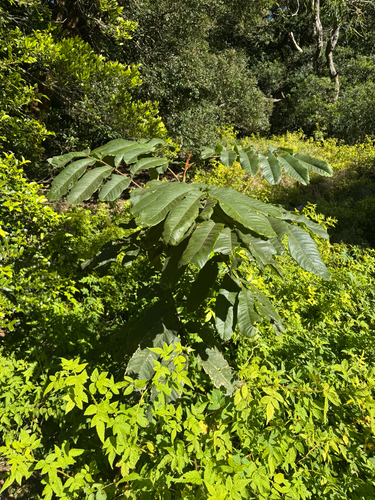
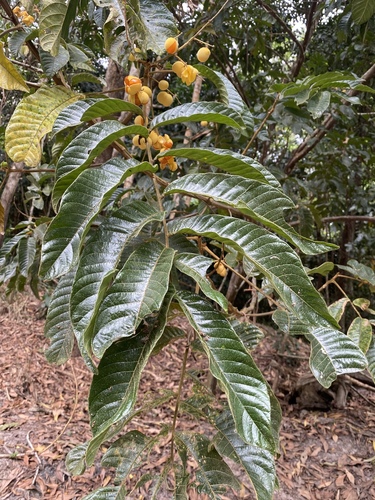
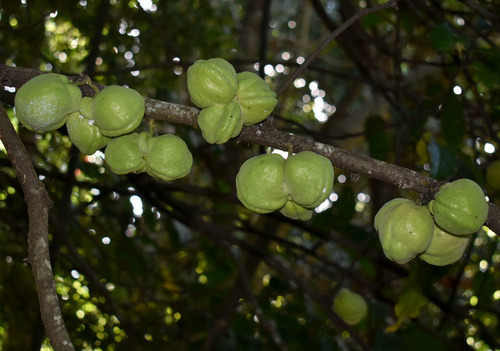
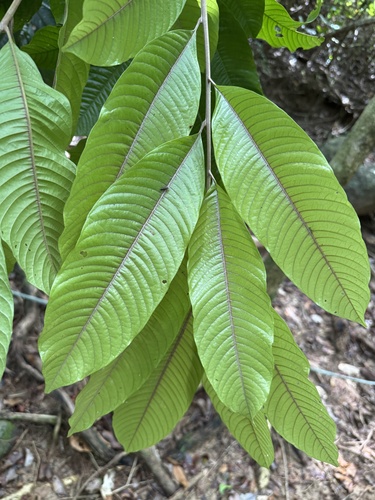
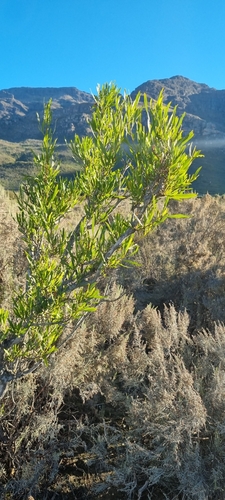
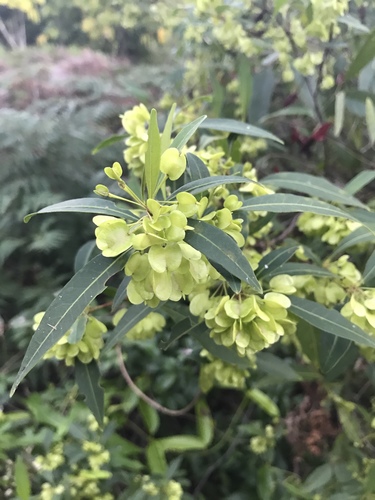
A tree. It grows 6-25 m tall. The trunk can be 50-100 cm across. The bark is smooth and greyish-green. The leaves are arranged in spirals and have 3 leaflets. The leaflets are narrowly oval and 14 cm long by 6 cm wide. There are irregular teeth along the edge. The flowers are in catkins that are branched 1 or 2 times. These flowering shoots are 8 cm long. The fruit is 8 mm long by 6 mm wide. It is oval to round.
Edible Uses
The seeds are eaten raw, and the fruits are eaten especially by children.
Traditional Uses
The seeds are eaten raw.
This uses section is brief — help expand it
Distribution
It is a tropical plant. It grows in lower mountain forest. It is recorded between 650-4,000 m above sea level.
Where It Grows
Africa, Botswana, Congo DR, East Africa, Ethiopia, Kenya, Malawi, Mozambique, Sudan, Tanzania, Uganda, Zimbabwe,
Cultivation
Plants can be grown from seed.
Other Information
The fruit are eaten especially by children.
Synonyms
Also Known As
Imbis, Irekemu, Odyaka, Xonxolooma
References (6)
- Bussman, R. W., et al, 2011, Plant Use in Odo-Bulu and Demaro, Bale region, Ethiopia. Journal of Ethnobiology and Ethnomedicine. 2011, 7:28
- Lulekal, E., et al, 2011, Wild edible plants in Ethiopia: a review on their potential to combat food insecurity. Afrika Focus - Vol. 24, No 2. pp 71-121
- Mutie, F. G., 2020, Conservation of Wild Food Plants and Their Potential for Combatting Food Insecurity in Kenya as Exemplified by the Drylands of Kitui County. Plants 2020, 9, 1017
- Oryema, C., et al, 2013, Edible wild fruit species of Gulu District, Uganda. International Journal of Biology and Biological Sciences Vol 2(4) pp 068-082
- Seyoum, Y., et al, 2015, Edible Wild Fruit Trees and Shrubs and Their Socioeconomic Significance in Central Ethiopia. Ethnobotany Research & Applications. 14:183-197
Show all 6 references Hide references
- Sina, B. & Degu, H. D., 2015, Knowledge and use of Wild Edible Plants in the Hula District of the Sidama Zone. International Journal of Bio-resource and Stress Management 6(3):352-365