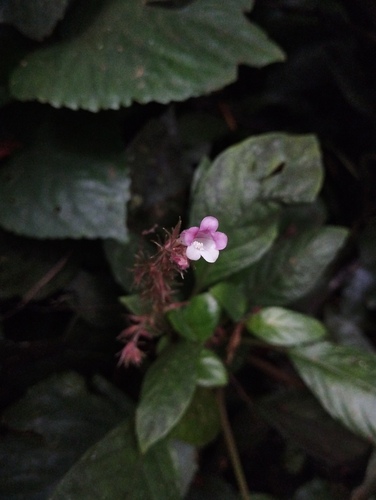
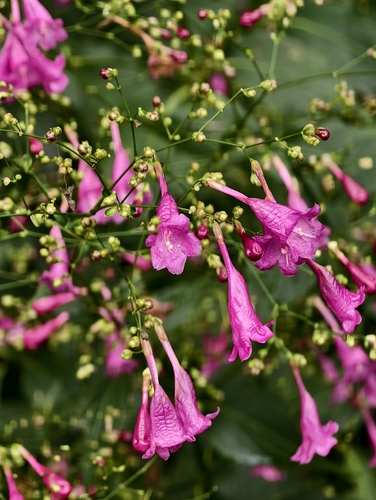
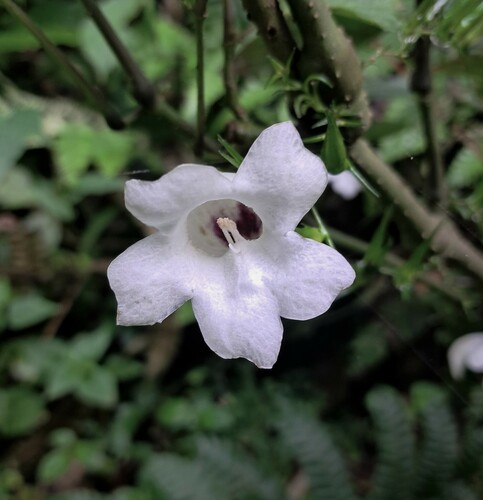
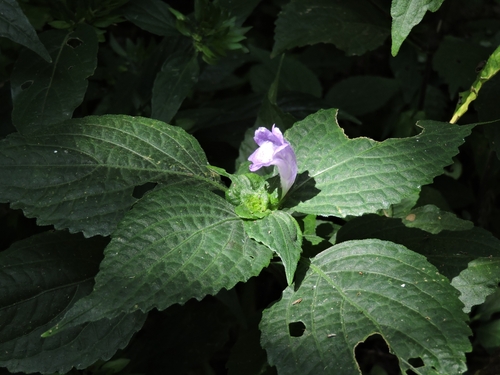
Blepharis linariifolia
Pers.
iNaturalist· cc-by-nc-sa
(c) Marco Schmidt, some rights reserved (CC BY-NC-SA)
Description
A low-growing wiry herb reaching about 30 cm high with prickly bracts. It is a tropical plant found in drier regions and the Sahara.
This description is brief — help expand it
Edible Uses
The seeds are boiled in milk and taken as a tonic.
Traditional Uses
The seeds are boiled in milk and taken as a tonic.
This uses section is brief — help expand it
Medicinal Uses
The seeds are boiled in milk and taken as a tonic.
Distribution
A tropical plant. It grows in drier regions and the Sahara.
Where It Grows
Africa, Burkina Faso, Cameroon, Central Africa, Chad, Côte d'Ivoire, India, Ivory Coast, Mali, Mauritania, Nigeria, Sahara, Senegal, Sudan, West Africa,
Cultivation
A plant for the drier areas of the tropics and subtropics.
Other Uses
The spiny bracts are used to trace patterns on earthenware before firing.
Synonyms
Also Known As
Bhangari, Jasad, Untkantalo
References (7)
- Ambasta S.P. (Ed.), 2000, The Useful Plants of India. CSIR India. p 75
- Bircher, A. G. & Bircher, W. H., 2000, Encyclopedia of Fruit Trees and Edible Flowering Plants in Egypt and the Subtropics. AUC Press. p 59
- Burkill, H. M., 1985, The useful plants of west tropical Africa, Vol. 3. Kew.
- Dalziel, J. M., 1937, The Useful plants of west tropical Africa. Crown Agents for the Colonies London.
- Jardin, C., 1970, List of Foods Used In Africa, FAO Nutrition Information Document Series No 2.p 39
Show all 7 references Hide references
- Peters, C. R., O'Brien, E. M., and Drummond, R.B., 1992, Edible Wild plants of Sub-saharan Africa. Kew. p 43
- World Checklist of Useful Plant Species 2020. Royal Botanic Gardens, Kew