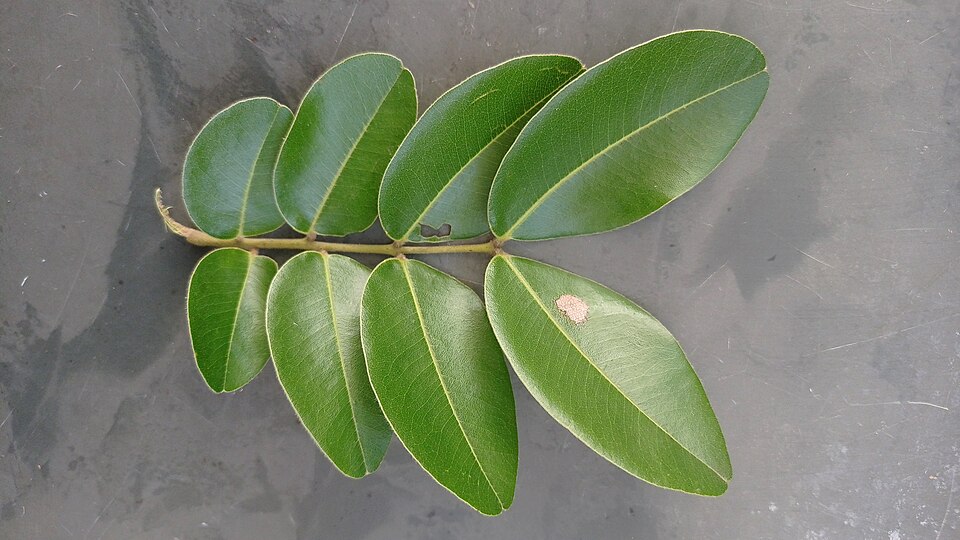
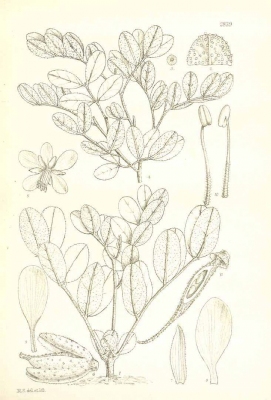
Acacia victoriae
Benth.
Bramble wattle, Gundabluey
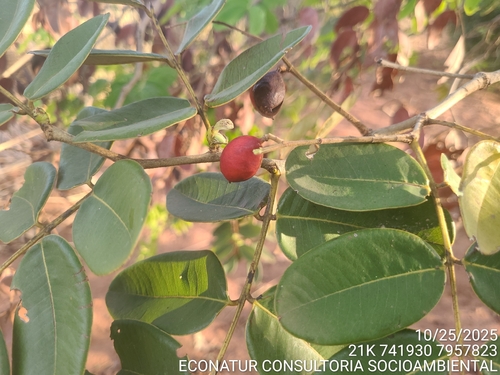
iNaturalist· cc-by-nc-sa
(c) Arthur Chapman, some rights reserved (CC BY-NC-SA), uploaded by Arthur Chapman
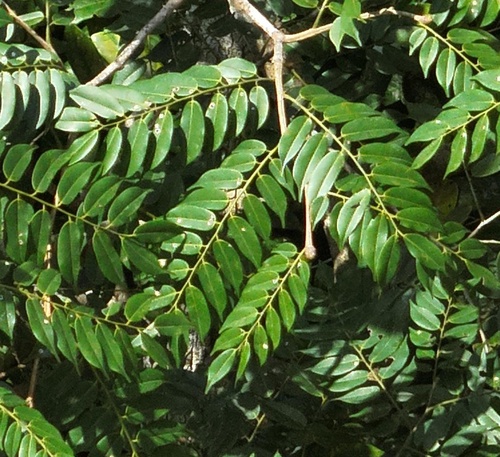
iNaturalist· cc-by
(c) Ian Sutton, some rights reserved (CC BY)
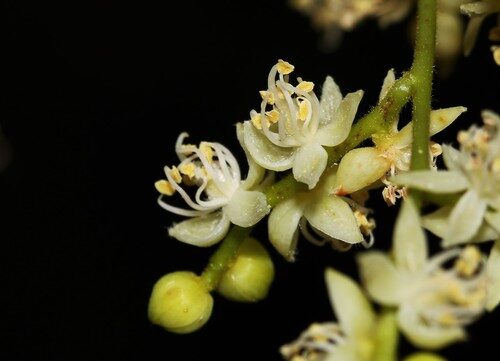
iNaturalist· cc-by-nc
(c) Marja Bouman, some rights reserved (CC BY-NC), uploaded by Marja Bouman
Summary
Source: WikipediaAcacia victoriae, commonly known as elegant wattle, bramble wattle, prickly wattle, gundabluey, gundabluie or bardi bush, is a shrub-like tree native to Australia. There is a single subspecies: A. victoriae subsp. arida Pedley
Description
A shrub or small tree. It grows 5 m tall. There are prickles along the stem. The leaves are twice divided and there are 8-18 pairs of pinnae. There are up to 50 pairs of pinnules on each pinnae. The flowers are yellow. They are in large clusters at the ends of branches. The pods are flattened.
Edible Uses
The seed is cooked and has a delicious flavour. It can be dried and ground into a powder for use alongside wheat flour in bread and cakes — the dark, rich flour produced is high quality, with overtones of coffee and chicory. Pods can also be harvested when the seeds are fully formed but still green, lightly roasted, and the seed eaten directly. Acacia seeds are highly nutritious, containing around 26% protein, 26% available carbohydrate, 32% fibre, and 9% fat. The fat content is higher than most legumes, with the aril providing the bulk of the fatty acids, which are largely unsaturated. Energy content is high across all tested species, averaging 1480 ±270 kJ per 100g. The seeds are low glycaemic index foods — starch is digested and absorbed slowly, producing a small but sustained rise in blood glucose and delaying the onset of exhaustion during prolonged exercise. The roasted seed can also be used as a coffee substitute. A white gum found on the trunk is edible.
Traditional Uses
When seeds are fully formed but still green the pods are lightly roasted and the seeds eaten. The mature seeds can be used as an emergency food after roasting then grinding to a paste with water and cooking as a damper. It can be used in breads, biscuits, pasta, ice cream and made into syrup. Edible grubs are found in the roots. The white gum is also eaten. The roasted seeds are used as a coffee substitute called wattleccino.
Medicinal Uses
The plant contains compounds called avicins, shown in laboratory studies to inhibit inflammation and cancer. The bark contains tannins and is astringent; taken internally, it is used to treat diarrhoea, dysentery, and internal bleeding. Applied externally as a wash, it is used for wounds, skin problems, haemorrhoids, perspiring feet, some eye problems, and as a mouthwash. The gum from the trunk and stems is sometimes taken internally to treat diarrhoea and haemorrhoids.
Known Hazards
The seed of many Acacia species, including this one, is edible and highly nutritious, and can be eaten safely as a fairly major part of the diet. Not all species are edible, however, and some can contain moderate levels of toxins. Especially when harvesting from the wild, especial care should be taken to ensure correct identification of any plants harvested for food. Especially in times of drought, many Acacia species can concentrate high levels of the toxin Hydrogen cyanide in their foliage, making them dangerous for herbivores to eat.
Distribution
A native plant of Australia. It prefers medium to heavy soils. It can grown in limestone and salty areas. It suits an open sunny position but can grow in part shade. It is drought and frost resistant. It suits arid areas but will grow in cooler moist climates. It occurs as far north as 17° S latitude. It occurs in areas with a rainfall from 130 to 250 mm per year but also in areas with 2,000 mm rainfall. Young plants can survive fires. Roots can extend deeply (27 m) into the soil and this plant often indicates underground water. It can grow in arid places. It suits hardiness zones 8-11.
Where It Grows
Africa, Asia, Australia*, Iran, Israel, Libya, Mediterranean, Middle East, North Africa, Pakistan,
Cultivation
It grows best in areas where annual daytime temperatures are within the range 12 - 32°c, but can tolerate 5 - 38°c. Mature plants can be killed by temperatures of -10°c or lower, though young growth is more sensitive and can be killed at -1°c. The plant prefers a mean annual rainfall in the range of 300 - 800mm, but tolerates 100 - 1,000mm. Grows best in a sunny position. Succeeds in most soils, being able to tolerate occasional short-term inundation. Tolerant of saline soils. Prefers a pH in the range 6 - 7.5, tolerating 5 - 8.5. Established plants are very drought tolerant. The tree has the potential to become a weed when grown in moister climates outside its native range. The plant is an ornamental species suited to growing in arid and semi-arid areas, yet adaptable to cooler moist climates. Acacia victoriae is an easily harvested species. The pods are held on the extremities of the branches and once fully mature, a gust of wind is sufficient to remove them. The pods may be shed unopened or may open on the plant with the seeds still attached by the funicle. Pods can be collected by manually shaking or gently beating the branches and collecting them on a groundsheet. The seeds separate from the pods with minimal mechanical processing. The plant bears uniformly heavy seed crops and is one of the few acacias whose seed can be collected from the ground. The plant responds very well to coppicing, and also produces suckers. Trees are fast-growing, but relatively short-lived, with a probable lifespan of 10 - 15 years. This species has a symbiotic relationship with certain soil bacteria, these bacteria form nodules on the roots and fix atmospheric nitrogen. Some of this nitrogen is utilized by the growing plant but some can also be used by other plants growing nearby.
Propagation
Most, if not all, members of this genus have hard-coated seeds that benefit from scarification before sowing. Pour a small amount of nearly boiling water over the seeds (taking care not to cook them), then soak in warm water for 12–24 hours. Seeds that have swollen and absorbed moisture are ready to sow; any that have not should be carefully nicked in the seedcoat without damaging the embryo, then soaked for a further 12 hours before sowing.
Other Uses
Acacia victoriae is a fast-growing, salt-tolerant species that regenerates readily from suckers and sometimes forms thickets. It is used in land reclamation and mine site rehabilitation in arid areas, and serves as a low windbreak and for soil stabilisation and sand dune stabilization in dry country. Numbers can increase markedly during successive wet seasons and it may become a nuisance, especially around watering points. In Western New South Wales its presence is considered a reliable indicator of underground water; roots have been traced to depths of around 25 metres. The branches and twigs exude a clear gum found in small quantities, much of it rich amber in colour when freshly exuded, with some portions nearly as pale as the best Turkey gum arabic. It is sparkling, clean-looking, readily and completely soluble in water, and easily reduced to a powder due to its somewhat vesicular nature. It would be a commercially valuable product if obtainable in greater quantity. The wood is soft but very tough, used traditionally for making spear blades, and also used as fuel. The species is also used in carbon farming, coppice systems, food forests, and as a nitrogen fixer.
Production
Plants grow fairly quickly flowering in 2 years. It flowers in spring regardless of the timing of the rain. They produce a heavy and uniform seed crop. Plants last for about 10 years.
Notes
There are about 1,350 Acacia species. Over 1,000 occur in Australia. It has anticancer properties. Also as Mimosaceae.
Nutrition
| Part | Moisture | kJ | kcal | Protein | Vit A | Vit C | Iron | Zinc |
|---|---|---|---|---|---|---|---|---|
| Seed | 6.9 | 1384 | 331 | 17.5 | — | — | 10.4 | 2.2 |
| Gum | — | — | — | — | — | — | — | — |
Synonyms
Also Known As
Aliti, Atunpa, Elegant wattle, Ngatuppa, Prickly wattle
References (43)
- Alice, L. & O'Quinn, T., Australian Bush Superfoods. Explore Australia p 178
- Anon., 2003, Native Plants for the Fitzroy basin. Society for Growing Australian Plants Inc. (Rockhampton Branch)
- Bindon, P., 1996, Useful Bush Plants. Western Australian Museum. p 31
- Bodkin, F., 1991, Encyclopedia Botanica. Cornstalk publishing, p 37
- Boland, D. J. et al, , 2006, Forest Trees of Australia. CSIRO p 188
Show all 43 references Hide references
- Bonney, N., 1997, Economic Native Trees and Shrubs for South Australia. Greening Australia (SA) inc. Campbelltown SA 5074 p 22
- Bonney, N., 2012, Edible Wild Native Plants for Southern Australia. p 13
- Boomsma, C.D., 1972, Native Tree of South Australia. Woods & Forests Department South Australia, Bulletin No.19. p 50
- Cancilla, D., 2018, Ethnobotanical and Ethnozoological Values Desktop Assessment - Eliwana Project. p 9
- Cherikoff V. & Isaacs, J., The Bush Food Handbook. How to gather, grow, process and cook Australian Wild Foods. Ti Tree Press, Australia p 42, 188
- Cundall, P., (ed.), 2004, Gardening Australia: flora: the gardener's bible. ABC Books. p 80
- Doran, J.C., & Turnbull, J.W. (Eds), 1997, Australian Trees and Shrubs: species for land rehabilitation and farm plantings in the tropics. ACIAR Monograph No 24. p 350
- Eddie, C., 2007, Field Guide to Trees and Shrubs of Eastern Queensland Oil and Gas Fields. Santos p 240
- Elliot, W.R., & Jones, D.L., 1982, Encyclopedia of Australian Plants suitable for cultivation. Vol 2. Lothian. p 129
- Etherington, K., & Imwold, D., (Eds), 2001, Botanica's Trees & Shrubs. The illustrated A-Z of over 8500 trees and shrubs. Random House, Australia. p 57
- Facciola, S., 1998, Cornucopia 2: a Source Book of Edible Plants. Kampong Publications, p 151
- Hall, N. et al, 1972, The Use of Trees and Shrubs in the Dry Country of Australia, AGPS, Canberra. p 353
- Hemphill, I, 2002, Spice Notes. Macmillan. p 413
- Hiddins, L., 1999, Explore Wild Australia with the Bush Tucker Man. Penguin Books/ABC Books. p 130
- Hunter, J.T., 2017, Is there a relationship between contemporary high Aboriginal plant resource locations and mapped vegetation communities? Cunninghamia 17:27-34. The Royal Botanic Garden Sydney. ISSN 2200 - 405X
- ILDIS Legumes of the World http:www;ildis.org/Legume/Web
- Kintzios, S. E., 2006, Terrestrial Plant-Derived Anticancer Agents and Plant Species Used in Anticancer research. Critical Reviews in Plant Sciences. 25: pp 79-113
- Lang, P. J., et al, 1986, Anangu Pitjantjatjara Lands Biological Survey. p 41
- Latz, P., 1996, Bushfires and Bushtucker. IAD. p 121
- Lazarides, M. & Hince, B., 1993, Handbook of Economic Plants of Australia, CSIRO. p 7
- Lister, P.R., P. Holford, T. Haigh, and D.A. Morrison, 1996, Acacia in Australia: Ethnobotany and potential food crop. p. 228-236. In: J. Janick (ed.), Progress in new crops. ASHS Press, Alexandria, VA.
- Lord, E.E., & Willis, J.H., 1999, Shrubs and Trees for Australian gardens. Lothian. p 43
- Low, T., 1991, Wild Food Plants of Australia. Australian Nature FieldGuide, Angus & Robertson. p 179
- Maslin, B. R., et al, 1998, Edible Wattle Seeds of Southern Australia. CSIRO p 24
- Miers, G., 2004, Cultivation and sustainable wild harvest of Bushfoods by Aboriginal Communities in Central Australia. RIRDC report W03/124 p 19
- Milson. J., 2000, Trees and Shrubs of north-west Queensland. DPI p 156
- T. L. Mitchell, J. exped. trop. Australia 333. 1848
- Paczkowska, G . & Chapman, A.R., 2000, The Western Australian Flora. A Descriptive Catalogue. Western Australian Herbarium. p 328
- Pennock, A., et al, Australian Dry-zone Acacias for Human Food: Proceedings of a Workshop.
- Robins, J., 1996, Wild Lime. Cooking from the Bush food garden. Allen & Unwin p 166
- Royal Botanic Gardens, Kew (1999). Survey of Economic Plants for Arid and Semi-Arid Lands (SEPASAL) database. Published on the Internet; http://www.rbgkew.org.uk/ceb/sepasal/internet [Accessed 27th April 2011]
- Self, M., 199, Phoenix Seeds catalogue. p 14
- Smith, K & I., 1999, Grow your own bushfoods. New Holland. Australia. p 100
- Townsend, K., 1994, Across the Top. Gardening with Australian Plants in the tropics. Society for Growing Australian Plants, Townsville Branch Inc. p 66
- Urban, A., 1990, Wildflowers of Inland Australia. Portside editions. p 74
- Wheeler, J.R.(ed.), 1992, Flora of the Kimberley Region. CALM, Western Australian Herbarium, p 331
- Williams, K.A.W., 1999, Native Plants of Queensland Volume 4. Keith A.W. Williams North Ipswich, Australia. p 38
- World Checklist of Useful Plant Species 2020. Royal Botanic Gardens, Kew