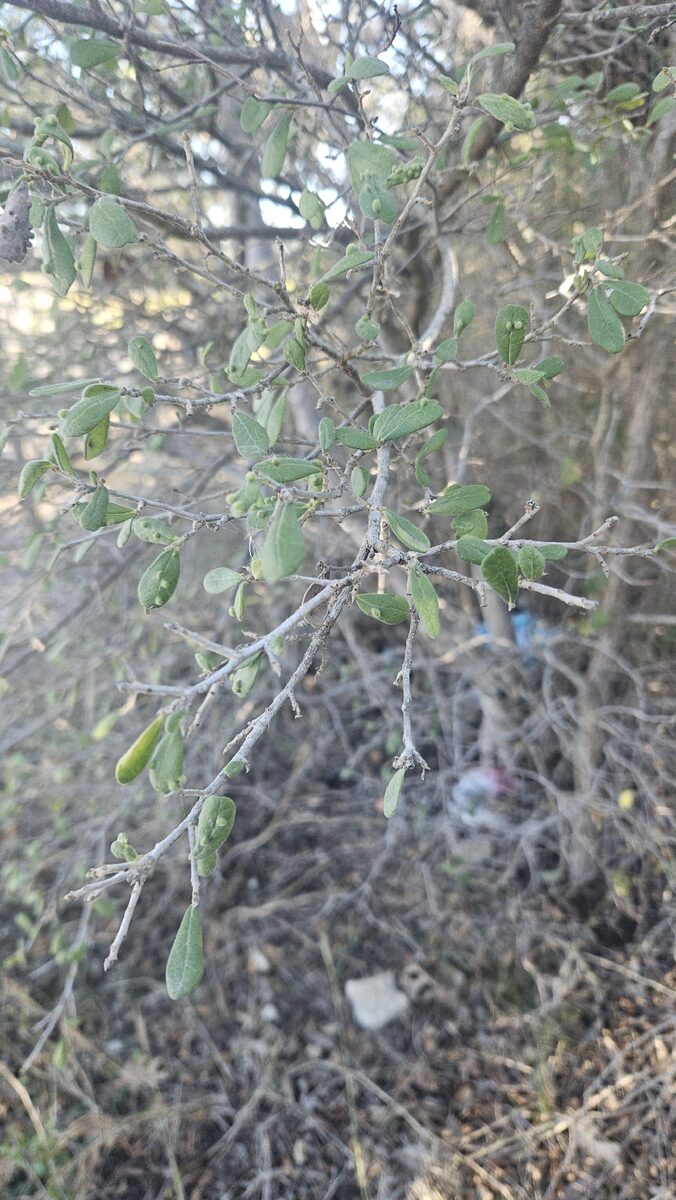
Diospyros sandwicensis
(DC.) Fosberg
Lama
iNaturalist· cc-by
(c) Kevin Faccenda, some rights reserved (CC BY), uploaded by Kevin Faccenda
iNaturalist· cc-by-nc
(c) Kenneth R. Wood (NTBG), some rights reserved (CC BY-NC)
iNaturalist· cc-by-nc
(c) Kenneth R. Wood (NTBG), some rights reserved (CC BY-NC)
Summary
Source: WikipediaDiospyros sandwicensis is a species of flowering tree in the ebony family, Ebenaceae, that is endemic to Hawaii. It belongs to the same genus as both persimmons and ebony. Its common name, lama, also means enlightenment in Hawaiian. Lama is a small to medium-sized tree, with a height of 6–12 m (20–39 ft) and a trunk diameter of 0.3 m (0.98 ft). It can be found in dry, coastal mesic, mixed mesic, and wet forests at elevations of 5–1,220 m (16–4,003 ft) on all major islands. Lama and olopua (Nestegis sandwicensis) are dominant species in lowland dry forests on the islands of Maui, Molokaʻi, Kahoʻolawe, and Lānaʻi.
Description
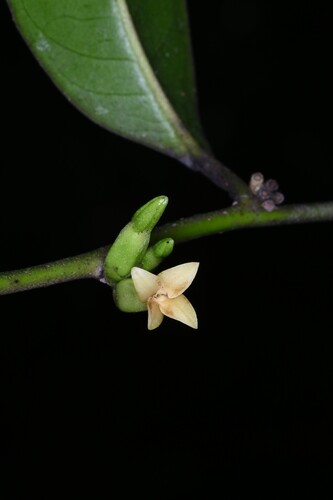
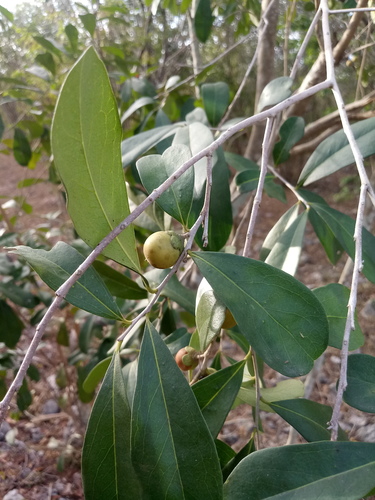
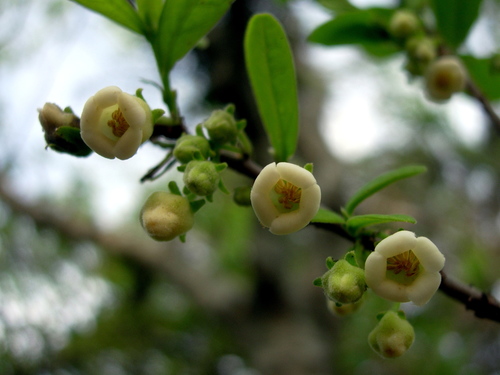
A tree. It can be 2-15 m tall. The leaves are small and leathery. They are reddish when young and dark green when mature. Flowers are of one sex only. They are in the axils of leaves. Trees are separately male or female. The female flowers develop fruit. The fruit are juicy and 2.5 cm long by 12 mm wide. They are green but turn yellow then ripen to red. They are sweet when ripe. They are edible. They contain 1-3 brown seeds.
Edible Uses
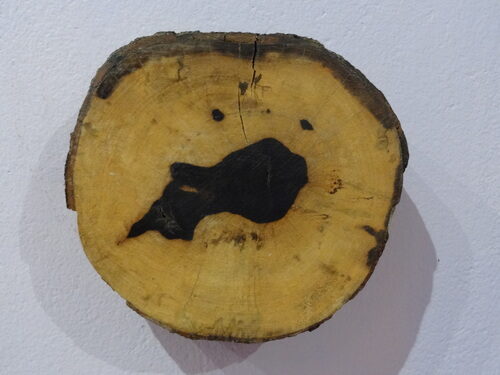
The sapwood of lama is very white and forms a wide band inside the trunk. The heartwood is reddish-brown, fine-textured, straight-grained, and extremely hard. Native Hawaiians made aukā (upright supports) out of lama wood, which were used in hīnaʻi (basket fish trap) construction. The white sapwood represented enlightenment, and thus had many religious uses. The pou (posts), ʻaho (thatching sticks) and oʻa (rafters) of a special building called a hale lau lama were made of the sapwood. A pā lama is a fenced enclosure made from lama sapwood. A block of the sapwood, covered in a yellow kapa and scented with ʻōlena (Curcuma longa), was placed on the kuahu (altar) inside of a hālau hula (building in which hula was performed). This block represented Laka, goddess of hula. The piʻoi (berries) are edible.
Medicinal Uses
The plant is often used medicinally in Hawaii, but usually as a secondary ingredient in combination with other herbs. It is used mainly in external applications to treat problems such as burns, cuts, boils, abscesses, bruises, and cold sores.
Distribution
A tropical plant. It grows in dry forest areas.
Where It Grows
American Samoa, Hawaii*, Pacific, USA,
Cultivation
We have seen no individual confirmation for this species, but in general Diospyros species are dioecious and require both male and female forms to be grown if fruit and seed are required.
Propagation
Seed - it has a very short viability and so should be sown as soon as possible. The flesh should be removed since this contains germination inhibitors. Sow the seed in a shady position in a nursery seedbed. The sowing media for ebony uses soil and fine sand at the ratio 3:1. The seed is planted horizontally or vertically with the radicle end down, with a sowing depth of 1 - 1½ times the thickness of seed. Distance between the seeds is 3 - 5cm. Seeds are very sensitive to desiccation during germination and early growth, so must be regularly watered at this time. Normally the seed will germinate after one week. In one trial, fresh seed, sown one day after collection, showed 85% germination rate within 17 - 65 days. As a rule fresh seeds have a high percentage of fertility. The seedlings develop long taproots at an early stage, often before any appreciable elongation of the shoot takes place. The growth of the seedling is decidedly slow .
Other Uses
The reddish-brown wood is very hard and close-grained. It is traditionally used for making statues of gods, for house posts, and house fences.
Production
It is slow growing.
Synonyms
Also Known As
'au'auli
References (2)
- http://www.ntbg.org/plants/plant details.php
- Lamoureux, C.H., 1976, Trailside Plants of Hawaii's National Parks. Hawaii Natural History Association. p 60