Blechnum spicant
(L.) Sm.
Hard fern, Deer Fern, Ladder fern
iNaturalist· cc-by-nc
(c) Anneliese Wilson, some rights reserved (CC BY-NC)
iNaturalist· cc-by-nc
(c) Anneliese Wilson, some rights reserved (CC BY-NC)
iNaturalist· cc-by-nc
(c) Anneliese Wilson, some rights reserved (CC BY-NC)
Summary
Source: WikipediaEvergreen fern growing slowly to 0.3 meters tall and wide. Hardy to UK zone 5. Year-round foliage with spore ripening June to August. Adapts to light sandy, medium loamy, or heavy clay soils with preference for well-drained conditions; tolerates heavy clay. Grows in mildly acid to neutral soils, including very acid conditions. Tolerates full shade, semi-shade, or open sun; prefers moist soil.
Description
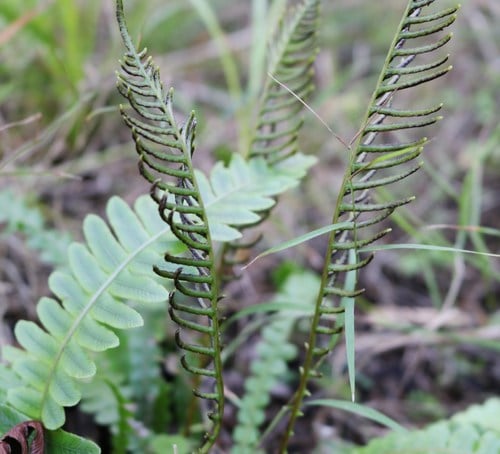
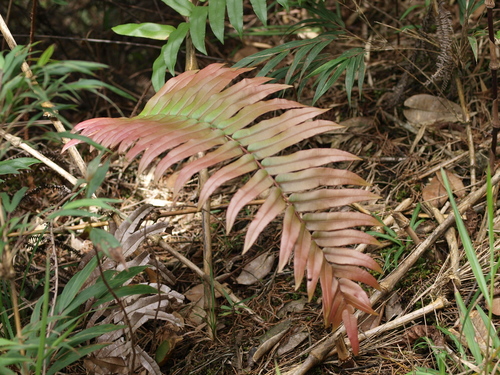
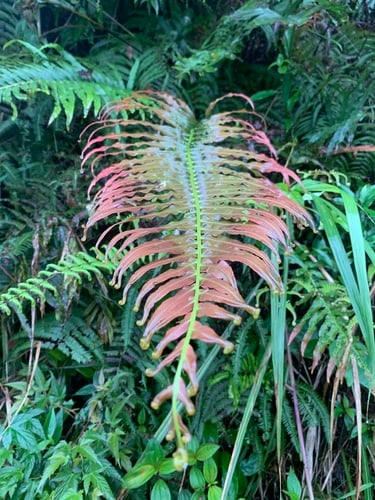
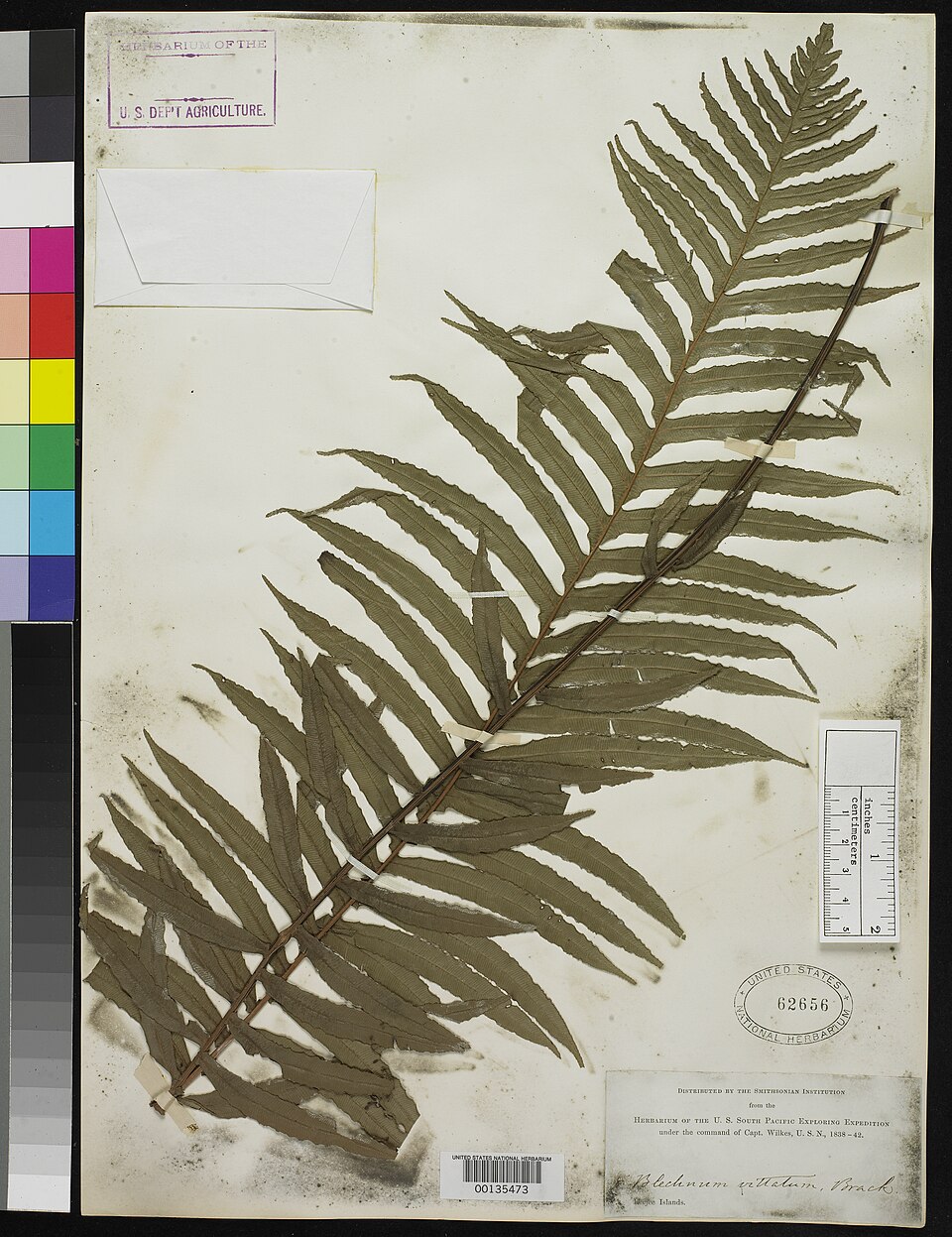
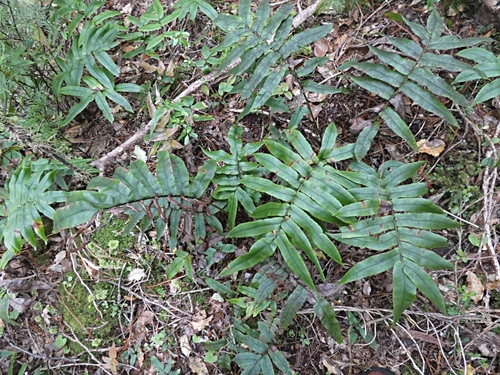
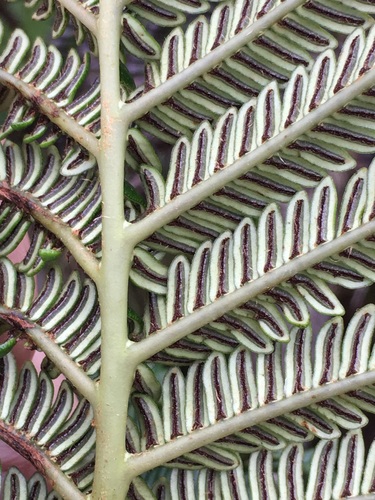
A fern with year round foliage. It grows 30-45 cm high and 45-60 cm wide. It grows in tufts. The sterile fronds form a large flat rosette. They grow almost flat on the ground. They are 15-20 cm long and 3.5 cm across. They have up to 60 pairs of closely set leaflets. The fertile fronds stand very upright from the centre of this. Frond shape can vary. The fertile fronds are 75 cm long.
Edible Uses
Edible Parts: Leaves Root Shoots Edible Uses: Root - cooked. An emergency food, used when all else fails. Young shoots (often called croziers) - cooked. The young tender stems can be peeled and the centre portion eaten. An emergency food, it is only used when all else fails. It is also chewed to alleviate thirst on long journeys.
Medicinal Uses
Astringent Cancer Skin Stomachic The leaflets have been chewed in the treatment of internal cancer, lung disorders and stomach problems. The fronds are used externally as a medicine for skin sores. A decoction of the root has been used in the treatment of diarrhoea.
Distribution
It is a temperate plant. It is frost hardy. It grows in wet acidic soils and peat bogs. The soils need to be lime free. It suits hardiness zones 5-9.
Where It Grows
Asia, Australia, Britain, Canada, Europe, Luxembourg, North America, USA,
Propagation
Spores - best sown as soon as they are ripe on the surface of a humus-rich sterilized soil. Keep the compost moist, preferably by putting a plastic bag over the pot. Pot on small clumps of plantlets as soon as they are large enough to handle and keep humid until they are well established. Overwinter for the first year in a greenhouse and plant outside in late spring or early summer. Division in spring or autumn. Larger divisions can be planted straight into their permanent positions whilst smaller clumps are best potted up and kept in a cold frame until they are growing away well.
Other Uses
A good ground cover plant. Relatively slow growing but succeeding in the dense shade of trees. Special Uses Ground cover
Notes
There are between 150 and 200 Blechnum species.
References (10)
- Cundall, P., (ed.), 2004, Gardening Australia: flora: the gardener's bible. ABC Books. p 240
- Etkin, N.L. (Ed.), 1994, Eating on the Wild Side, Univ. of Arizona. p 74
- Goudey, C.J., 1988, A Handbook of Ferns for Australia and New Zealand. Lothian. p 72
- Hibbert, M., 2002, The Aussie Plant Finder 2002, Florilegium. p 44
- Joyce, D., 1998, The Garden Plant Selector. Ryland, Peters and Small. p 334
Show all 10 references Hide references
- Kuhnlein, H. V. and Turner, N. J., 1991, Traditional Plant Foods of Canadian Indigenous Peoples. Food and Nutrition in History and Anthropology Volume 8. Gordon and Breach. p 31
- MacKinnon, A., et al, 2009, Edible & Medicinal Plants of Canada. Lone Pine. p 382
- Mem. Acad. Roy. Sci. Turin 5:411. 1793
- Plants for a Future database, The Field, Penpol, Lostwithiel, Cornwall, PL22 0NG, UK. http://www.scs.leeds.ac.uk/pfaf/
- Slocum, P.D. & Robinson, P., 1999, Water Gardening. Water Lilies and Lotuses. Timber Press. p 112