Crataegus texana
Buckl.
Texas hawthorn
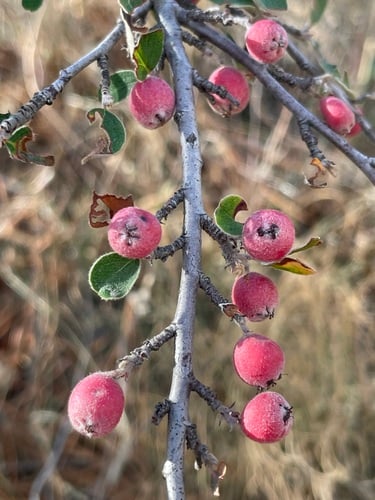
iNaturalist· cc-by
(c) Eric Knight, some rights reserved (CC BY), uploaded by Eric Knight
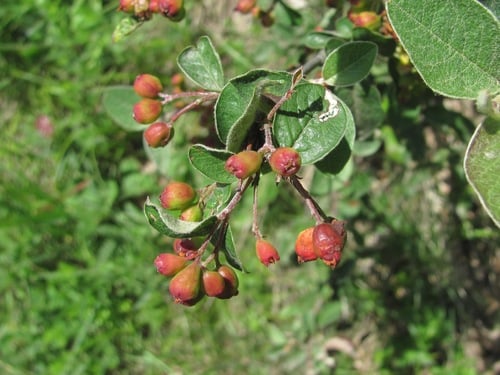
iNaturalist· cc-by
(c) Michelle W. (鍾偉瑋), some rights reserved (CC BY)
Summary
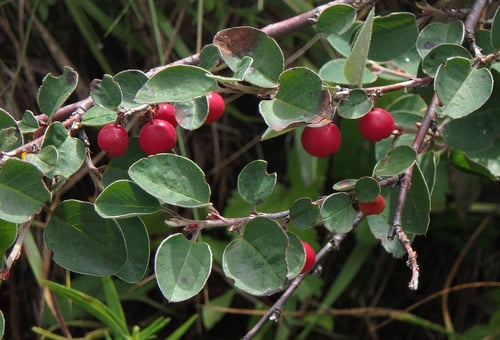
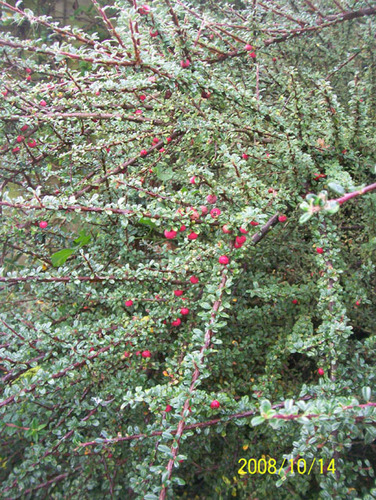
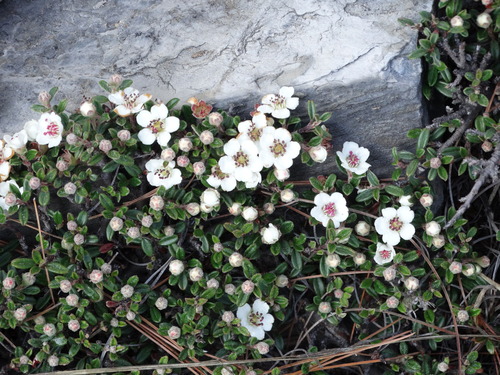
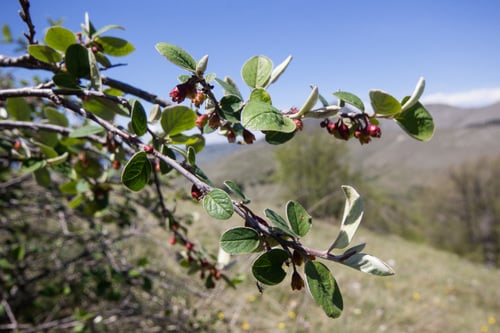
Source: WikipediaCrataegus texana, the Texas hawthorn, is a member of the family Rosaceae. Typically, it is found in the form of a small tree or a large shrub and blooms in early spring, usually in the months of March and April. Flowers of the Texas Hawthorn are white and usually produce small, one-inch, scarlet fruits that are said to resemble tiny red apples. Its twigs are usually armed with thorns that can grow to be about one to three inches long.
Description
A shrub or small tree. It has a tall trunk. The crown is broad and irregular or rounded. It grows 9 m high. The trunk is 30 cm across. The bark is reddish-brown to grey and scaly. The leaves are 7.5-10 cm long by 6-7.5 cm wide. They are broadly oval. There are double teeth along the edge. There are usually 8-10 shallow lobes beyond the middle. The leaves are shiny and dark green above and paler and hairy underneath. The flowers are 19 mm wide and hairy. There are 5 white petals. The flowers occur in large clusters. The fruit are 12-19 mm wide. They are bright red with large pale dots. They are hairy when young.
Edible Uses
The fruit are edible.
Distribution
It is a temperate plant.
Where It Grows
North America, USA,
References (1)
- Little, E.L., 1980, National Audubon Society Field Guide to North American Trees. Alfred A. Knopf. p 485