Chelyocarpus ulei
Dammer
Xila, Sacha anguaillo
iNaturalist· cc-by
(c) Rajan Rao, some rights reserved (CC BY), uploaded by Rajan Rao
iNaturalist· cc-by-nc
(c) railson, some rights reserved (CC BY-NC)
iNaturalist· cc-by-nc
(c) railson, some rights reserved (CC BY-NC)
Summary
Source: WikipediaChelyocarpus ulei is a species of palm tree that is native to the western Amazon.
Description
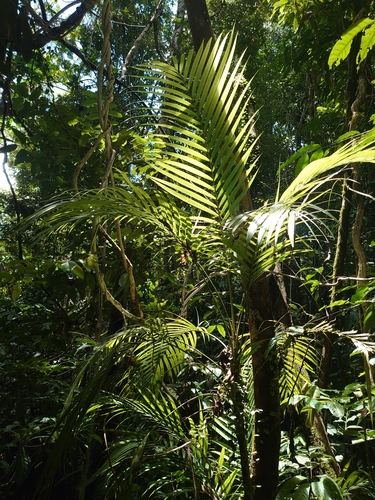
A single stem palm. It grows 1-8 m tall. The stem is 4-7 cm across. There are 10-15 leaves. The blade is 1-1.5 m across. It is white on the lower surface. The leaves are split into 5-12 leaflets.
Edible Uses
The fruit is eaten, the liquid endosperm is drunk, and vegetable salt is extracted from burnt stems in Colombia.
Traditional Uses
Vegetable salt is extracted from the burnt stems in Colombia. The liquid endosperm is drunk. The fruit is eaten.
This uses section is brief — help expand it
Distribution
It is a tropical plant. It grows in lowland rainforest in the Amazon. It grows in both flooded and non flooded areas. It is usually below 500 m altitude but can be up to 900 m altitude.
Where It Grows
Amazon, Brazil, Colombia, Ecuador, Peru, South America,
Notes
There are 4 Chelyocarpus species.
Synonyms
Also Known As
Chila, Gabamo, Gaban, Gabana, Gabawe, Ne'e, Sacha bombanaje, Ushpa aguaje, Xila
References (7)
- Grandtner, M. M. & Chevrette, J., 2013, Dictionary of Trees, Volume 2: South America: Nomenclature, Taxonomy and Ecology. Academic Press p 124
- Henderson, A., Galeano, G and Bernal, R., 1995, Field Guide to the Palms of the Americas. Princeton. p 39
- Kermath, B. M., et al, 2014, Food Plants in the Americas: A survey of the domesticated, cultivated and wild plants used for Human food in North, Central and South America and the Caribbean. On line draft. p 214
- Marcia, M. J., et al, 2011, Palm Uses in Northwestern South America: A Quantitative Review. Bot. Rev. (2011) 77:462-570
- Roa, J. A. G. & Boada, D. S. G., 2018, Fundación para el Fortalecimiento de la Fruticultura y Plantas Alimenticias no Convencionales en Colombia.
Show all 7 references Hide references
- Torre, de la L., et al, 2008, Enciclopedia de las Plantas Útiles del Ecuador. Herbario QCA. Pontificia Universidad Católica del Ecuador. p 199
- World Checklist of Useful Plant Species 2020. Royal Botanic Gardens, Kew