Clinostigma harlandii
Becc.
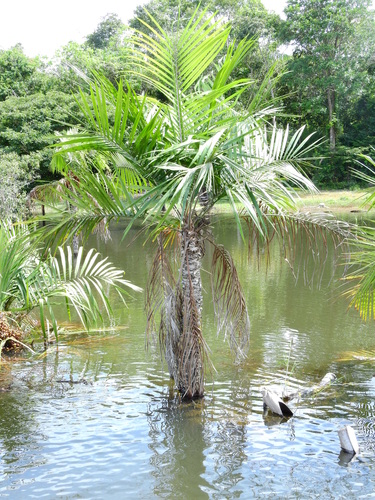
Ngami igh
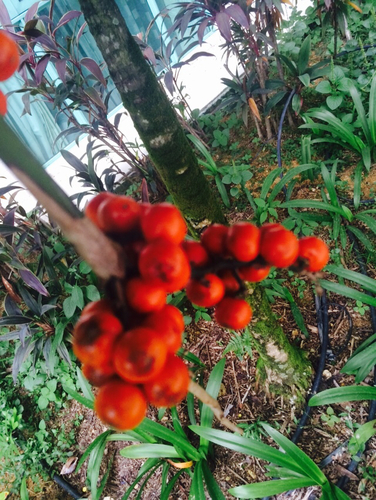
iNaturalist· cc-by-nc
(c) Rowan Hindmarsh-Walls, some rights reserved (CC BY-NC), uploaded by Rowan Hindmarsh-Walls
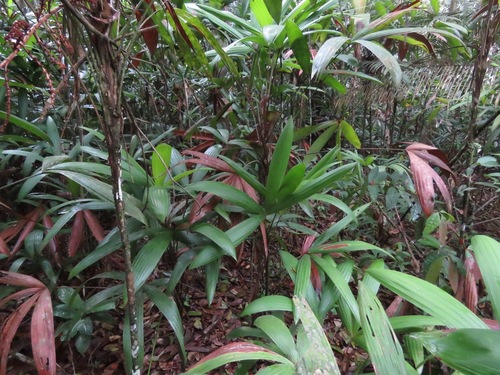
iNaturalist· cc-by-nc
(c) Scott Zona, some rights reserved (CC BY-NC)
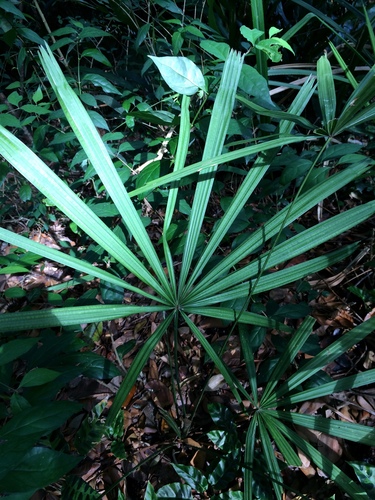
iNaturalist· cc-by-nc
(c) Simon Gorta, some rights reserved (CC BY-NC)
Summary
Source: WikipediaClinostigma harlandii is a species of flowering plant in the family Arecaceae. It is found only in Vanuatu. It is threatened by habitat loss.
Description
A solitary palm. It grows 28 m high. The trunk is 25 cm across. The trunk is green with white rings of leaf base scars. The trunk becomes grey. It has a ring of 2 m high stilt roots at the base. The crown-shaft is 1.3 m long and bulges at the base. The leaves are finely divided. The crown-shaft is prominent. It is light yellow or orange. The leaves are arching. They are 5 m long and the leaf stalk is 60 cm long. The leaflets hang down making the crown circular. The leaflets are regularly spaced and deep green. They have long tips. The fruit are small and round. They are deep red when ripe.
Edible Uses
The fruit and palm heart (cabbage) are eaten.
Traditional Uses
Fruit eaten, Palm heart eaten.
This uses section is brief — help expand it
Distribution
It is a tropical plant. They cannot tolerate frost. They need moisture and humidity. They do not like alkaline soils. They like shade when young. They do not suit hot or dry climates. It grows in the rainforest between 425 to 1500 m altitude in Vanuatu. In the Cairns Botanical Gardens.
Where It Grows
Australia, Pacific, Vanuatu,
Notes
There are 13 Clinostigma species palms in the Pacific.
Synonyms
References (6)
- Dowe, J.L., 1989, Palms of the South-West Pacific. Palm and Cycad Society of Australia. p 101, 183
- Haynes, J., & McLaughlin, J., 2000, Edible palms and Their Uses. University of Florida Fact sheet MCDE-00-50-1 p 5
- Johnson, D.V., 1998, Tropical palms. Non-wood Forest products 10. FAO Rome. p 79
- Jones, D.L., 2000, Palms of Australia 3rd edition. Reed/New Holland. p 146 (Genus)
- Lebot, V. & Sam, C., Green desert or ‘all you can eat’? How diverse and edible was the flora of Vanuatu before human introductions?. Terra australis 52 p 409
Show all 6 references Hide references
- Riffle, R.L. & Craft, P., 2003, An Encyclopedia of Cultivated Palms. Timber Press. p 306