Astrocaryum huicungo
Damm. ex Burret
Si'ra
gbif· cc-by
The New York Botanical Garden
gbif· cc-by
The New York Botanical Garden
Description
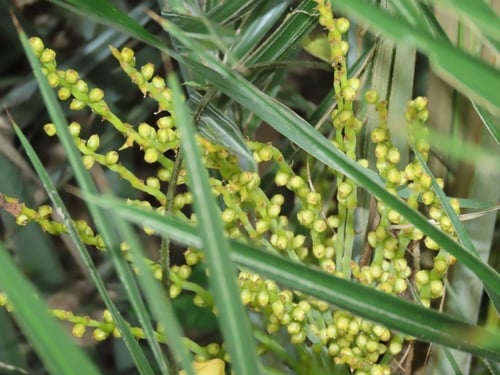
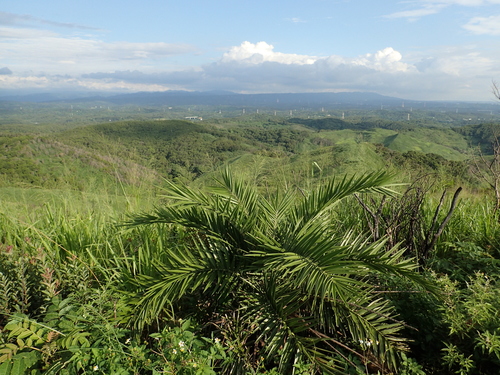
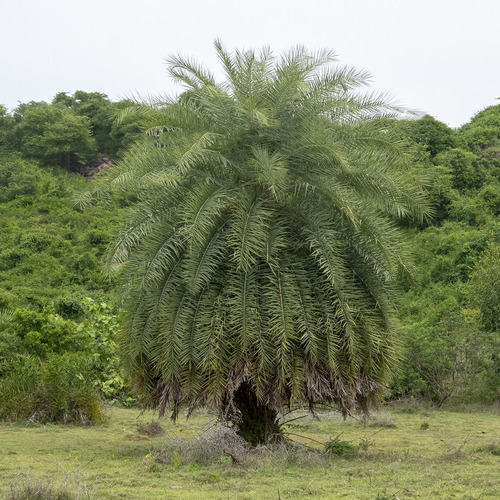
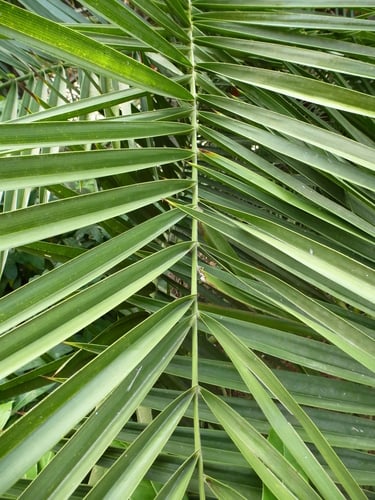
A palm. It can have single stems or in clusters. They can be above or below ground. The trunks can be 1.5-15 m tall. They are 10-30 cm wide. They are spiny and have persistent leaf bases. There are 6-15 or more leaves. They are up to 7 m long and spread out horizontally. There are 90-130 leaflets on each side. They are arranged regularly and spread in the same plane. The flowering stalks are erect and among the leaves. It has clustered stems and fruits 6.5-7.5 cm long. They have a fleshy mesocarp.
Edible Uses
The palm heart (the inner core and growing bud of the plant) is harvested. It provides a crispy food, rich in nutrients, that can be eaten raw or cooked. Harvesting the heart will lead to the death of the stem it was harvested from, though in multi-stemmed plants such as this the rest of the plant will continue to grow and often produce new stems. Fruit - raw. A fleshy pulp. The tawny, obovoid fruit can be 65 - 75mm long and 37 - 44mm wide, with an orange, fleshy mesocarp surrounding a single, large seed. The liquid endosperm (developing seed) of the unripe fruits is drunk. We have no specific information for this species, but the fruits and seeds of various species in this genus are reported to be used for oil production in the Amazon region. Existing analyses of fruit fat content show a relatively homogeneous composition among the different species, with around. 20% of fat content in the mesocarp, mostly composed of oleic and palm itic acids, and 20 - 35% of fat content in the endosperm, with a predominance of lauric acid.
Distribution
A tropical plant.
Where It Grows
Amazon, Brazil, Ecuador, Peru, South America,
Other Uses
The leaves and stems are sometimes used in the construction of traditional houses. The hard endocarp of various Amazonian species is commonly used to make beads and ornaments for necklaces The plant is a natural pioneer species that can become very abundant in secondary forest and pastures. It can be used in reforestation schemes within its natural range for restoring forests.
Notes
There are about 40-50 Astrocaryum species.
Synonyms
Also Known As
Huicungo, Uicungo
References (6)
- Balick, M.J. and Beck, H.T., (Ed.), 1990, Useful palms of the World. A Synoptic Bibliography. Colombia p 402, (As Astrocaryum murumuru var. huicungo)
- Etkin, N.L. (Ed.), 1994, Eating on the Wild Side, Univ. of Arizona. p 157 (As Astrocaryum murumuru var. huicungo)
- Henderson, A., Galeano, G and Bernal, R., 1995, Field Guide to the Palms of the Americas. Princeton. p 204 (As Astrocaryum murumuru var. huicungo)
- Kermath, B. M., et al, 2014, Food Plants in the Americas: A survey of the domesticated, cultivated and wild plants used for Human food in North, Central and South America and the Caribbean. On line draft. p 100 (As Astrocaryum murumuru var. huicungo)
- Marcia, M. J., et al, 2011, Palm Uses in Northwestern South America: A Quantitative Review. Bot. Rev. (2011) 77:462-570
Show all 6 references Hide references
- World Checklist of Useful Plant Species 2020. Royal Botanic Gardens, Kew