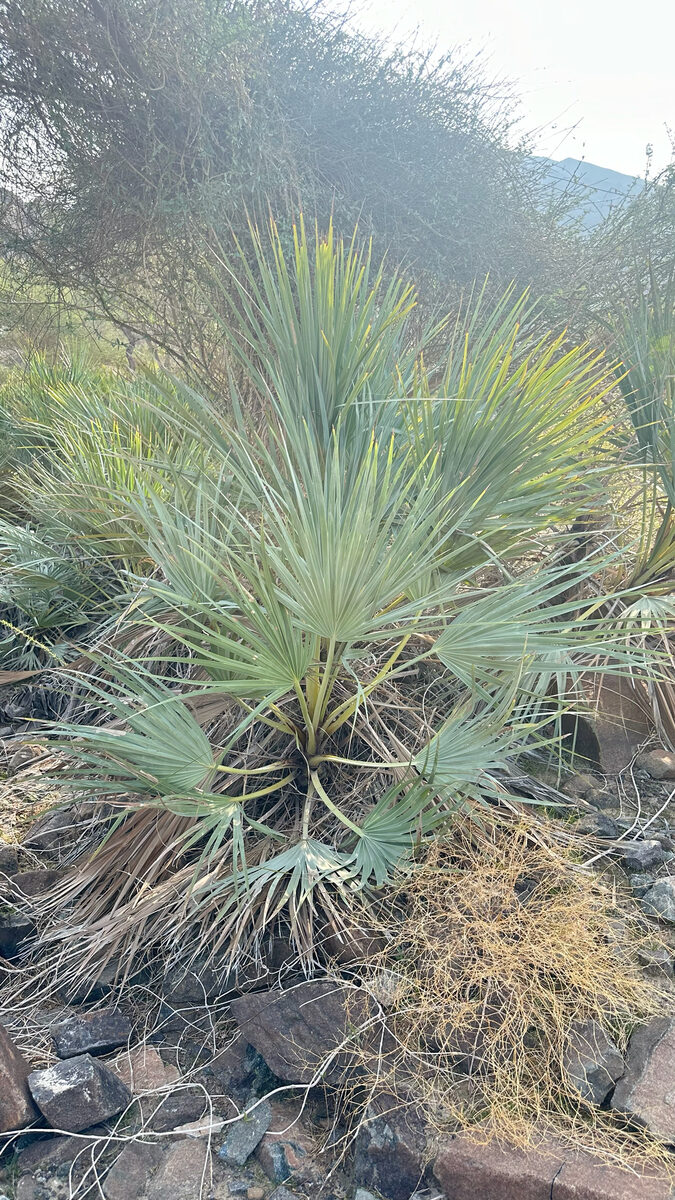
Syagrus cardenasii
Glassman
Corocito, Saro
gbif· cc-by-nc-sa
MBG
gbif· cc-by-nc-sa
MBG
gbif· cc-by-nc-sa
MBG
Description
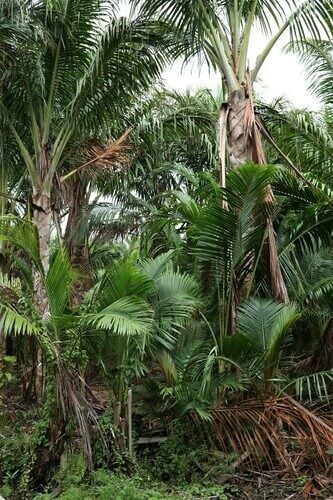
A solitary or clustering palm. It grows to 6 m high. The trunk is 1 m long. The leaves are 2.6 m long. The leaflets are widely spaced and greyish-green. They are stiff and grow at an angle to the stalk. The flowering stalk is short and erect. It is yellow with greenish-brown fruit. The fruit are edible.
Edible Uses
Fruit - raw. The pulp has a flavour like pineapple. The brownish, ovoid fruit can be up to 3cm long and 2cm wide.
Traditional Uses
The fruit tastes like pineapple.
This uses section is brief — help expand it
Distribution
A tropical plant. It grows in dry open forest. It grows between 400 and 1760 m altitude.
Where It Grows
Bolivia, South America,
Cultivation
The plant is liable to tolerate light frosts without damage. Prefers an open, sunny position. Found in the wild mainly in sandy soils. Requires a well-drained soil.
Propagation
Seed - easy to germinate, but difficult to grow on. The plants send down an extremely deep taproot and the new leaf emerges from the shoot at the BOTTOM of the pot leaving no room for any roots as they will be air pruned as soon as they try to form. This palm has subteranean trunk ,which is the reson why , therefore if you grow it from seed use a very, very deep pot or sow direct where you want the plant to grow.
Other Information
The fruit are enjoyed.
Notes
There are about 30-42 Syagrus species. There are also some hybrids. The seeds are most species are edible.
References (7)
- Haynes, J., & McLaughlin, J., 2000, Edible palms and Their Uses. University of Florida Fact sheet MCDE-00-50-1 p 13
- Henderson, A., Galeano, G and Bernal, R., 1995, Field Guide to the Palms of the Americas. Princeton. p 144
- Janick, J. & Paul, R. E. (Eds.), 2008, The Encyclopedia of Fruit & Nuts. CABI p 159
- Johnson, D.V., 1998, Tropical palms. Non-wood Forest products 10. FAO Rome. p 95
- Kermath, B. M., et al, 2014, Food Plants in the Americas: A survey of the domesticated, cultivated and wild plants used for Human food in North, Central and South America and the Caribbean. On line draft. p 841
Show all 7 references Hide references
- NYBG Herbarium "edible"
- Riffle, R.L. & Craft, P., 2003, An Encyclopedia of Cultivated Palms. Timber Press. p 456