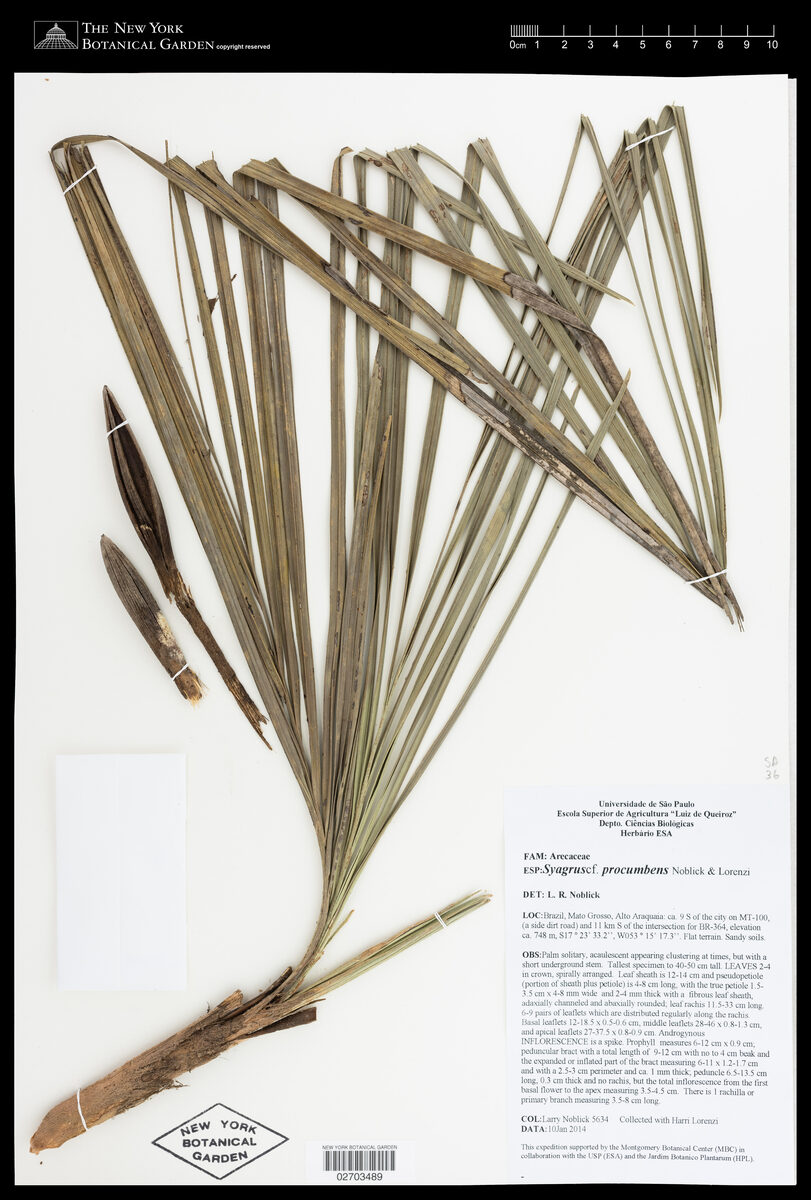
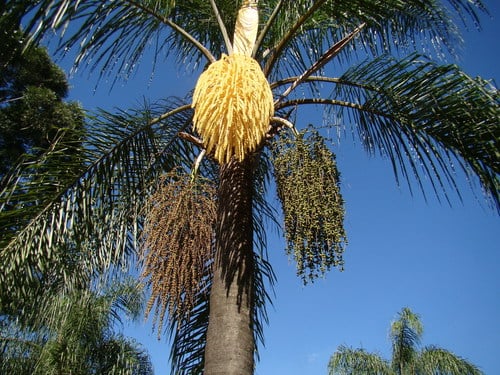
Syagrus botryophora
(Mart.) Mart.
Pati, Patioba
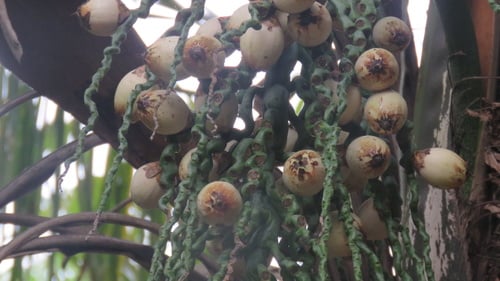
iNaturalist· cc-by-nc-nd
(c) Alex Popovkin, some rights reserved (CC BY-NC-ND), uploaded by Alex Popovkin
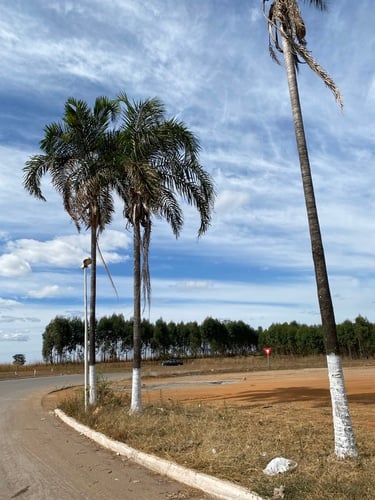
iNaturalist· cc-by-nc-nd
(c) Alex Popovkin, some rights reserved (CC BY-NC-ND), uploaded by Alex Popovkin
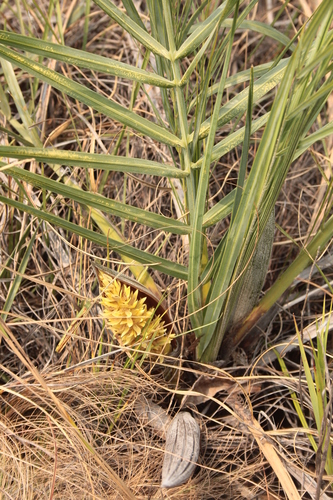
iNaturalist· cc-by-nc-nd
(c) Alex Popovkin, some rights reserved (CC BY-NC-ND), uploaded by Alex Popovkin
Summary
Source: WikipediaSyagrus botryophora is a species of flowering plant in the family Arecaceae. It is endemic to Brazil. It is threatened by habitat loss.
Description
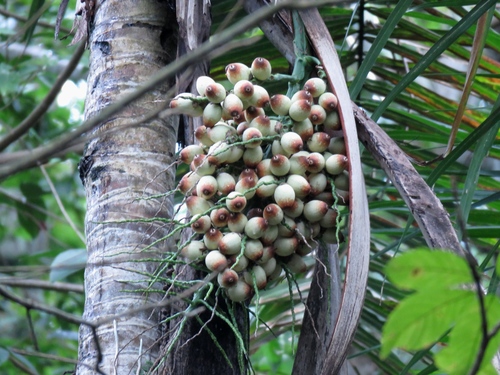
A solitary palm. They are 6-18 m tall. The trunks are 15-25 cm across. There are 10-15 leaves. they are 3 m long. They arch over. There are 100-150 leaflets on each side of the leaf. The leaflets are rigid and point upwards forming a V shape. They are regularly arranged. The flowering stalks are woody. They are very thick and deeply grooved. There are 30-50 flowering branches. The fruit are oval. They are 3.5-4.5 cm long and 2.2-2.5 cm wide. They are white to yellow.
Edible Uses
The seeds are rich in edible oil. The palm hearts can be eaten as a cabbage after treatment to remove bitterness.
Traditional Uses
The seeds are rich in edible oil. The palm hearts are bitter until treated.
This uses section is brief — help expand it
Medicinal Uses
The palm hearts have traditional use despite their natural bitterness until treated.
Distribution
A tropical plant. They grow in lowland rainforest on clayey soils. They grow below 400 m altitude. It grows in coastal areas.
Where It Grows
Brazil, South America,
Cultivation
An easily grown and fast-growing plant that is tolerant of a wide range of conditions so long as there is an adequate supply of moisture to the roots. Established plants are drought resistant. A fast-growing plant.
Other Uses
The stems are used in construction.
Notes
There are about 32 Syagrus species. They grow in South America.
Synonyms
References (6)
- Balick, M.J. and Beck, H.T., (Ed.), 1990, Useful palms of the World. A Synoptic Bibliography. Colombia p 130, 561 (As Cocos botryphora),
- Henderson, A., Galeano, G and Bernal, R., 1995, Field Guide to the Palms of the Americas. Princeton. p 143
- Hist. nat. palm. 3:292, t. 166. 1845 (A. D. d'Orbigny, Voy. Amerique mer. 7(3). Palmiers 133. 1847)
- Janick, J. & Paul, R. E. (Eds.), 2008, The Encyclopedia of Fruit & Nuts. CABI p 159
- Kermath, B. M., et al, 2014, Food Plants in the Americas: A survey of the domesticated, cultivated and wild plants used for Human food in North, Central and South America and the Caribbean. On line draft. p 841
Show all 6 references Hide references
- Oliviera V. B., et al, 2012, Native foods from Brazilian biodiversity as a source of bioactive compounds. Food Research International 48 (2012) 170-179