Orthomene schomburgkii
(Miers) Barneby & Krukoff
Akawesi, Monkey genip
iNaturalist· cc-by-nc-sa
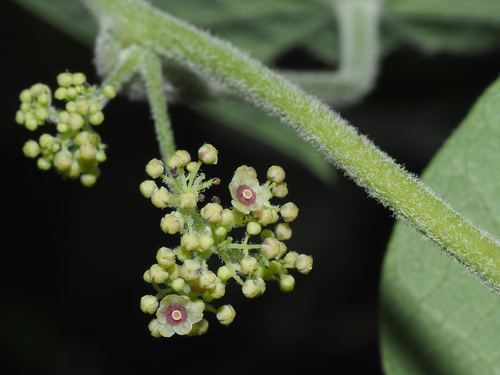
(c) Rich Hoyer, some rights reserved (CC BY-NC-SA), uploaded by Rich Hoyer
iNaturalist· cc-by-nc
(c) Robin Heymans, some rights reserved (CC BY-NC)
iNaturalist· cc-by-nc
(c) Robin Heymans, some rights reserved (CC BY-NC)
Description
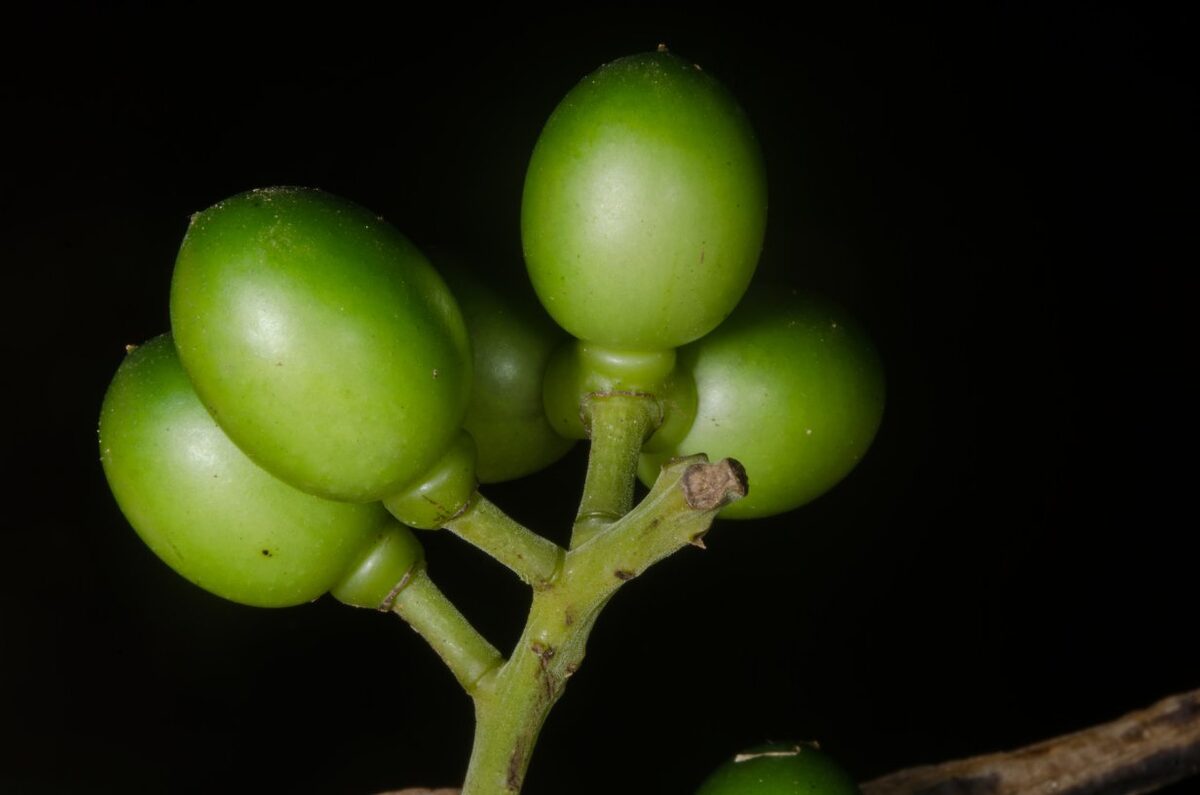
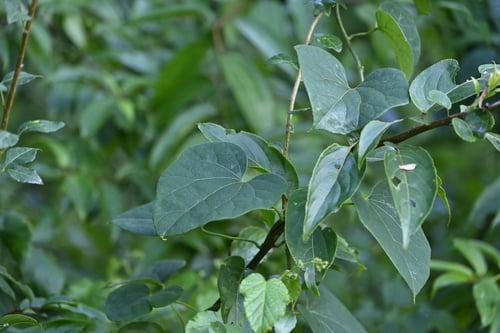
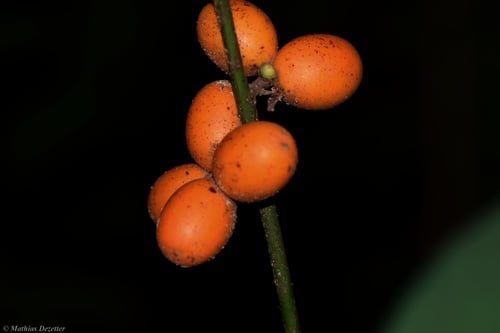
A vine or liana. The leaf stalks are reddish yellow. The flowers occur singly or in small groups in the axils of leaves. The fruit stalk is about 1.1 cm long and slender. There are 1-3 fruit. They are oblong and 2-4 cm long by 1.2 cm wide. They are greenish-yellow to range with white dots. The flesh is edible.
Edible Uses
The sweet fruit pulp is eaten fresh.
Traditional Uses
The fruit pulp is sweet and is eaten.
This uses section is brief — help expand it
Distribution
A tropical plant. It grows along water courses.
Where It Grows
Amazon, Colombia, Ecuador, Guiana, Guianas, Guyana, South America*, Suriname,
Synonyms
Also Known As
Chini kuro waska, Ituri ishi lokoda, Kulatawe wete, Pisimo acahuese, Tama kalemu, Yawati waska
References (5)
- Etkin, N. L. (Ed.), 1994, Eating on the Wild Side, Univ. of Arizona. p 156
- Roa, J. A. G. & Boada, D. S. G., 2018, Fundación para el Fortalecimiento de la Fruticultura y Plantas Alimenticias no Convencionales en Colombia.
- Torre, de la, L., et al, 2008, Enciclopedia de las Plantas Útiles del Ecuador. Herbario QCA. Pontificia Universidad Católica del Ecuador. p 443
- van Andel, T., 2000, Useful plants of Guyana. Non-timber forest products of the North-West District of Guyana. Part 2. A Field Guide. Tropenbos-Guyana Programme. p 291
- van Roosmalen, M.G.M., 1985, Fruits of the Guianan Flora. Utrecht Univ. & Wageningen Univ. p 292