Brasiliopuntia brasiliensis
(Willdenow) A. Berger
Brazilian opuntia, Brazilian prickly pear
iNaturalist· cc-by-nc-sa
(c) Rich Hoyer, some rights reserved (CC BY-NC-SA), uploaded by Rich Hoyer
iNaturalist· cc-by-nc
(c) Juan Diego Döke, some rights reserved (CC BY-NC), uploaded by Juan Diego Döke
iNaturalist· cc-by
(c) Alexandre Magno, some rights reserved (CC BY), uploaded by Alexandre Magno
Description
A cactus. It is a treelike plant which is erect and tapers towards the top. It can be 20 m high. It is 35 cm across. The trunks are well formed and have clusters of spines. There are 2 types of stem segments. The ones in the middle are cylinder shaped and 20-100 cm long. The ends segments are an irregular shape and narrow towards the base. These produce thin leaf-like shoots which fall off. There are 1-3 spines. The flowers are on the tips of the end segments. They open during the day. They are 6 cm long yellow, orange, red or purple. They are 3-4 cm across. There are 1-5 seeds in each fruit.
Edible Uses
Fruit - raw. A trailside snack. The fleshy fruit is very variable in shape and especially in colour. It can range from yellow to orange-red, red, or purple,and can be globose to pear shaped or oblong . It is generally 3 - 4cm in diameter, bearing distinct clusters of dark brown glochids. There are 1 - 5 large seeds per fruit, each seed around 6 - 10mm in diameter,
Medicinal Uses
The unripe fruits are emollient. The ripe fruits are used in the treatment of tuberculosis. The ripe fruits are used in poultices in order to relieve the pain of sciatica. The juice from the roots and cladodes is used as a febrifuge.
Known Hazards
The plant has numerous minutely barbed glochids - these are barbed spines that are usually small to minute and are very sharp and brittle. The glochids are very easily dislodged when the plant is touched and can penetrate the skin where, because of their barbs, they become stuck and are very difficult to see and remove. They can cause considerable irritation and discomfort. Opuntia species can contain quite high levels of oxalic acid, especially in older parts of the plant. Perfectly alright in small quantities, foods containing oxalic acid should not be eaten in large amounts since it can lock-up other nutrients in the food, especially calcium, thus causing mineral deficiencies. The oxalic acid content will be reduced if the plant is cooked. People with a tendency to rheumatism, arthritis, gout, kidney stones or hyperacidity should take especial caution if including this plant in their diet since it can aggravate their condition.
Distribution
A tropical plant. It grows in sand to clay loam. It is in semi-arid areas in full sun. It is tolerant to drought. In Argentina it grows below 500 m above sea level. In XTBG Yunnan.
Where It Grows
Argentina, Asia, Bolivia, Brazil*, China, Indonesia, Paraguay, Peru, SE Asia, South America*, USA,
Cultivation
Plants can be grown by cuttings.
Other Uses
The plant is used as a hedge.
Notes
There are about 250 Opuntia species.
Synonyms
Also Known As
Brasil cacty, Cuija, Kaktus brasil
References (6)
- Altschul, S.V.R., 1973, Drugs and Foods from Little-known Plants. Notes in Harvard University Herbaria. Harvard Univ. Press. Massachusetts. no. 2984 (As Opuntia brasiliensis)
- Anderson, E.F., 2001, The Cactus Family, Timber Press. p 132
- Bortolotto, I. M., et al, 2018, Lista preliminar das plantas alimenticias nativas de Mato Grosso do Sul, Brasil. Iheringia, Serie Botanica, Porto Alegre, 73 (supl.):101-116
- Entwicklungslin. Kakt. 94. 1926
- Sukarya, D. G., (Ed.) 2013, 3,500 Plant Species of the Botanic Gardens of Indonesia. LIPI p 1006
Show all 6 references Hide references
- www.colecionandofrutas.org
More from Cactaceae
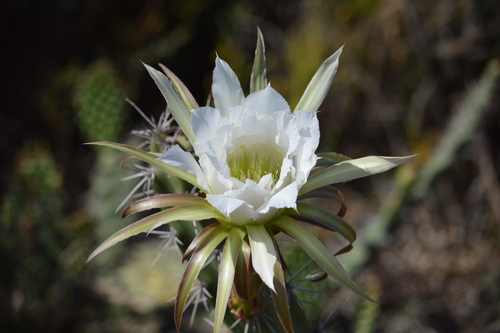
Harrisia bonplandii
Datura, Ajnia
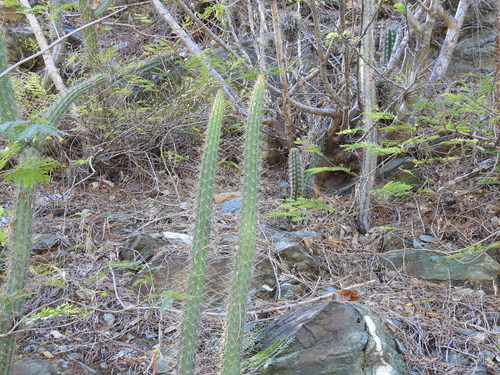
Harrisia eriophora
Fragrant prickly apple
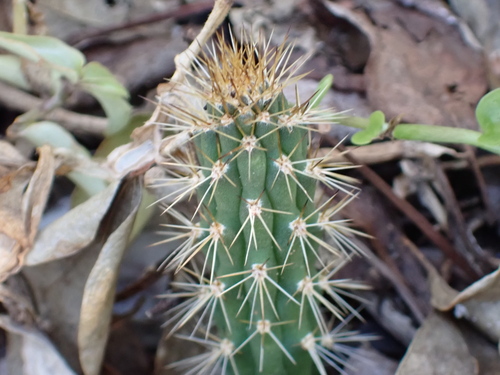
Harrisia fragrans
Caribbean apple cactus, Fragrant prickly-apple
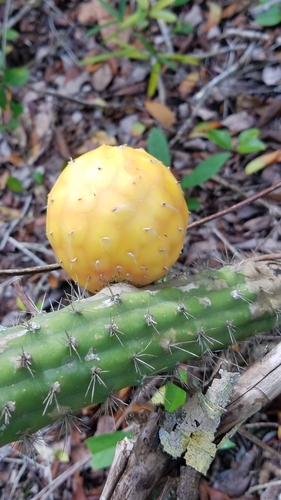
Harrisia simpsonii
Simpson's apple cactus
Helianthocereus atacamensis
Cardon
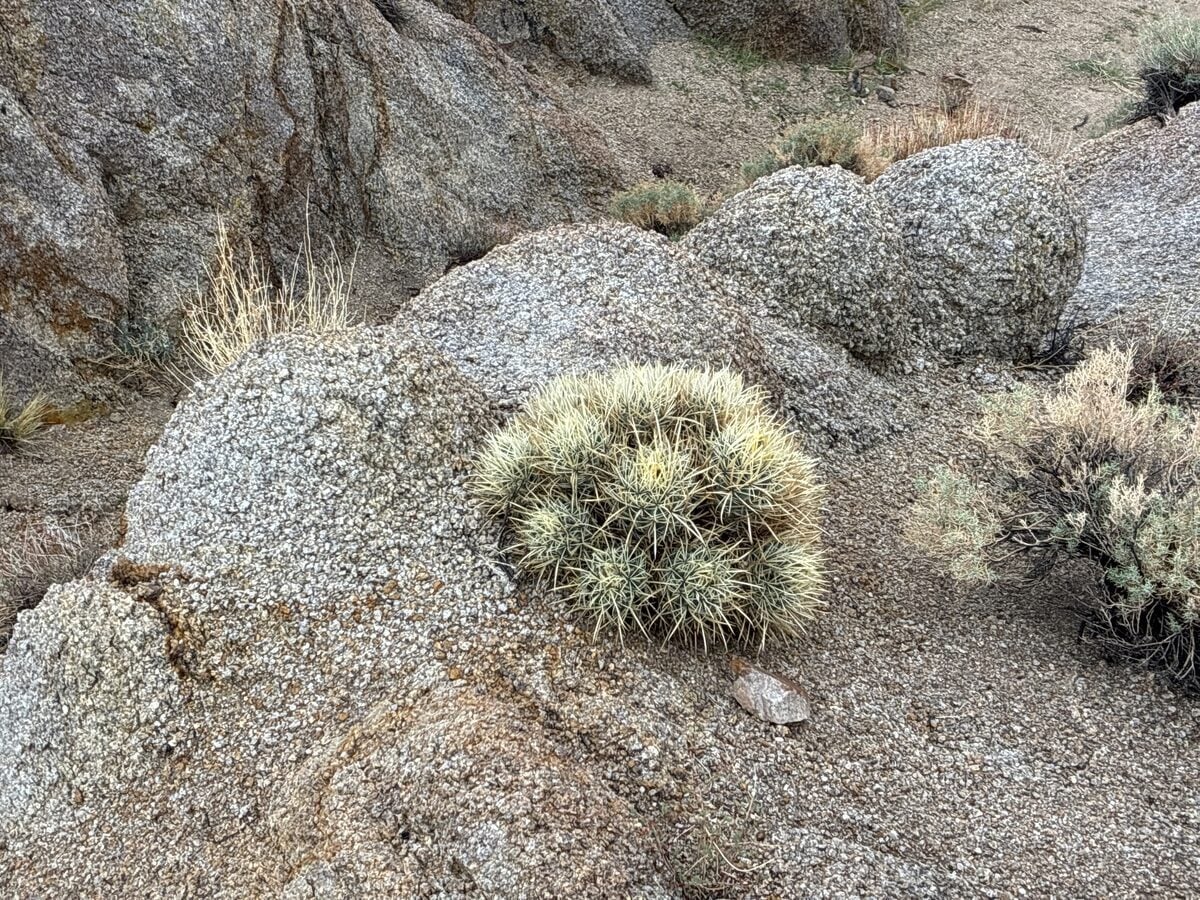
Homalocephala polycephala - (Engelm. & J.M.Bigelow) F.M.Knuth
Triangle Cactus, Cotton-top cactus