Carnegiea gigantea
(Engelm). Britt. & Rose.
Saguaro Cactus, Giant cactus
iNaturalist· cc-by-nc
(c) Marianne Skov Jensen, some rights reserved (CC BY-NC), uploaded by Marianne Skov Jensen
iNaturalist· cc-by-nc
(c) Manuel Magaña, some rights reserved (CC BY-NC)
Summary
Source: WikipediaAn evergreen tree cactus reaching 10m tall and 4m wide, growing slowly, hardy to UK zone 9. The saguaro features a stout single trunk with upright arms and lacks glochids. Flowers appear in late spring to early summer (typically May–June) and are pollinated by bats, birds, and insects. It thrives in light sandy or medium loamy well-drained soils with neutral to mildly alkaline pH, requires full sun, and tolerates drought.
Description
A giant cactus. It is erect and like a tree. It can be 15 m tall. The trunk can be 60 cm across. The plant can weigh many thousands of kilograms. There are 12-24 ribs with spines grouped about 2 cm apart. There are 12 or more spines in a group and they are 2 cm long. In the centre there are 3-6 brown spines which are 7-8 cm long. The flowers are at the ends of the branches. The flowers are white in the centre and green on the outside. They are about 12 cm across and long. The flowers come out at night. The fruit are up to 8 cm long. They have red pulp and shiny black seeds.
Edible Uses
The fruits and seeds are the main edible parts, together providing a high-calorie, high-protein, high-fat food. Fully ripe fruits are red within, with a sticky, sweet pulp surrounding many small, black seeds. The flavour is sweet and fruity, often described as a cross between watermelon and fig, with no bitter or resinous overtones. The seeds are pleasantly nutty with a subtle crunch. Traditional processing methods include eating the raw pulp and seeds, boiling fruits into a thick dark syrup, sun-drying pulp into leathery slabs or cakes, and grinding or pounding seeds into a paste or meal for porridges and bread-like products. Fruits that split open on the plant or ground can be sun-dried to concentrate sugars, though prompt processing and good hygiene are important. Fermented juice or diluted syrup can yield mildly alcoholic beverages used in culturally specific rituals. Fruits are ripe from late June through July, when the outer skin splits longitudinally at the apex to expose the red interior. In Arizona, saguaro is protected by state law; harvesting fruits, ribs, or any part of the plant without appropriate permits or landowner permission is illegal. Many traditional harvest sites and practices are also embedded in Indigenous cultural and ceremonial contexts, and respect for local laws, land ownership, and Indigenous rights is essential.
Traditional Uses
The fruits are processed (i.e. dried, fermented, canned) and stored for year-round use. Seeds, rich in fat, are ground for use as flour and in porridges. The seed can be turned into a paste. The fruit can be used for syrup or made into conserve. The fruit are eaten. The red pulp of the fruit can be eaten fresh. The seeds are ground into flour and used in soups, sweetmeats and as a buttery paste on tortillas. The seed also produce an edible oil.
Medicinal Uses
None Known
Distribution
A subtropical plant. Mature plants will tolerate temperatures down to -7°C. It needs temperatures from 5-30°C. Seedlings need protection from cold. They can tolerate intense heat and sun. They must have acid soil. It suits hardiness zones 9-11. Hobart Botanical Gardens.
Where It Grows
Asia, Australia, Central America, Indonesia, Mexico*, North America, SE Asia, Tasmania, USA*,
Cultivation
It is grown only from seed. The seedlings have few branches and many spines. It can also be grown from cuttings.
Propagation
Saguaros are propagated almost entirely by seed, as they rarely produce vegetative offsets. Seeds germinate best on moist but well-drained mineral or sandy soil, often under partial shade from rocks or nurse shrubs. Natural recruitment is sporadic and closely tied to rainfall patterns and nurse-plant availability. In nursery conditions, sow seeds in shallow trays with sterile cactus mix, kept warm, lightly moist, and partially shaded until seedlings are established.
Other Uses
For the Tohono O'odham and other Sonoran Desert peoples, saguaro fruit harvest marked the beginning of the new year — a pivotal seasonal event combining subsistence and ceremony, embedded in stories, songs, and rules of conduct governing respect for the cactus and the land. Dried saguaro ribs were used for construction and tools, including the long poles used to knock fruit from the crown. Ecologically, saguaro is a keystone species of the Sonoran Desert. Cavities excavated by Gila woodpeckers and gilded flickers provide nesting sites for many bird species. Flowers are pollinated primarily by nocturnal nectar-feeding bats — notably the lesser long-nosed bat and Mexican long-tongued bat — and by diurnal visitors including white-winged doves, other birds, bees, and insects as blooms remain open into the morning. Fruits and seeds are dispersed by birds, mammals, and gravity.
Production
It is slow growing. It grows at 20 cm per year. It may only flower after reaching 3.5 m high. The fruit fall naturally and are dried by the sun and collected. They can be stored. The fruit ripen in one month.
Other Information
Saguaro fruits were a major food staple of the Papago and Pima Indians;
Notes
There is only one Carnegiea species. (It is often shown as scenery in movies.)
Synonyms
Also Known As
Kaktus karnegi, Pitayas, Sage-of-the-desert, Sahuaro
References (38)
- Andersohn, G., 1983, Cacti and Succulents. EP Publishing. p 68
- Anderson, E.F., 2001, The Cactus Family, Timber Press. p 49, 138
- Anderson, M., 2002, The World Encyclopedia of Cacti and Succulents. Hermes House, New York. p 55.
- Beckstrom-Sternberg, Stephen M., and James A. Duke. "The Foodplant Database." http://probe.nalusda.gov:8300/cgi-bin/browse/foodplantdb.(ACEDB version 4.0 - data version July 1994)
- Benson, L., 1969, The Native Cacti of California. Stanford University Press. p 173 (As Cereus giganteus)
Show all 38 references Hide references
- Bircher, A. G. & Bircher, W. H., 2000, Encyclopedia of Fruit Trees and Edible Flowering Plants in Egypt and the Subtropics. AUC Press. p 84
- Brickell, C. (Ed.), 1999, The Royal Horticultural Society A-Z Encyclopedia of Garden Plants. Convent Garden Books. p 231
- Chapman, P and Martin, M., 1989, Exotic Cacti, HP Books p 57
- Cundall, P., (ed.), 2004, Gardening Australia: flora: the gardener's bible. ABC Books. p 332
- Darley, J.J., 1993, Know and Enjoy Tropical Fruit. P & S Publishers. p 19
- Etherington, K., & Imwold, D., (Eds), 2001, Botanica's Trees & Shrubs. The illustrated A-Z of over 8500 trees and shrubs. Random House, Australia. p 182
- Etkin, N.L. (Ed.), 1994, Eating on the Wild Side, Univ. of Arizona. p 70
- Facciola, S., 1998, Cornucopia 2: a Source Book of Edible Plants. Kampong Publications, p 63
- Fouqué, A. 1972. Espèces fruitières d'Amérique tropicale. Institut français de recherches fruitierès outre-mer
- Hedrick, U.P., 1919, (Ed.), Sturtevant's edible plants of the world. p 180
- Heywood, V.H., Brummitt, R.K., Culham, A., and Seberg, O. 2007, Flowering Plant Families of the World. Royal Botanical Gardens, Kew. p 77
- Hibbert, M., 2002, The Aussie Plant Finder 2002, Florilegium. p 60
- https://www.fireflyforest.com/flowers/category/edible-plants/ Edible Plants – Southeastern Arizona Wildflowers and Plants
- Huxley, A. (Ed.), 1977, The Encyclopedia of the Plant Kingdom. Chartweil Books. p 71, 160
- Innes, C. and Glass, C., 1997, The Illustrated Encyclopedia of Cacti. Sandstone Books. p 38
- J. New York Bot. Gard. 9:188, t. 32. 1908
- Kermath, B. M., et al, 2014, Food Plants in the Americas: A survey of the domesticated, cultivated and wild plants used for Human food in North, Central and South America and the Caribbean. On line draft. p 186
- Kew, Plants of the World on Line
- Kiple, K.F. & Ornelas, K.C., (eds), 2000, The Cambridge World History of Food. CUP p 1836
- Kiple, K.F. & Ornelas, K.C., (eds), 2000, The Cambridge World History of Food. CUP p 1847 (As Cereus giganteus)
- Martin, F. W., et al, 1987, Perennial Edible Fruits of the Tropics. USDA Handbook 642 p 84
- Morley, B. & Everard, B., 1970, Wild Flowers of the World. Ebury press. Plate 175
- Pinkava, D. J. 1995. Cactaceae, part 1. Cactus Family: the cereoid cactus. J. Arizona-Nevada Acad. Sci. 29:8.
- Plant Ecology - Reviews of Research. 1955, Arid Zone Research VI. UNESCO p 97
- Saunders, C.F., 1948, Edible and Useful Wild Plants. Dover. New York. p 110 (As Cereus giganteus)
- Segura, S. et al, 2018, The edible fruit species in Mexico. Genet Resour Crop Evol (2018) 65:1767–1793
- Sukarya, D. G., (Ed.) 2013, 3,500 Plant Species of the Botanic Gardens of Indonesia. LIPI p 1006
- Subik, R., & Kunte, L., 2003, The Complete Encyclopedia of Cacti. Rebo publishers. p 13
- Tozer, F., 2007, The Uses of Wild Plants. Green Man Publishing. p 61
- USDA, ARS, National Genetic Resources Program. Germplasm Resources Information Network - (GRIN). [Online Database] National Germplasm Resources Laboratory, Beltsville, Maryland. Available: www.ars-grin.gov/cgi-bin/npgs/html/econ.pl (10 April 2000)
- Wiersema, J. H. & Leon, B., 2013, World Economic Plants. A Standard Reference CRC Press. 2nd Ed. p 145
- World Checklist of Useful Plant Species 2020. Royal Botanic Gardens, Kew
- www.desert-tropicals.com
More from Cactaceae
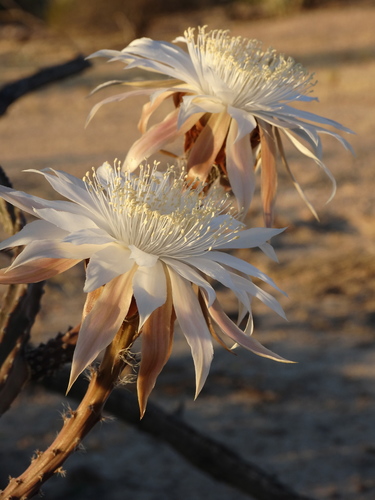
Peniocereus greggii
Sweet potato cactus, Night-blooming cereus
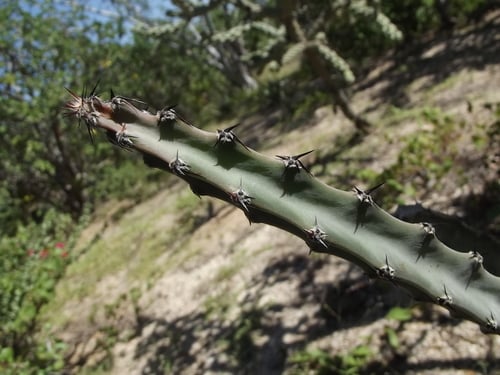
Peniocereus johnstonii
Matraca, Pitayita, Saramatraca
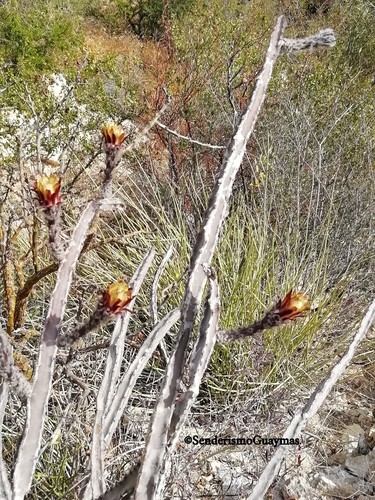
Peniocereus marianus
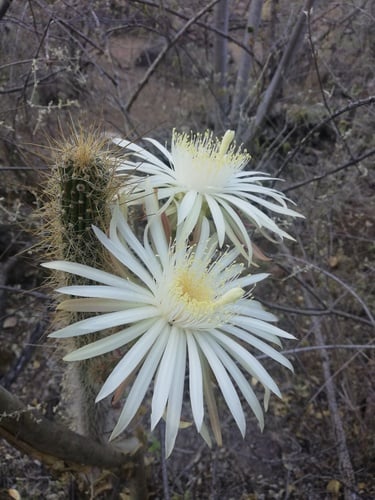
Peniocereus serpentinus
Mexican night-blooming cereus, Serpent cactus, Snake cactus
Peniocereus striatus
Gearstem cactus, Dahlia-root cereus
Peniocereus viperinus