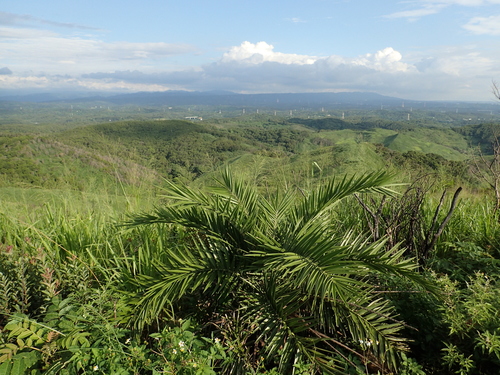
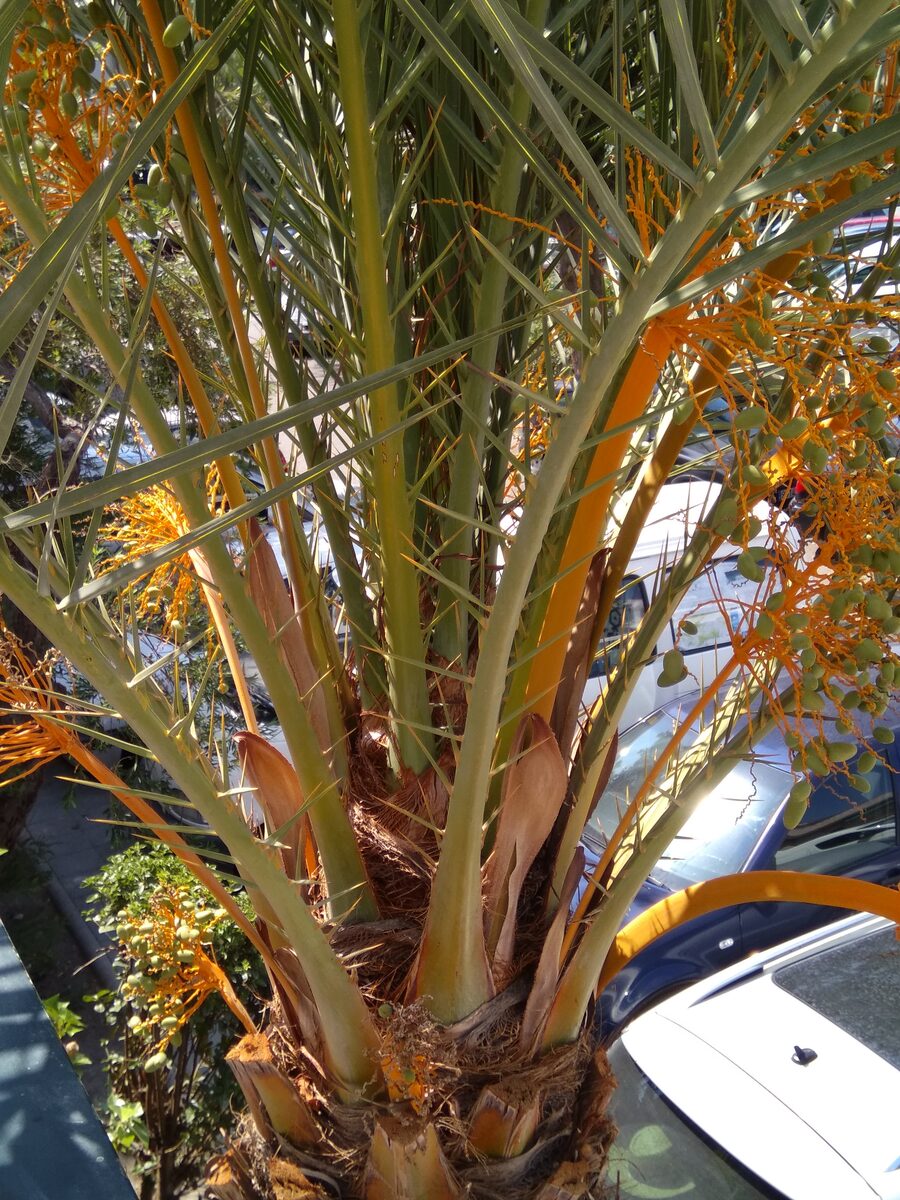
Syagrus romanzoffiana
(Cham.) Glassman
Queen palm
iNaturalist· cc-by
(c) mauro halpern, some rights reserved (CC BY)
iNaturalist· cc-by-nc
(c) eduscastilho, some rights reserved (CC BY-NC)
iNaturalist· cc-by-nc
(c) eduscastilho, some rights reserved (CC BY-NC)
Summary
Source: WikipediaSyagrus romanzoffiana, the queen palm, cocos palm or Jerivá, is a palm native to South America, introduced throughout the world as a popular ornamental garden tree. S. romanzoffiana is a medium-sized palm, quickly reaching maturity at a height of up to 15 m (49 ft) tall, with pinnate leaves having as many as 494 pinnae (leaflets), although more typically around 300, each pinna being around 50 centimetres (18 in) in length and 3–5 centimetres (1–2 in) in width.
Description
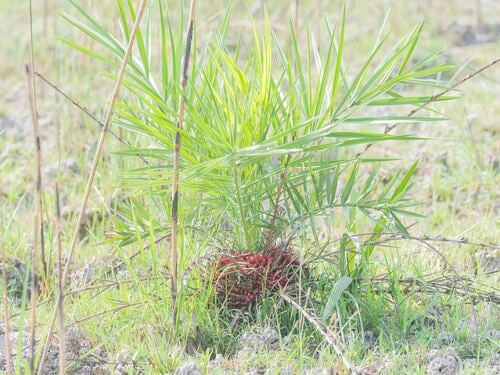
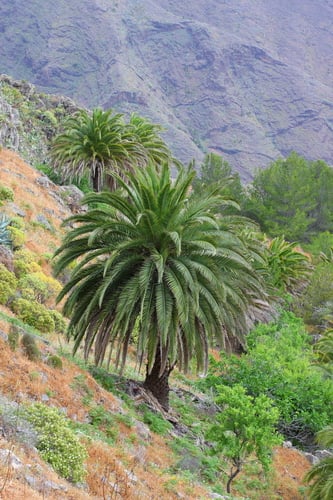
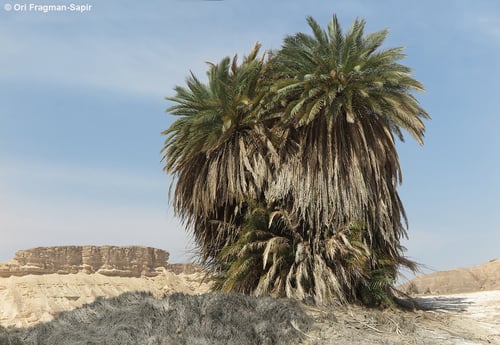
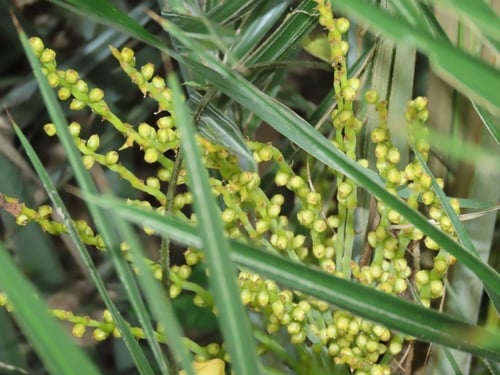
A tall robust palm. It has a single stem and feather leaves. It has a wide spreading crown due to dark green arching fronds but their is no crownshaft. Often there are a number of dead fronds hanging from the trunk. The trunk is grey and grows to 20 m tall and 30-60 cm across. It is fairly straight. It has widely spaced leaf scars. The leaves are 3-5 m long. The leaf stalk is about 1 m long. There are many crowded leaflets often arranged in small groups and attached at different angles. The base of the leaf has a shredded edge around the trunk. The leaflets are 1 m long and 3 cm wide. They have a long pointed tip. The flowering stalk comes from among the leaf bases. The flowering stalk has many branches. It is 1-2 m long and many slender flower producing small branches. Several flowering stalks are often present at the same time. Two pointed woody bracts surround the flowering stalk. The flowers are yellow and male flowers 8-10 mm long while female flowers are 5 mm long. Both sexes occur on the one stalk. Fruit are crowded in long hanging masses. They are green but turn yellow when ripe. They are 2.5-3 cm long and 2-3 cm wide. The fruit are edible. Seeds are round and have a fleshy layer around them. There are named varieties and also various hybrids.
Edible Uses
The fruit is eaten raw and is edible when ripe (turning yellow). The young buds are preserved in oil or vinegar and eaten as a vegetable after treatment to remove bitterness. The trunk yields starch and the kernels yield an oil.
Traditional Uses
The fruit is eaten raw. The young buds are preserved in oil or vinegar and eaten as a vegetable. They are bitter until treated. The trunk yields starch. The kernels yield an oil. Caution: The unripe seed may be toxic.
Medicinal Uses
The fruits, when macerated in wine or made into a syrup, are said to be an effective pectoral.
Known Hazards
The unripe seed may be toxic.
Distribution
They do best in the tropics and subtropics but will grown in warm temperate regions. They often grow naturally along river banks. They will tolerate salt laden winds. In alkaline soils trees can suffer from iron and manganese deficiency. It needs temperatures above 13°C. In Argentina it grows below 500 m above sea level. It suits hardiness zones 9-12.
Where It Grows
Africa, Antigua and Barbuda, Argentina*, Asia, Australia, Bolivia, Brazil*, Central America, Colombia, East Africa, Hawaii, India, Indonesia, Kenya, Mexico, Myanmar, New Zealand, North America, Pacific, Paraguay, SE Asia, Slovenia, South America, Uruguay, USA, Venezuela,
Cultivation
Plants are grown from fresh seed. The fruit can be used as seed. These germinate irregularly over 2 months. They are easy to transplant.
Propagation
Seed - fresh seed germinates easily. Pre-soak stored seed for 24 hours in warm water and sow in containers. Germination usually takes place in about 2 months. Seedlings develop deep-running roots and early growth is rapid so long as the roots are given room to develop. It is, therefore, best to plant out the seedlings in the shade of other plants as soon as they are about 10cm tall.
Other Uses
The leaves, or the fibres obtained from them, are used for making baskets, hats etc. The wood is moderately heavy, hard, very durable in salt water. It is used for various constructional purposes, as stepping boards over swampy areas, footbridges and rustic piers in salt water. The trunks are frequently hollowed out to make water pipes.
Production
It is fast growing.
Notes
There are about 30 Syagrus species.
Synonyms
Also Known As
Chiriva, Coqueiro, Coquinho, Giriba palm, Guariroba, Jeriba, Jeriva, Kraljičina palma, Palma cambray, Palma pindo, Palma reina, Pindo, Thinbaw-ohn, Thinbaw-on
References (41)
- Ambasta S.P. (Ed.), 2000, The Useful Plants of India. CSIR India. p 50 (As Arecastrum romanzoffianum)
- Balick, M.J. and Beck, H.T., (Ed.), 1990, Useful palms of the World. A Synoptic Bibliography. Colombia p 130, 203, 505, 557 (As Arecastrum romanzoffianum),
- Brickell, C. (Ed.), 1999, The Royal Horticultural Society A-Z Encyclopedia of Garden Plants. Convent Garden Books. p 989
- Bodkin, F., 1991, Encyclopedia Botanica. Cornstalk publishing, p 98
- Bortolotto, I. M., et al, 2018, Lista preliminar das plantas alimenticias nativas de Mato Grosso do Sul, Brasil. Iheringia, Serie Botanica, Porto Alegre, 73 (supl.):101-116
Show all 41 references Hide references
- Brack, P., et al, 2020, Frutas nativas do Rio Grande do Sul, Brasil: riqueza e potencial alimentício. Native fruits of Rio Grande do Sul, Brazil: richness and potential as food. Rodriguésia 71: e03102018.
- Cronin, L., 1989, The Concise Australian Flora. Reed. p 216
- Cronin, L., 2000, Australian Palms, Ferns, Cycads and Pandans. Cronin Publications. p
- Cundall, P., (ed.), 2004, Gardening Australia: flora: the gardener's bible. ABC Books. p 1384
- Dharani, N., 2002, Field Guide to common Trees & Shrubs of East Africa. Struik. p 295
- Fieldiana, Bot. 31:382, t. 10, 14. 1968
- Gibbons, M., 1993, Palms. Compact study Guide and Identifier. Sandstone. p 72
- Gibbons, M., 2003, A pocket guide to Palms. Chartwell Books. p 203
- Gouldstone, S., 1978, Australian and New Zealand Guide to food bearing plants. Books for Pleasure. p 39 (As Arcustrum romanizofficinum)
- Haynes, J., & McLaughlin, J., 2000, Edible palms and Their Uses. University of Florida Fact sheet MCDE-00-50-1 p 13
- Hearne, D.A., & Rance, S.J., 1975, Trees for Darwin and Northern Australia. AGPS, Canberra p 24
- Henderson, A., Galeano, G and Bernal, R., 1995, Field Guide to the Palms of the Americas. Princeton. p 148
- Hibbert, M., 2002, The Aussie Plant Finder 2002, Florilegium. p 295
- http://www.botanic-gardens-ljubljana.com/en/plants
- INFOODSUpdatedFGU-list.xls
- Janick, J. & Paul, R. E. (Eds.), 2008, The Encyclopedia of Fruit & Nuts. CABI p 159
- Johnson, D.V., 1998, Tropical palms. Non-wood Forest products 10. FAO Rome. p 95
- Jones, D.L., 1994, Palms throughout the World. Smithtonian Institution, Washington. p 57, 361
- Kermath, B. M., et al, 2014, Food Plants in the Americas: A survey of the domesticated, cultivated and wild plants used for Human food in North, Central and South America and the Caribbean. On line draft. p 844
- Kinupp, V. F., 2007, Plantas alimenticias nao-convencionais da regiao metropolitana de Porto Alegre, RS, Brazil p 63
- Kinupp, V. F. & Bergman, I., 2008, Protein and minerals of native species, potential vegetables and fruits. Cienc.Tecnol. Aliment. Vol. 28 No. 4 Campinas Oct/Dec.
- Llamas, K.A., 2003, Tropical Flowering Plants. Timber Press. p 119
- Lord, E.E., & Willis, J.H., 1999, Shrubs and Trees for Australian gardens. Lothian. p 92
- Lorenzi, H., 2002, Brazilian Trees. A Guide to the Identification and Cultivation of Brazilian Native Trees. Vol. 01 Nova Odessa, SP, Instituto Plantarum p 305
- Lorenzi, H., Bacher, L., Lacerda, M. & Sartori, S., 2006, Brazilian Fruits & Cultivated Exotics. Sao Paulo, Instituto Plantarum de Estuados da Flora Ltda. p 95
- Lyle, S., 2006, Discovering fruit and nuts. Land Links. p 309
- Martins, R. C., et al, 2014, Use and Diversity of Palm (Arecaceae) Resources in Central Western Brazil. The Scientific World Journal.. Volume 2014, Article ID 942043
- Recher, P, 2001, Fruit Spirit Botanical Gardens Plant Index. www.nrg.com.au/~recher/ seedlist.html p 7
- Riffle, R.L. & Craft, P., 2003, An Encyclopedia of Cultivated Palms. Timber Press. p 459
- Roa, J. A. G. & Boada, D. S. G., 2018, Fundación para el Fortalecimiento de la Fruticultura y Plantas Alimenticias no Convencionales en Colombia.
- Scarpa, G. F., 2009, Wild food plants used by the indigenous peoples of South American Gran Chaco: A general synopsis and intercultural comparison. Journal of Applied Botany and Food Quality 83:90-101
- Segura, S. et al, 2018, The edible fruit species in Mexico. Genet Resour Crop Evol (2018) 65:1767–1793 (As Arecastrum romanzoffianum)
- Staples, G.W. and Herbst, D.R., 2005, A tropical Garden Flora. Bishop Museum Press, Honolulu, Hawaii. p 628
- Sukarya, D. G., (Ed.) 2013, 3,500 Plant Species of the Botanic Gardens of Indonesia. LIPI p 820
- Wong, M., 2006, Edible Plants for Hawai'i Landscapes. College of Tropical Agriculture and Human Resources. Univ. of Hawai'i
- www.colecionandofrutas.org