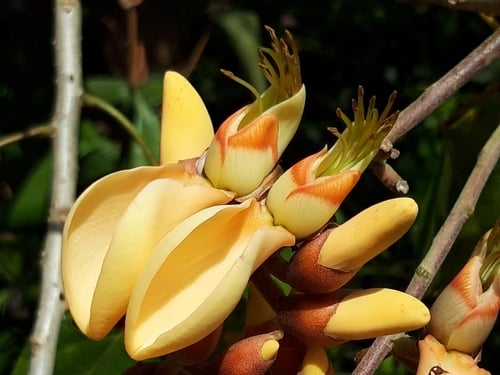
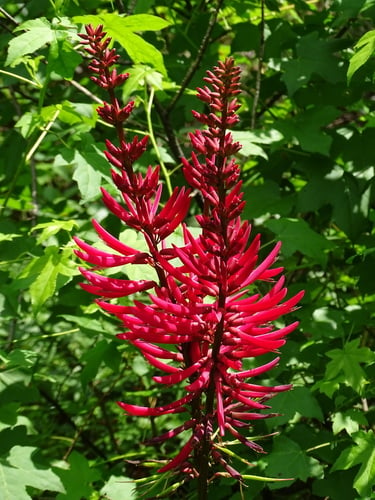
Ormocarpum kirkii
S. Moore
Curled caterpillar bush, Caterpillar-pod
iNaturalist· cc-by-nc
(c) pietersen_darren, some rights reserved (CC BY-NC), uploaded by pietersen_darren
iNaturalist· cc-by-nc
(c) tjeerd, some rights reserved (CC BY-NC)
Description
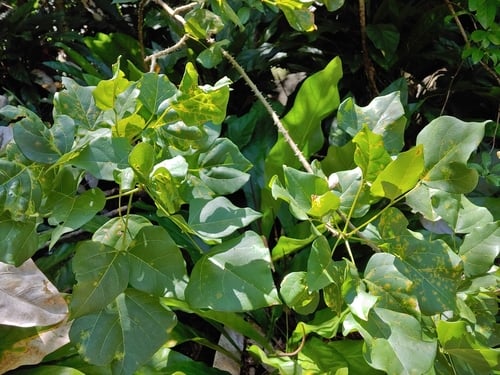
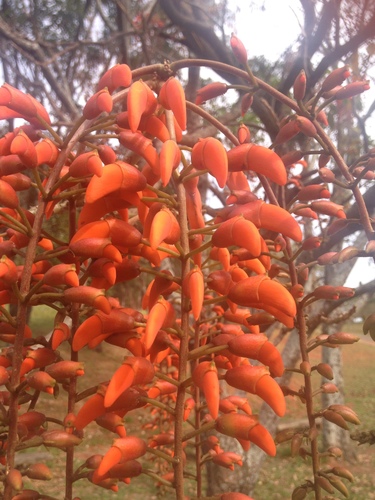
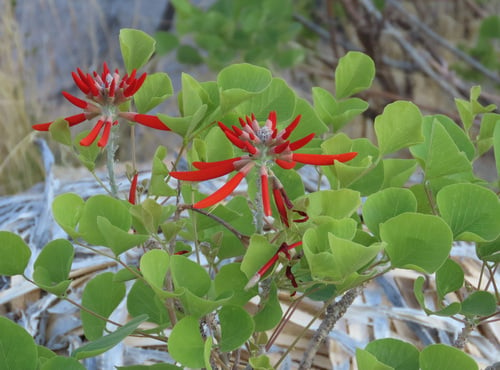
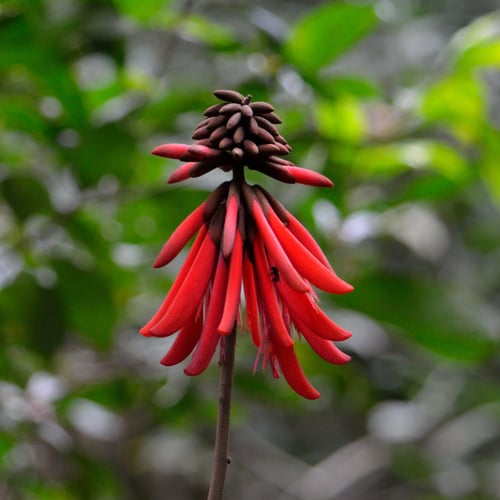
A shrub or small tree. It grows 2-9 m tall. The small branches are white. The bark is rough, corky and has furrows along it. The leaves are single and spread out along the young shoots. There are 7-13 leaflets. They are 6-12 mm long by 2-7 mm wide. The flowers are in groups of 1-3. The fruit is a coiled pod. It usually has one seed.
Edible Uses
The dried leaves are pounded and sieved. This powder is stirred into warm water, which is then boiled while stirring to form a thick paste, which may then be mixed with pounded groundnuts and eaten with a staple food such as ugali or rice.
Medicinal Uses
Ash from the plant is rubbed onto swollen parts of the body after scarification in order to reduce oedema and relieve allergic conditions. The roots are used to treat rheumatism and stomach problems. The crushed leaves are rubbed on to the forehead to treat headache.
Distribution
It is a tropical plant. It grows in woodland. It grows between 100-1,500 m altitude. It can grow in stony or sandy soil. It cannot tolerate frost. It is drought tolerant. It can grow in arid places.
Where It Grows
Africa, Central Africa, Congo DR, East Africa, Kenya, Malawi, Mozambique, Namibia, Somalia, South Africa, Southern Africa, Tanzania, Zambia, Zimbabwe,
Cultivation
This species possibly hybridizes with O. Trichocarpum in the wild.
Other Uses
The wood is used for walking sticks and poles. The wood is used for fuel.
Other Information
Leaves are sold in local markets.
Synonyms
Also Known As
Chitadzi, Engokiki, Esekilianjoi, Hombo-kiumbu, Kapulula-mbuzi, Kigoje, Kirumbu, Kisogo, Kitazi, Kitimbwi kidala, Kiumbu, M'ghame, Matsiayi, Mopurrunha, Mtute, Mukuvale, Munni, Mupotanzou, Musinda, Muthingii, Muzisinde, Natsiimo, Tuuti, Uwi
References (14)
- East African Herbarium records, 1981,
- Fowler, D. G., 2007, Zambian Plants: Their Vernacular Names and Uses. Kew. p 38
- Grubben, G. J. H. and Denton, O. A. (eds), 2004, Plant Resources of Tropical Africa 2. Vegetables. PROTA, Wageningen, Netherlands. p 563
- Harkonen, M. & Vainio-Mattila, K., 1998, Some examples of Natural Products in the Eastern Arc Mountains. Journal of East African Natural History 87:265-278
- Luoga, E. J., et al, 2000, Differential Utilization and Ethnobotany of Trees in Kitulanghalo Forest Reserve and Surrounding Communal Lands, Eastern Tanzania. Economic Botany, Vol. 54, No. 3, pp. 328-343
Show all 14 references Hide references
- Mutie, F. G., 2020, Conservation of Wild Food Plants and Their Potential for Combatting Food Insecurity in Kenya as Exemplified by the Drylands of Kitui County. Plants 2020, 9, 1017
- Mutie, F. M., et al, 2023, Important Medicinal and Food Taxa (Orders and Families) in Kenya, Based on Three Quantitative Approaches. Plants 2023, 12, 1145
- Peters, C. R., O'Brien, E. M., and Drummond, R.B., 1992, Edible Wild plants of Sub-saharan Africa. Kew. p 136
- Reis, S. V. and Lipp, F. L., 1982, New Plant Sources for Drugs and Foods from the New York Botanical Garden herbarium. Harvard. p 137
- Royal Botanic Gardens, Kew (1999). Survey of Economic Plants for Arid and Semi-Arid Lands (SEPASAL) database. Published on the Internet; http://www.rbgkew.org.uk/ceb/sepasal/internet [Accessed 29th April 2011]
- Ruffo, C. K., Birnie, A. & Tengnas, B., 2002, Edible Wild Plants of Tanzania. RELMA p 502
- Vainio-Mattila, K., 2000, Wild vegetables used by the Sambaa in the Usumbara Mountains, NE Tanzania. Ann. Bot. Fennici 37:57-67
- World Checklist of Useful Plant Species 2020. Royal Botanic Gardens, Kew p 322
- www.zimbabweflora.co.zw 2011