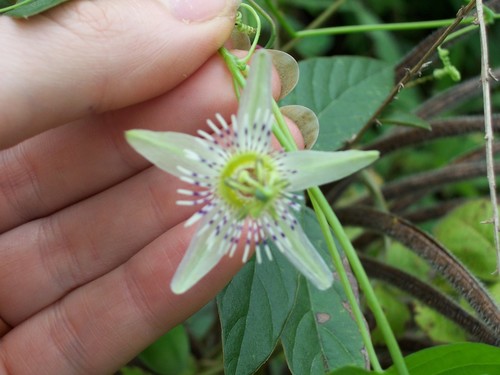
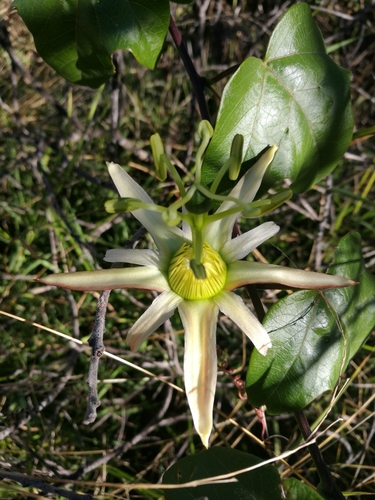
Passiflora ampullacea
(Mast.) Harms
Cream passionfruit
iNaturalist· cc-by-nc-nd
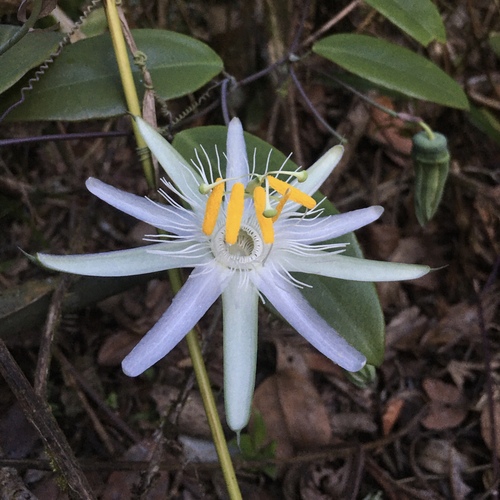
(c) Kabir Montesinos, some rights reserved (CC BY-NC-ND), uploaded by Kabir Montesinos
iNaturalist· cc-by-nc-sa
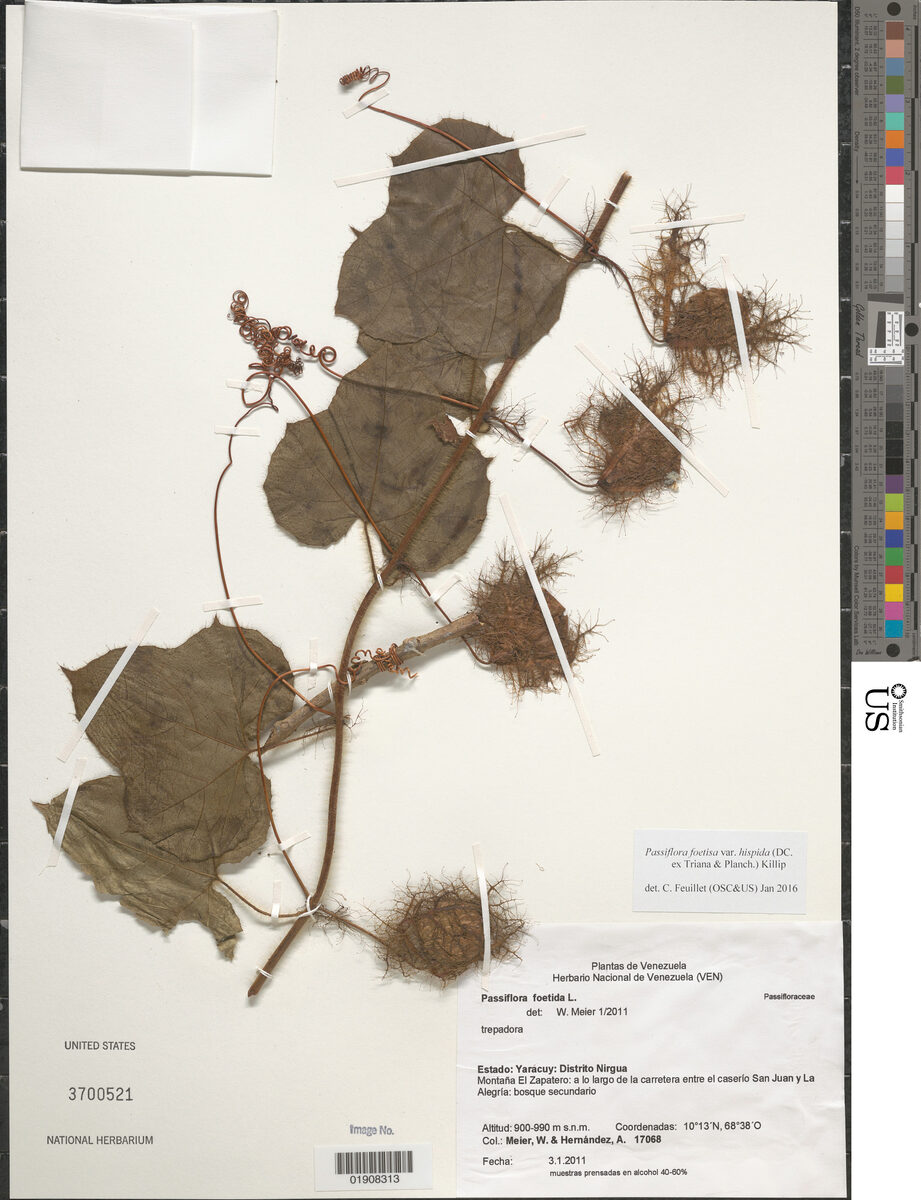
(c) Smithsonian Institution, National Museum of Natural History, Department of Botany, some rights reserved (CC BY-NC-SA)
iNaturalist· cc-by-nc-sa
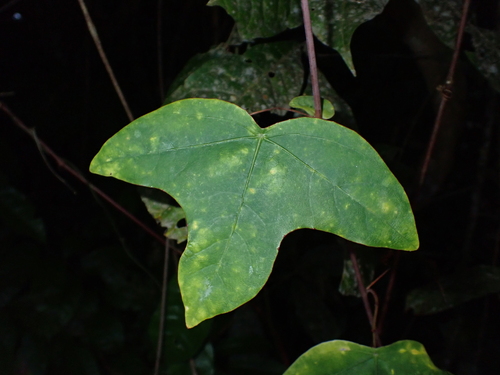
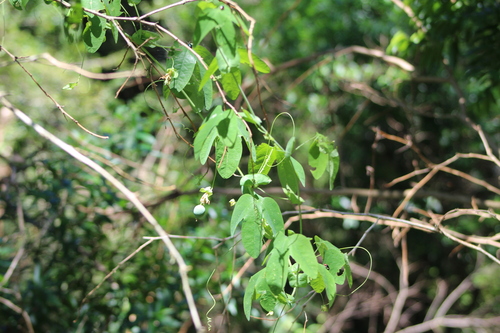
(c) Smithsonian Institution, National Museum of Natural History, Department of Botany, some rights reserved (CC BY-NC-SA)
Summary
Source: WikipediaPassiflora ampullacea is a species of flowering plant in the family Passifloraceae. The vine is endemic to Ecuador. It is an IUCN Red List threatened species.
Description
A climbing shrub. The stems scramble over the ground and climb other plants using tendrils. The fruit are oval and 6 cm long by 3.5 cm wide.
This description is brief — help expand it
Edible Uses
Fruit - raw. Tasty. The ovoid fruit is about 6cm long and 3.5cm in diameter. The flowers reportedly are eaten 'prepared'. (perhaps cooked?).
Traditional Uses
The fruit are eaten raw.
This uses section is brief — help expand it
Medicinal Uses
The leaves and roots of some, if not all, members of this genus contain a substance called 'passiflorina' which has similaritiesr to morphine and is an effective tranquilizer. We have no specific information for this species but many species are used in herbal infusions to calm the nerves and help bring about a restful sleep. The leaves of many species are also considered to be anthelmintic, antihysteric and diaphoretic. They are used in Brazil to combat intermittent fevers, cutaneous inflammations, and erysipelas.
Distribution
A tropical plant. It grows in wet Andean vegetation at high altitudes. It grows between 2,600-3,330 m above sea level. It needs well-drained soils.
Where It Grows
Ecuador*, Peru, South America,
Cultivation
A plant of the moist tropics where it is found at higher elevations of 2,600 - 3,330 metres. Passiflora species generally grow best in a sheltered, sunny position or in dappled shade. Most species are found in the wild in moist but well-drained soils, generally of a lighter texture, and will often flower and fruit more heavily if the soil fertility is low. They often develop deep roots and can be moderately tolerant of dry spells. Most Passiflora species prefer a neutral to slightly alkaline soil, growing best where the pH is around 6. 5 - 7.5.
Propagation
Seed - best sown as soon as it is ripe along with the pulp which will help break down the seed coat and speed up germination. Stored seed should be soaked for 24 hours in warm water and germination time can be reduced if the seed is then mixed with the juice of a fresh passion fruit (of any species). Even so, it can take 12 months for stored seed to germinate. Place the seed tray in a shady position, maintaining a temperature around 19 - 24°c. Prick the seedlings out into individual containers as soon as they are large enough to handle and plant out when large enough. Cuttings of young shoots, taken at the nodes. The cuttings root best in a neutral to slightly acid compost, but 100% sharp sand also produces good results. Cuttings of fully mature wood taken at a node. They can take 3 months. Layering. Very easy. Air layering.
Other Information
The fruit are appreciated locally and also cultivated. The fruit are sold in local markets.
Synonyms
Also Known As
Gulin, Guillan
References (5)
- Facciola, S., 1998, Cornucopia 2: a Source Book of Edible Plants. Kampong Publications, p 166
- Fern, K., 2012, Tropical Species Database http://theferns.info/tropical/
- National Research Council, 1989, Lost crops of the Incas: little-known plants of the Andes with promise for worldwide cultivation. National Academy Press, Washington DC, U.S.A.
- Ulmer, T., & MacDougal, J.M., 2004, Passiflora Passionflowers of the World. Timber Press. p 69
- Vanderplanck, J., 1996, Passion flowers - Second edition. Massachusetts Institute of Technology Press. Cambridge, Massachusetts, USA.