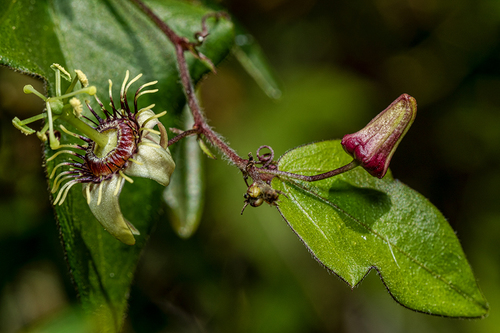
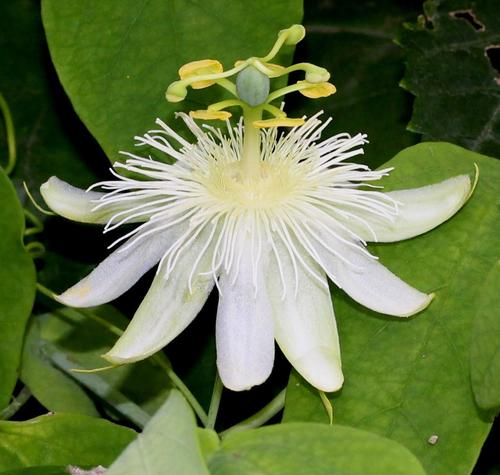
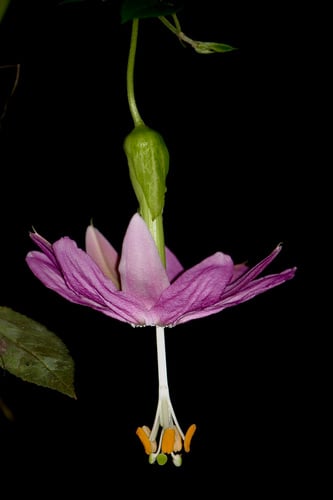
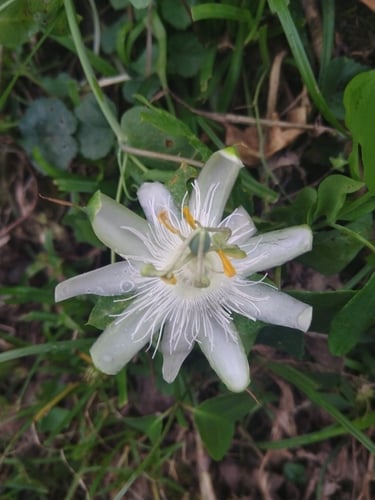
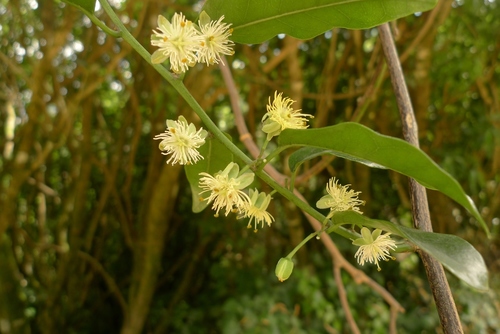
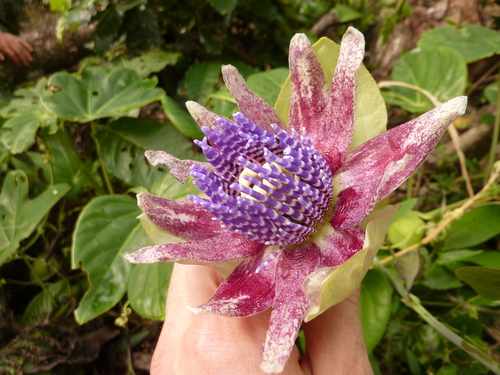
Passiflora foetida var. gossypiifolia
(Desv. ex Ham.) Mast.
gbif· cc-by-nc-sa
MBG
gbif· cc0
Gibran Morales C.
gbif· cc0
Conveyor Belt
Summary
Source: WikipediaPassiflora foetida (common names: stinking passionflower, wild maracuja, bush passion fruit, wild water lemon, stoneflower, love-in-a-mist, or running pop) is a species of passion flower that is native to the southwestern United States (southern Texas and Arizona), Mexico, the Caribbean, Central America, and much of South America. It has been introduced to tropical regions around the world, such as Southeast Asia, South Asia, Hawaii, Africa, and The Maldives. It is a creeping vine like other members of the genus, and yields an edible fruit. The specific epithet, foetida, means "stinking" in Latin and refers to the strong aroma emitted by damaged foliage. This passion flower tolerates arid ground, but favours moist areas. It is known to be an invasive species in some areas. This plant is also a widely grown perennial climber, and has been used in traditional medicine.
Description
A climbing shrub. It has tendrils. The leaves are oval to oblong. They usually have 3 lobes. They leaves are 5-14 cm long by 4-13 cm wide. The flowers occur singly or in pairs. The fruit have an orange coating. They are 1.5-2 cm long.
Edible Uses
The fruit is eaten.
Medicinal Uses
The fruits are roughly the size of a ping pong ball or kumquat and contain a bluish-white pulp that is mildly sweet and delicately flavored. In the Philippines, the fruit of Passiflora foetida are known colloquially as marya-marya ('Little Mary'), balabalecua (in kapampangan), kurombot, utot-utot, and santo papa (due to its resemblance to the Pope's mitre). Young leaves and plant tips are also edible. Dry leaves are used in tea in Vietnamese folk medicine to relieve sleeping problems, as well as treatment for itching and coughs.
Distribution
It is a tropical plant.
Where It Grows
Central America, Dominican Republic, El Salvador, Mexico, North America, Pacific, Samoa, West Indies,
Synonyms
References (2)
- Parham, B. E. V., 1972, Plants of Samoa. New Zealand Department of Scientific and Industrial Research. Information Series. No. 85 p 98
- Reis, S. V. and Lipp, F. L., 1982, New Plant Sources for Drugs and Foods from the New York Botanical Garden herbarium. Harvard. p 197