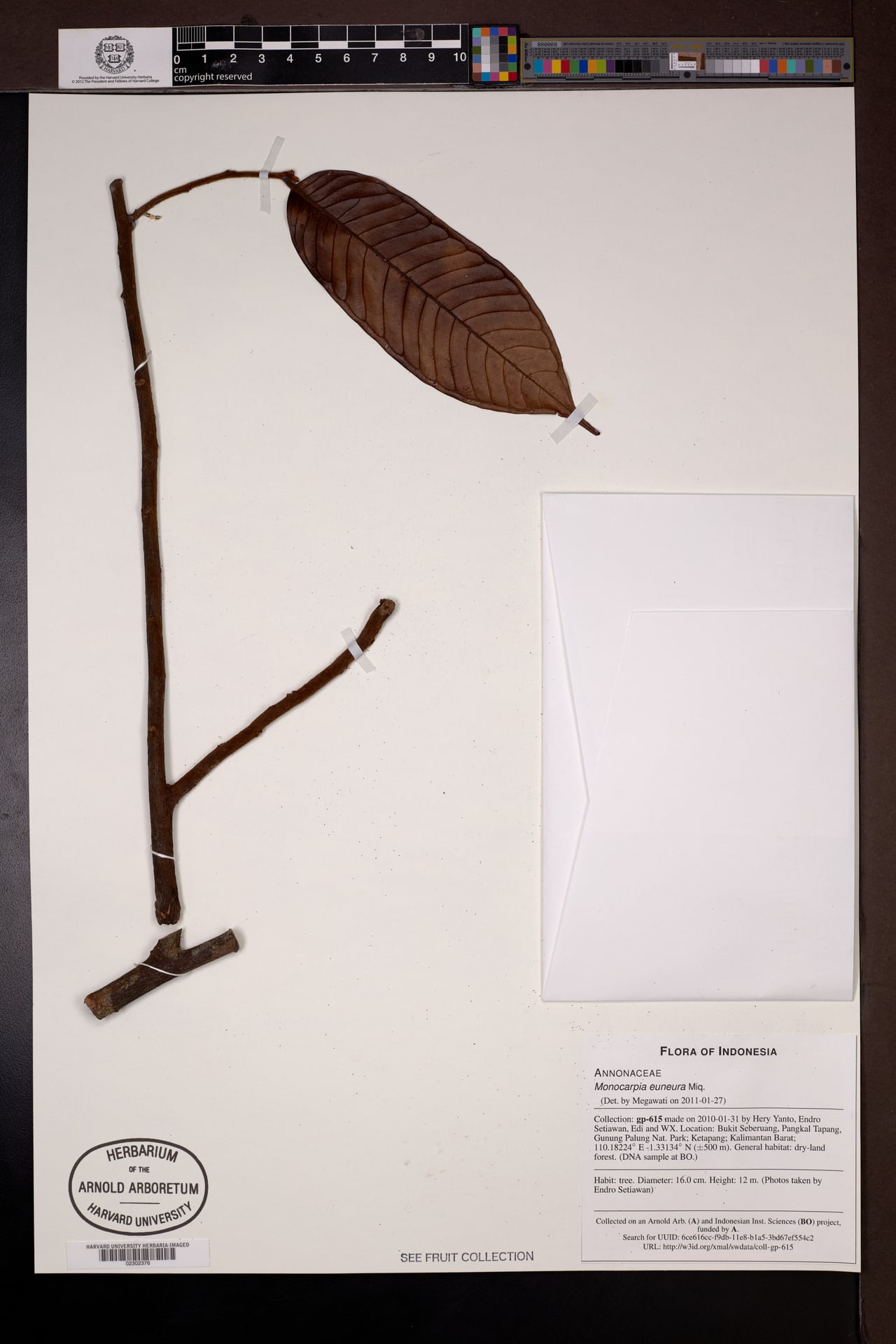
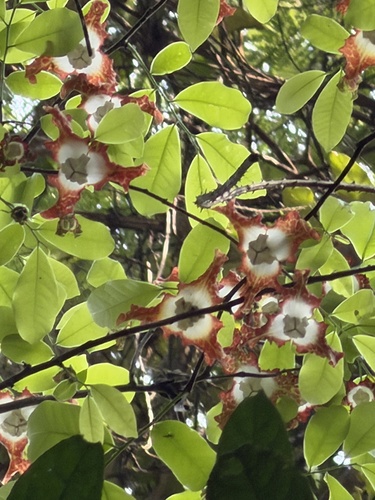
Uvaria kirkii
Oliv. ex Hook. f.
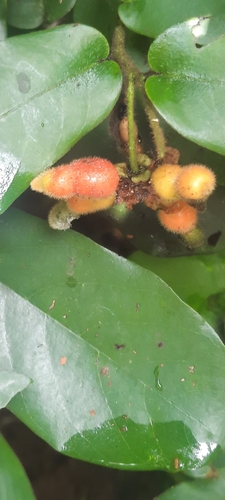
iNaturalist· cc-by-nc
(c) alexander1951, some rights reserved (CC BY-NC)
iNaturalist· cc-by-nc
(c) alexander1951, some rights reserved (CC BY-NC)
iNaturalist· cc-by-nc
(c) alexander1951, some rights reserved (CC BY-NC)
Description
A shrub or scrambler. It can grow 8 m high. The leaves are broadly oval. The base is heart shaped or rounded. They are 3-12 cm long by 3-5 cm wide. The flowers are cream or pale yellow. They occur singly. They are large. The plant flowers then dies. The fruit are 17-25 mm long by 8-11 mm wide. There are 5-8 seeds.
Edible Uses
Fruit - raw. The pulp of ripe fruits is sweet and eaten fresh as a snack. The seeds are discarded. The oblong fruit is 17 - 25mm long and 8 - 11mm wide. It is produced in clusters of 5 - 10 fruits.
Traditional Uses
The ripe fruit are eaten raw. The seeds are discarded.
This uses section is brief — help expand it
Distribution
It is a tropical plant. In East Africa it grows from sea level to 450 m above sea level. It grows near rivers. It can grow in arid places.
Where It Grows
Africa, East Africa, Jamaica, Kenya, Mozambique, Tanzania, West Indies,
Cultivation
Plants can be grown from seeds.
Other Uses
A black dye is obtained from the roots. The wood is used for withies and tool handles. The wood is used for fuel.
Production
In Tanzania fruit are collected from April to June.
Synonyms
Also Known As
Maofu, Mcho, Mchofu, Msofu, Nchofuo
References (9)
- Dale, I. R. and Greenway, P. J., 1961, Kenya Trees and Shrubs. Nairobi. p 39
- Herb., E. A., 1981,
- Maundu, P. et al, 1999, Traditional Food Plants of Kenya. National Museum of Kenya. 288p (As Oliv.)
- Mutie, F. M., et al, 2023, Important Medicinal and Food Taxa (Orders and Families) in Kenya, Based on Three Quantitative Approaches. Plants 2023, 12, 1145
- Peters, C. R., O'Brien, E. M., and Drummond, R.B., 1992, Edible Wild plants of Sub-saharan Africa. Kew. p 56
Show all 9 references Hide references
- Royal Botanic Gardens, Kew (1999). Survey of Economic Plants for Arid and Semi-Arid Lands (SEPASAL) database. Published on the Internet; http://www.rbgkew.org.uk/ceb/sepasal/internet [Accessed 28th March 2011]
- Ruffo, C. K., Birnie, A. & Tengnas, B., 2002, Edible Wild Plants of Tanzania. RELMA p 698
- Walsh, M., 2009, The Use of Wild and Cultivated Plants as famine Foods on Pemba Island, Zanzibar. Études océan Indien. 42-43
- World Checklist of Useful Plant Species 2020. Royal Botanic Gardens, Kew