Beta vulgaris subsp. cicla
(L.) W. D. J. Koch
Silver beet
gbif· cc-by-nc-sa
Gerrit Davidse
gbif· cc-by-nc-sa
Gerrit Davidse
gbif· cc-by-nc-sa
Gerrit Davidse
Summary
Source: WikipediaBeta vulgaris (beet) is a species of flowering plant in the subfamily Betoideae of the family Amaranthaceae. It is a perennial plant usually growing up to 120 centimetres (4 ft) tall. Three subspecies are typically recognised. The wild ancestor of all the cultivated beets is the sea beet (Beta vulgaris subsp. maritima), with several modern cultivars all belonging to B. vulgaris subsp. vulgaris. Some of the most popular cultivar groups include: the sugar beet (used to produce table sugar), the root vegetable known as the beetroot or garden beet, the leaf vegetable known as chard or spinach beet or silverbeet, and mangelwurzel (a fodder crop).
Description
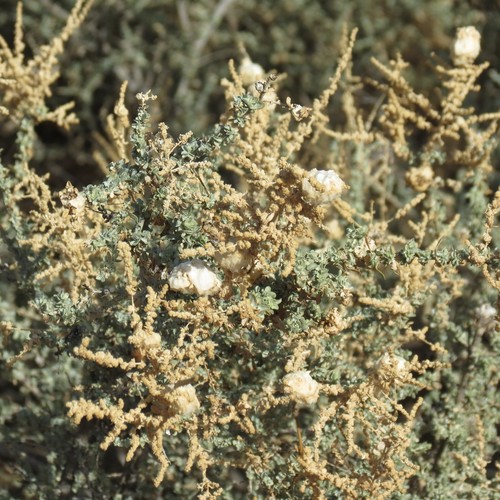
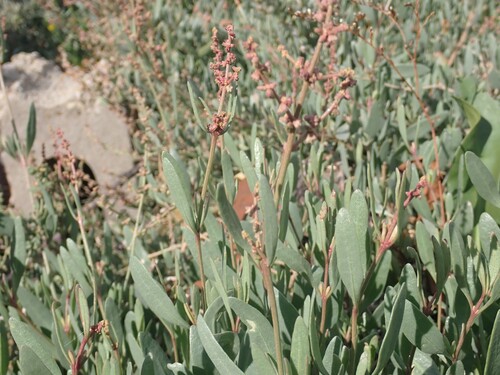
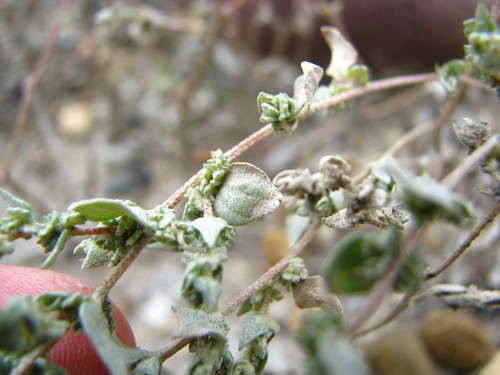
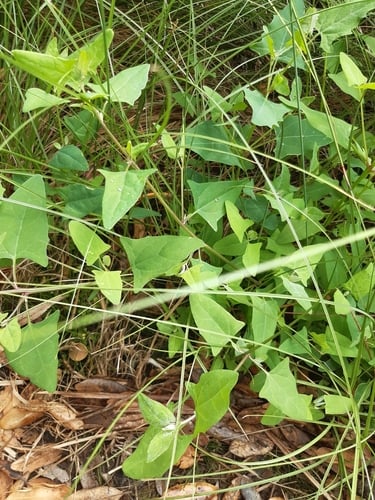
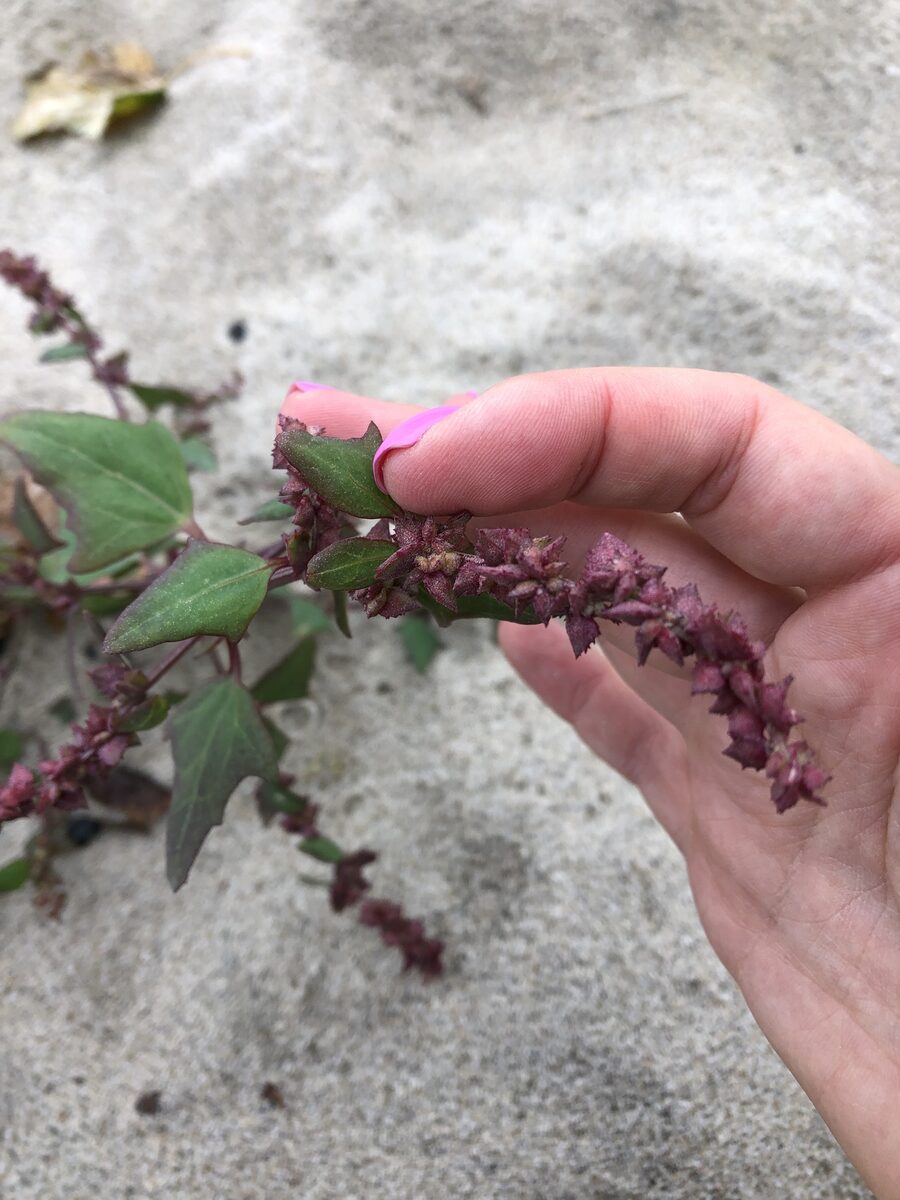
A broad leafed annual plant. Stalks are smooth and often white with a dark green leaf. A clump of stalks and leaves are produced from the base. Plants can also be blue. The leaves can be 12-25 cm long. The flowers are small and greenish. They are in slender clusters. The fruit are dry and spiny.
Edible Uses
Spinach beet leaves are eaten as a pot herb. Young leaves of the garden beet are sometimes used similarly. The midribs of Swiss chard are eaten boiled while the whole leaf blades are eaten as spinach beet. In some parts of Africa, the whole leaf blades are usually prepared with the midribs as one dish. The leaves and stems of young plants are steamed briefly and eaten as a vegetable; older leaves and stems are stir-fried and have a flavour resembling taro leaves. The usually deep-red roots of garden beet can be baked, boiled, or steamed, and often served hot as a cooked vegetable or cold as a salad vegetable. They are also pickled. Raw beets are added to salads. A large proportion of the commercial production is processed into boiled and sterilised beets or into pickles. In Eastern Europe beet soup, such as cold borsch, is a popular dish. Yellow-coloured garden beets are grown on a very small scale for home consumption. The consumption of beets causes pink urine in some people. Jewish people traditionally eat beet on Rosh Hashana (New Year). Its Aramaic name סלקא sounds like the word for "remove" or "depart"; it is eaten with a prayer "that our enemies be removed".
Traditional Uses
The leaves and stalks are cooked and eaten. The leaf stalks can be cut from the leaf and cooked separately as an asparagus substitute. They can be braised and served with buttered bread crumbs. The leaves are used for sarma in Turkey. They are rolled around a filling of rice or minced meat. Some kinds have edible roots.
Medicinal Uses
The roots and leaves of the beet have been used in traditional medicine to treat a wide variety of ailments. Ancient Romans used beetroot as a treatment for fevers and constipation, amongst other ailments. Apicius in De re coquinaria gives five recipes for soups to be given as a laxative, three of which feature the root of beet. Platina recommended taking beetroot with garlic to nullify the effects of 'garlic-breath'. Beet greens and Swiss chard are both considered high oxalate foods which are implicated in the formation of kidney stones.
Distribution
It is a temperate plant. It needs to be over at least 500 m altitude in the tropics. It is mostly grown between 1000 and 2600 m altitude. It can tolerate frost.
Where It Grows
Africa, Angola, Asia, Australia, Austria, Bangladesh, Benin, Botswana, Britain, Burkina Faso, Burundi, Cameroon, Canada, Central Africa, Central African Republic, CAR, Chad, China, Congo, Cook Islands, Côte d'Ivoire, Cuba, Djibouti, Dominican Republic, East Africa, Ecuador, Equatorial Guinea, Eritrea, Eswatini, Ethiopia, Europe, Fiji, France, Gabon, Gambia, Georgia, Germany, Ghana, Greece, Guinea, Guinée, Guinea-Bissau, Haiti, Hawaii, India, Indonesia, Iran, Italy, Ivory Coast, Japan, Jordan, Kenya, Kiribati, Korea, Liberia, Madagascar, Malawi, Mali, Mauritania, Mediterranean, Mexico, Middle East, Mozambique, Namibia, Nauru, Nepal, Netherlands, New Zealand, Niger, Nigeria, North America, Pacific, Papua New Guinea, PNG, Philippines, Portugal, Puerto Rico, Rwanda, Sahel, SE Asia, Senegal, Sicily, Sierra Leone, Sikkim, Slovenia, Somalia, South Africa, Southern Africa, Spain, Swaziland, Switzerland, Tanzania, Tasmania, Togo, Turkey, Türkiye, Uganda, Uruguay, USA, Vanuatu, West Africa, West Indies, Zambia, Zimbabwe,
Cultivation
It is grown from seeds. Under tropical conditions it is not normally possible to save your own seed. In cold climates plants need to be sown when conditions are warmer so that plants do not go straight to flower. A spacing of 30 cm between plants is suitable. Seed are sown 2.5 cm deep.
Production
The first leaves are ready after 8-10 weeks and can produce for 2 years. Only the outer leaves are picked off.
Other Information
It is a commercially cultivated vegetable. It is moderately common in some highland areas in the tropics including Papua New Guinea.
Notes
Probably all Beta are one species and 2 main forms - Cicla - for leaves, and Contiva - for roots. Also put in the family Chenopodiaceae.
Nutrition
| Part | Moisture | kJ | kcal | Protein | Vit A | Vit C | Iron | Zinc |
|---|---|---|---|---|---|---|---|---|
| Leaves - boiled | 92.7 | 84 | 20 | 1.9 | 314 | 18 | 2.3 | 0.3 |
| Leaves - raw | 92 | 80 | 19 | 1.8 | 330 | 30 | 1.8 | 0.4 |
Synonyms
Also Known As
Acelga, Bette a couper, Bette, Bioetola, Chukandar, Geundae, Hou pi cai, Leaf beet, Mangold, Navadna pesa, Sorta, Palak, Schnittmangold, Seakale, Spinach beet, Swiss chard
References (42)
- Bianchini, F., Corbetta, F., and Pistoia, M., 1975, Fruits of the Earth. Cassell. p 76
- Brouk, B., 1975, Plants Consumed by Man. Academic Press, London. p 139
- Bussman, R. W., et al, 2016, A comparative ethnobotany of Khevsureti, Samtskhe-Javakheti, Tusheti, Svaneti, and Racha-Lechkhumi, Republic of Georgia (Sakartvelo), Caucasus. Journal of Ethnobiology and Ethnomedicine (2016) 12:43
- Cundall, P., (ed.), 2004, Gardening Australia: flora: the gardener's bible. ABC Books. p 234
- Dogan, Y., et al, 2015, Of the importance of a leaf: the ethnobotany of sarma in Turkey and the Balkans. Journal of Ethnobiology and Ethnomedicine, 11:56
Show all 42 references Hide references
- Facciola, S., 1998, Cornucopia 2: a Source Book of Edible Plants. Kampong Publications, p 76
- Flora of China. www.eFloras.org
- French, B.R., 1986, Food Plants of Papua New Guinea, A Compendium. Asia Pacific Science Foundation p 135
- French, B.R., 2010, Food Plants of Solomon Islands. A Compendium. Food Plants International Inc. p 98
- Grubben, G. J. H. and Denton, O. A. (eds), 2004, Plant Resources of Tropical Africa 2. Vegetables. PROTA, Wageningen, Netherlands. p 110
- Hadfield, J., 2001, The A-Z of Vegetable Gardening in South Africa. Struik p 126
- Hu, Shiu-ying, 2005, Food Plants of China. The Chinese University Press. p 376
- Jardin, C., 1970, List of Foods Used In Africa, FAO Nutrition Information Document Series No 2.p 59
- Kays, S. J., and Dias, J. C. S., 1995, Common Names of Commercially Cultivated Vegetables of the World in 15 languages. Economic Botany, Vol. 49, No. 2, pp. 115-152
- Kiple, K.F. & Ornelas, K.C., (eds), 2000, The Cambridge World History of Food. CUP p 1864
- Kumar, A., et al, 2012, Ethnobotanical Edible Plant Biodiversity of Lepcha Tribes. Indian Forester, 138 (9):798-803
- Lazarides, M. & Hince, B., 1993, Handbook of Economic Plants of Australia, CSIRO. p 32
- Macmillan, H.F. (Revised Barlow, H.S., et al), 1991, Tropical Planting and Gardening. Sixth edition. Malayan Nature Society. Kuala Lumpur. p 361
- Martin, F.W. & Ruberte, R.M., 1979, Edible Leaves of the Tropics. Antillian College Press, Mayaguez, Puerto Rico. p 119
- Miguel, E., et al, 1989, A checklist of the cultivated plants of Cuba. Kulturpflanze 37. 1989, 211-357
- Niwano, Y. et al., 2009, Extensive Screening for Plant Foodstuffs in Okinawa, Japan with Anti-Obese Activity on Adipocytes, in vitro. Plant Foods in Human Nutrition 64:6-10
- Ochse, J.J. et al, 1931, Vegetables of the Dutch East Indies. Asher reprint. p 102
- Oomen, H.A.P.C., & Grubben, G.J.H., 1978, Tropical Leaf Vegetables in Human Nutrition, Communication 69, Department of Agricultural research, RTI Amsterdam, p 66, 93, 126
- Pascual-Mendoza, S. et al, 2021, Traditional knowledge of edible plants in an indigenous community in the Sierra Norte of Oaxaca, Mexico. Plant Biosystems - An International Journal Dealing with all Aspects of Plant Biology
- Plants for a Future database, The Field, Penpol, Lostwithiel, Cornwall, PL22 0NG, UK. http://www.scs.leeds.ac.uk/pfaf/
- Plants of Haiti Smithsonian Institute http://botany.si.edu
- Ruiters-Welcome, A. K., 2019, Food plants of southern Africa. Ph.D. thesis. Univ. of Johannesburg p 11
- Schneider, E., 2001, Vegetables from Amaranth to Zucchini: The essential reference. HarperCollins. p 645
- Shah, S. K., 2014, Dietary contribution of underutilized minor crops and indigenous plants collected from uncultivated lands and forests in Nepal. in Promotion of Underutilized Indigenous Food Resources for Food Security and Nutrition in Asia and Pacific. FAO. Bangkok p 64
- Sharma, B.B., 2005, Growing fruits and vegetables. Publications Division. Ministry of Information and broadcasting. India. p 190 (As var. bengalensis), 198,
- Siemonsma, J. S. and Piluek, K. (Eds), 1994, Plant Resources of South-East Asia No. 8 Vegetables. Prosea Foundation, Bogor, Indonesia, p 97
- Small, E., 2009, Top 100 Food Plants. The world's most important culinary crops. NRC Research Press. p 121
- Termote, C., et al, 2014, Assessing the potential of wild foods to reduce the cost of a nutritionally adequate diet: An example from eastern Baringo District, Kenya. Food and Nutrition Bulletin, vol. 35, no. 4
- Terra, G.J.A., 1973, Tropical Vegetables. Communication 54e Royal Tropical Institute, Amsterdam, p 29
- Thaman, R.R., 1976, The Tongan Agricultural System, University of the South Pacific, Suva, Fiji. p 383
- Tindall, H.D., 1983, Vegetables in the tropics. Macmillan p. 74
- Torre, de la L., et al, 2008, Enciclopedia de las Plantas Útiles del Ecuador. Herbario QCA. Pontificia Universidad Católica del Ecuador. p 155
- Tukan, S. K., et al, 1998, The use of wild edible plants in the Jordanian diet. International Journal of Food Sciences and Nutrition. 49:225-235
- USDA, ARS, National Genetic Resources Program. Germplasm Resources Information Network - (GRIN). [Online Database] National Germplasm Resources Laboratory, Beltsville, Maryland. Available: www.ars-grin.gov/cgi-bin/npgs/html/econ.pl (10 April 2000)
- van Wyk, B., 2005, Food Plants of the World. An illustrated guide. Timber press. p 87
- Williamson, J., 2005, Useful Plants of Malawi. 3rd. Edition. Mdadzi Book Trust. p 36
- Zhu Gelin (Chu Ge-ling); Steven E. Clemants, CHENOPODIACEAE [Draft], Flora of China