Suaeda aegyptiaca
(Hasselq.) Zohary
Egyptian sea blite
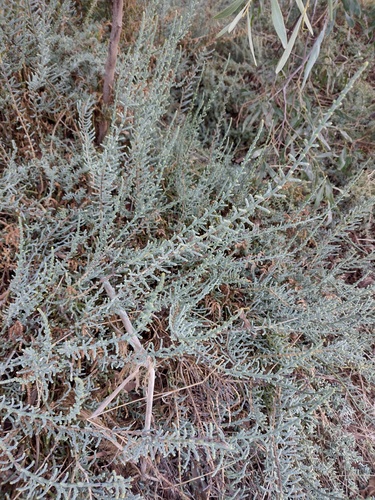
iNaturalist· cc-by-nc
(c) Mohammad Marafi, some rights reserved (CC BY-NC), uploaded by Mohammad Marafi
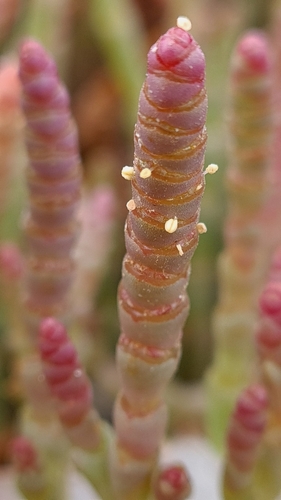
iNaturalist· cc-by-nc
(c) Shrikey, some rights reserved (CC BY-NC)
Summary
Source: WikipediaSuaeda aegyptiaca is a species of succulent plant in the family Amaranthaceae (formerly classified under the Chenopodiaceae), and salt-tolerant (halophyte) plant that is distributed in eastern North Africa, the Near East and West Asia. Local vernacular names for this plant in Qatar are juliman, guluman, ikhreet or hamd.
Description
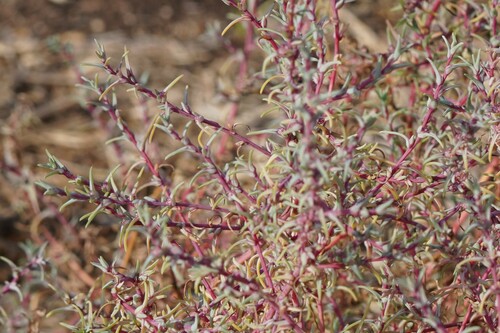
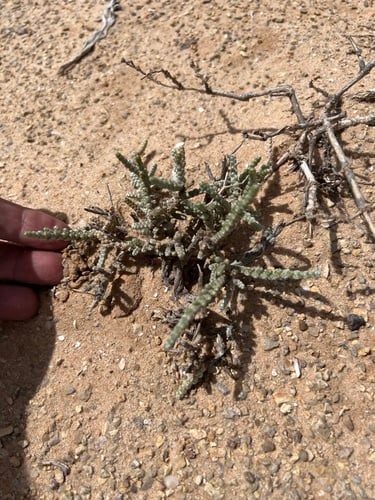
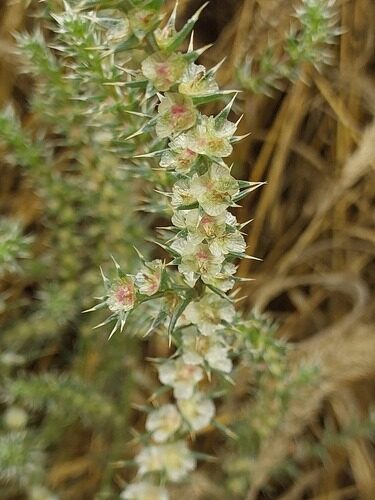
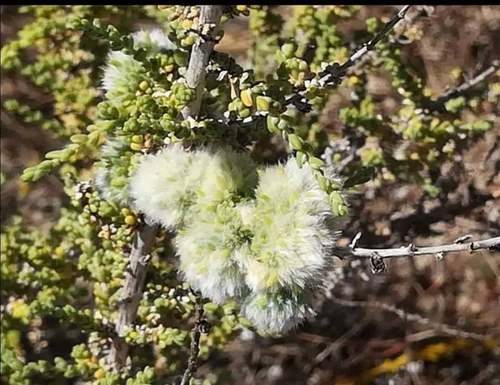
A succulent plant. It keeps growing from year to year. It grows 30-50 cm high. The stems are closely packed with bright green leaves. The leaves are narrow and cylinder shaped and they curve upwards. The flowers are small and yellowish-green. They occur in clusters in the axils of the upper leaves. It varies a lot depending on water and soils.
Edible Uses
The young leaves are eaten raw as salad.
Traditional Uses
The young leaves are eaten raw as salad.
This uses section is brief — help expand it
Distribution
A Mediterranean plant. It grows in sandy or gravelly soils with adequate moisture. It can tolerate highly salty soils. It grows near the seashore. It can grow in arid places.
Where It Grows
Afghanistan, Africa, Bahrain, Egypt, Iran, Iraq, Israel, Kuwait, Libya, Mediterranean, Middle East, North Africa, Oman, Pakistan, Qatar, Saudi Arabia, Sudan, Syria, United Arab Emirates, UAE, Yemen,
Other Information
It is sold in local markets.
Notes
Also put in the family Chenopodiaceae.
Synonyms
Also Known As
Hamd, Hatallus, Rejla, Suweda
References (6)
- Flora of Pakistan. www.eFloras.org
- Karim, F. M. & Dakheel, A, J., 2006, Salt-tolerant plants of the United Arab Emirates. 2006. International Center for Biosaline Agriculture, Dubai, UAE.
- Norton, J., et al, 2009, An Illustrated Checklist of the Flora of Qatar. UNESCO Office in Doha.
- Phillips, D.C., 1988, Wild Flowers of Bahrain. A Field Guide to Herbs, Shrubs, and Trees. Privately published. p 103
- Royal Botanic Gardens, Kew (1999). Survey of Economic Plants for Arid and Semi-Arid Lands (SEPASAL) database. Published on the Internet; http://www.rbgkew.org.uk/ceb/sepasal/internet [Accessed 8th April 2011] (As aegyptica)
Show all 6 references Hide references
- World Checklist of Useful Plant Species 2020. Royal Botanic Gardens, Kew