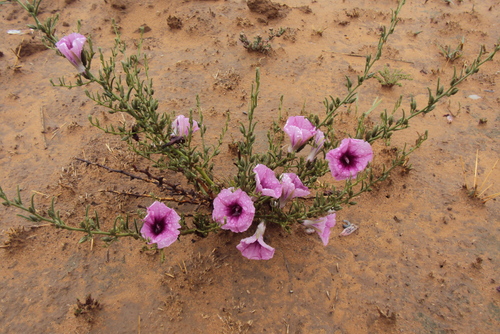
Stictocardia tiliifolia
(Desr.) Hallier f.
Spotted heart
iNaturalist· cc0
no rights reserved, uploaded by 葉子
iNaturalist· cc0
no rights reserved, uploaded by 葉子
iNaturalist· cc-by
(c) XJ, some rights reserved (CC BY)
Description
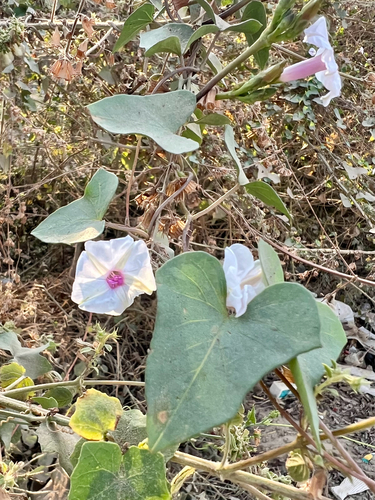
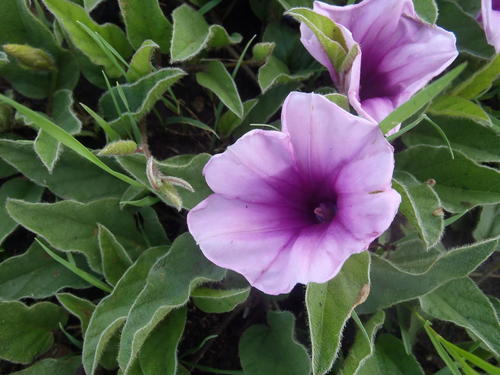
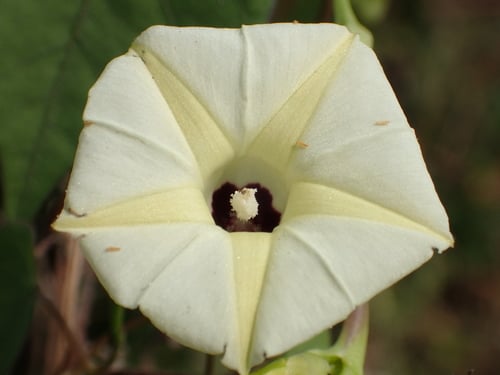
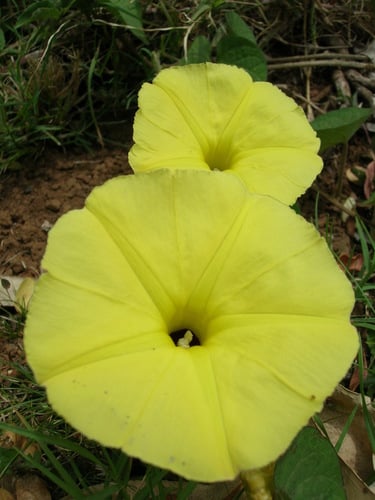
A large woody climber. The young branches are hairy. The leaf stalks are 3-14 cm long. The leaf blade is oval or round and 6-20 cm long by 5-20 cm wide. The base is heart shaped. There are 1-3 flowers in a group. They are funnel shaped and 8-10 cm long and wide. The fruit is round and 2-4 cm across. The seeds are dark brown and 8-9 mm wide.
Edible Uses
The young seeds are eaten.
Traditional Uses
The seeds are eaten when young.
This uses section is brief — help expand it
Distribution
A tropical plant. It grows in tropical America.
Where It Grows
American Samoa, Asia, Australia, Central America, China, Dominican Republic, Hawaii, India, Indochina, Indonesia, Japan, Malaysia, Marquesas, Myanmar, Pacific, Philippines, Puerto Rico, SE Asia, Sri Lanka, Taiwan, Thailand, Vietnam, West Indies,
Cultivation
A plant of lowland tropical areas, where it is usually found at elevations below 300 metres. Requires a sunny position. Prefers a well-drained, sandy loam[. Prefers a pH in the range 5.5 - 6.5.
Other Uses
The sap has been used for coagulating the latex of Castilla elastica.
Synonyms
Also Known As
Taung-kazun-gyi, Xian ye teng
References (1)
- Hedrick, U.P., 1919, (Ed.), Sturtevant's edible plants of the world. p 358 (As Ipomoea grandiflora)