Ipomoea obscura
(L.) Ker. Gawl.
Yellow ipomoea
iNaturalist· cc0
no rights reserved, uploaded by 葉子
iNaturalist· cc-by-nc
(c) James Bailey, some rights reserved (CC BY-NC), uploaded by James Bailey
iNaturalist· cc-by-nc
(c) tjeerd, some rights reserved (CC BY-NC), uploaded by tjeerd
Summary
Source: WikipediaThe Ipomoea obscura, commonly known as the obscure morning glory or the small white morning glory, is a species of the genus Ipomoea. It is an invasive species native to parts of Africa, Asia, and certain Pacific Islands. While the plant's seeds are toxic, the leaves can be used for many different medicinal purposes.
Description
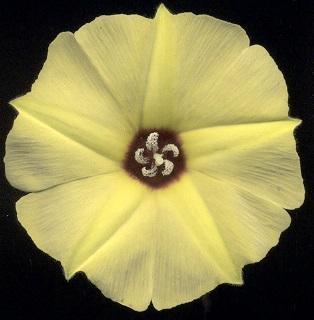
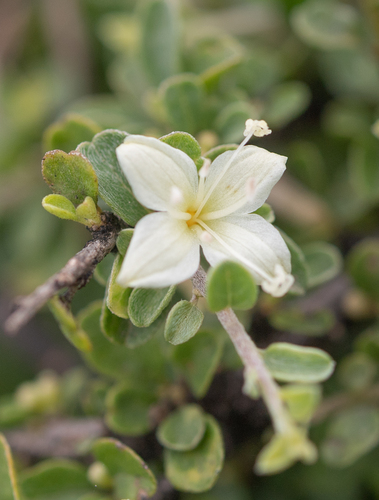
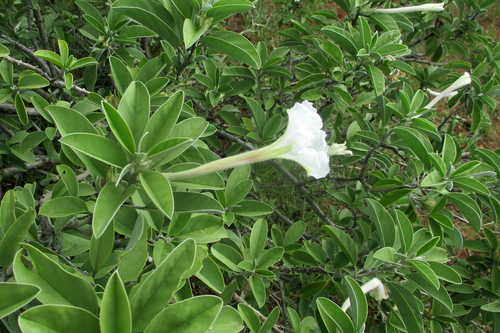
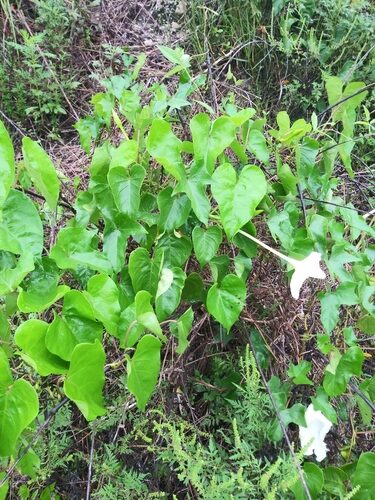
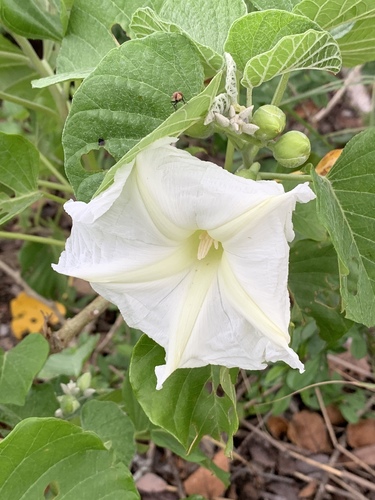
A climbing herb. It is a slender trailing plant. It lies along the ground. It can be a climber or twining. It has a taproot and can keep growing from year to year. The leaf stalks are 1.5 cm long. The leaf blades vary but are long and tapering to the tip with a broadly heart shape base. They are 4 cm long. The flowers occur singly or as a few together in the axils of leaves. The flowers are funnel shaped and 4 cm long and 3 cm across. They are pale yellow or white.
Edible Uses
The leaves are cooked and eaten as a relish or added to soup. The roots and tubers are also edible portions of this minor vegetable of local importance.
Traditional Uses
The leaves are cooked and eaten as a relish. The leaves are added to soup.
This uses section is brief — help expand it
Medicinal Uses
The dried leaves of Ipomoea obscura contain an extract that can be used as a source of antioxidant and as an anti-inflammatory. This extract has also been found to inhibit the growth and proliferation of tumor cells.
Distribution
It is a tropical plant. It grows in the savannah in West Africa. It grows from sea level to 1,800 m above sea level. It grows in woodland, grassland and savannah. It can grow in arid places. It can grow in coastal sands. In Yunnan.
Where It Grows
Africa, Asia, Australia, Botswana, Burkina Faso, Cambodia, Central Africa, Chad, China, Congo, Dominican Republic, East Africa, East Timor, Eswatini, Fiji, Guinea, Guinée, Guinea-Bissau, Hawaii, India, Indochina, Indonesia, Kenya, Laos, Madagascar, Malawi, Malaysia, Maldives, Marquesas, Mozambique, Myanmar, Namibia, New Guinea, Nigeria, Pacific, Philippines, SE Asia, Senegal, Seychelles, South Africa, Southern Africa, Sri Lanka, Swaziland, Taiwan, Thailand, Timor-Leste, Uganda, Vietnam, West Africa, West Indies, West Timor, Zambia, Zimbabwe,
Cultivation
Grows best in full sun. Succeeds in most soils, so long as they are well-drained. The plant is often grown as an ornamental, and is also used as a food and traditional medicine. It has been spread by human activity and escapes from cultivation. It has been declared to be an invasive weed in many areas, particularly Hawaii and the Caledonian Islands.
Propagation
Seed - Cuttings
Other Information
A minor vegetable of only local importance.
Nutrition
| Part | Moisture | kJ | kcal | Protein | Vit A | Vit C | Iron | Zinc |
|---|---|---|---|---|---|---|---|---|
| Leaves | 56.6 | 569 | 136 | 8.8 | — | — | 28.8 | 1.1 |
Synonyms
Also Known As
Babi, Chikoakoa, Eyeripopo, Ijalambu, Muduhwi, Mundalendale, Musonya, Muwira, Thaalhafilima, Umdzandzabuka, Wild petunia
References (19)
- Burkill, H. M., 1985, The useful plants of west tropical Africa, Vol. 1. Kew.
- Cowie, I, 2006, A Survey of Flora and vegetation of the proposed Jaco-Tutuala-Lore National Park. Timor-Lests (East Timor) www.territorystories.nt/gov.au p 46
- Fowler, D. G., 2007, Zambian Plants: Their Vernacular Names and Uses. Kew. p 21
- Fox, F. W. & Young, M. E. N., 1982, Food from the Veld. Delta Books. p 159 (As var. fragilis)
- Goode, P., 1989, Edible Plants of Uganda. FAO p 30
Show all 19 references Hide references
- Grubben, G. J. H. and Denton, O. A. (eds), 2004, Plant Resources of Tropical Africa 2. Vegetables. PROTA, Wageningen, Netherlands. p 336
- Long, C., 2005, Swaziland's Flora - siSwati names and Uses http://www.sntc.org.sz/flora/
- Magwede, K., van Wyk, B.-E., & van Wyk, A. E., 2019, An inventory of Vhavenḓa useful plants. South African Journal of Botany 122 (2019) 57–89
- Mutie, F. M., et al, 2023, Important Medicinal and Food Taxa (Orders and Families) in Kenya, Based on Three Quantitative Approaches. Plants 2023, 12, 1145
- Ogle & Grivetti, 1985,
- Peters, C. R., O'Brien, E. M., and Drummond, R.B., 1992, Edible Wild plants of Sub-saharan Africa. Kew. p 95
- Rajapaksha, U., 1998, Traditional Food Plants in Sri Lanka. HARTI, Sri Lanka. p 125
- Royal Botanic Gardens, Kew (1999). Survey of Economic Plants for Arid and Semi-Arid Lands (SEPASAL) database. Published on the Internet; http://www.rbgkew.org.uk/ceb/sepasal/internet [Accessed 14th April 2011]
- Ruiters-Welcome, A. K., 2019, Food plants of southern Africa. Ph.D. thesis. Univ. of Johannesburg p 46
- Sujanapal, P., & Sankaran, K. V., 2016, Common Plants of Maldives. FAO & Kerala FRI, p 153
- Swaziland's Flora Database http://www.sntc.org.sz/flora
- Wehmeyer, A. S, 1986, Edible Wild Plants of Southern Africa. Data on the Nutrient Contents of over 300 species
- Welcome, A. K. & Van Wyk, B.-E., 2019, An inventory and analysis of the food plants of southern Africa. South African Journal of Botany 122 (2019) 136–179
- World Checklist of Useful Plant Species 2020. Royal Botanic Gardens, Kew