Gymnema lactiferum
(L.) R. Br. ex Schult.
Cow plant
iNaturalist· cc0
no rights reserved, uploaded by 葉子
gbif· cc-by
Royal Botanic Gardens, Kew
iNaturalist· cc-by-nc
(c) oec, some rights reserved (CC BY-NC), uploaded by oec
wikimedia· pd
Franz Eugen Köhler, Köhler's Medizinal-Pflanzen (via Wikimedia Commons)
Summary
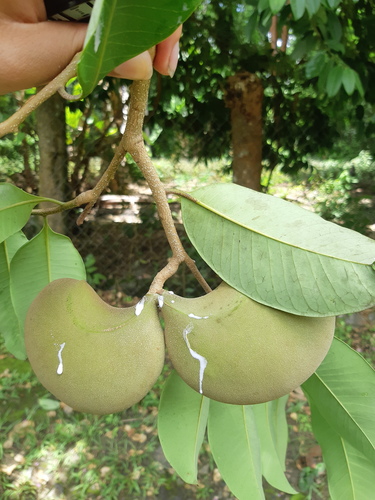
Source: WikipediaGymnema lactiferum, the Ceylon cow-tree or Ceylon cow plant, is a species of climbing perennial shrub native to India and Sri Lanka. In Sanskrit it is called ksirakakoli. James Emerson Tennent described the use of the plant in his account of Ceylon (Sri Lanka), and wrote it was "evidently a form of the G. sylvestre". The milky juice of this plant has been said to be used as a substitute for milk and cream, but it is believed to contain enough of the poisonous principle peculiar to the order (a poisonous substance that is specific to the order) to cast a doubt upon this reputed use.
Description
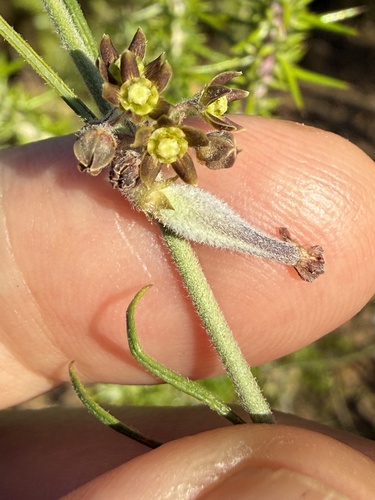
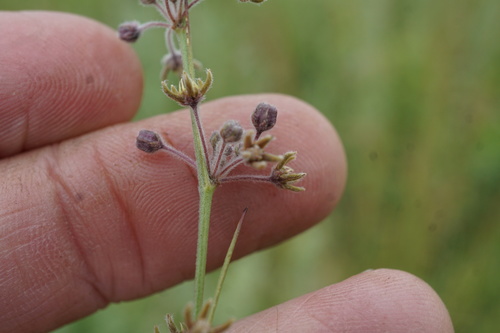
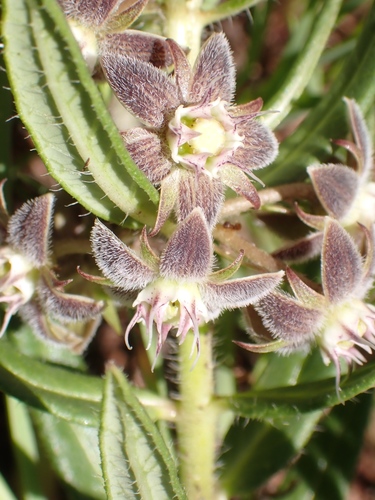
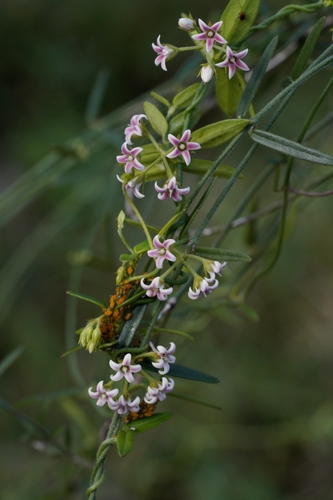
A climbing shrub. It keeps growing from year to year. Young plant parts are hairy. The leaf blade is 8 cm long and 4 cm wide. The flowers are in groups with stalks from a common point.
Edible Uses
The leaves are used fresh in salads and curries, and the sap and milk are also edible.
Traditional Uses
Caution: The leaves are used in salads and curries.
This uses section is brief — help expand it
Medicinal Uses
The leaves have been used to treat diabetes.
Distribution
A tropical plant. It grows in dry forests.
Where It Grows
Asia, India, Malaysia, SE Asia, Sri Lanka,
Notes
The leaves have been used to treat diabetes.
Synonyms
Also Known As
Ksirakakoli, Kurincha
References (1)
- Hedrick, U.P., 1919, (Ed.), Sturtevant's edible plants of the world. p 335