Cynanchum obtusifolium
L.f.
Documented toxic effects
ataxiacns diseaseepilepsyhypersensitivityparalysis
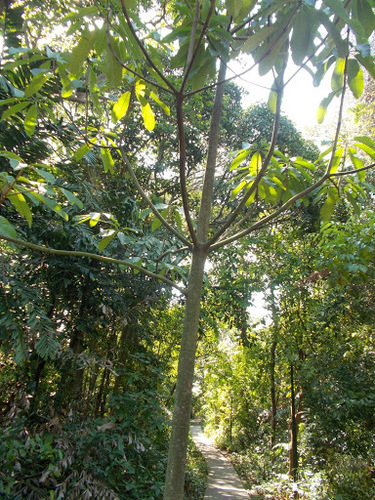
Source: Encyclopedia of Life →iNaturalist· cc-by-nc
(c) Adriaan Grobler, some rights reserved (CC BY-NC), uploaded by Adriaan Grobler
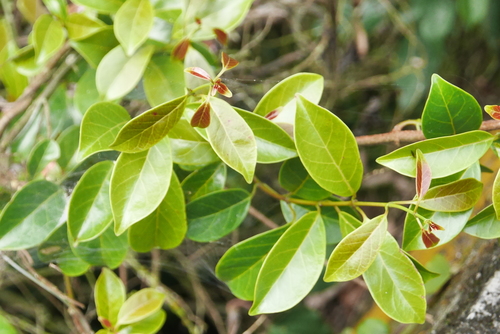
iNaturalist· cc-by-nc
(c) Marie Delport, some rights reserved (CC BY-NC)
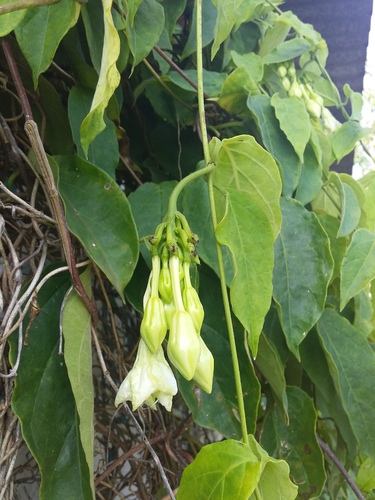
iNaturalist· cc-by-nc
(c) Marie Delport, some rights reserved (CC BY-NC)
Description
A climber. It has a woody base and climbs 3 m tall. It has milky sap. The leaves are opposite and narrowly oval. The flowers are in clusters near the axils of leaves.
Edible Uses
The fruit are eaten raw, including the unripe fruit which are eaten by children.
Traditional Uses
The fruit are eaten raw.
This uses section is brief — help expand it
Distribution
It is a subtropical plant.
Where It Grows
Africa, Mozambique, South Africa, Southern Africa,
Other Information
The unripe fruit are eaten by children.
Synonyms
Vincetoxicum obtusifolium (L.f.) Kuntze
Also Known As
Kapoke. Klimop, Papie, Pa-pok, Pok-pok
References (3)
- De Vynk, J. C., et al, 2016, Indigenous edible plant use by contemporary Khoe-San descendants of South Africa's Cape South Coast. South African Journal of Botany. 102 (2016) 60-69
- Ruiters-Welcome, A. K., 2019, Food plants of southern Africa. Ph.D. thesis. Univ. of Johannesburg p 23
- Welcome, A. K. & Van Wyk, B.-E., 2019, An inventory and analysis of the food plants of southern Africa. South African Journal of Botany 122 (2019) 136–179