Ixora javanica
(Blume) DC.
Javanese ixora, Jungle flame
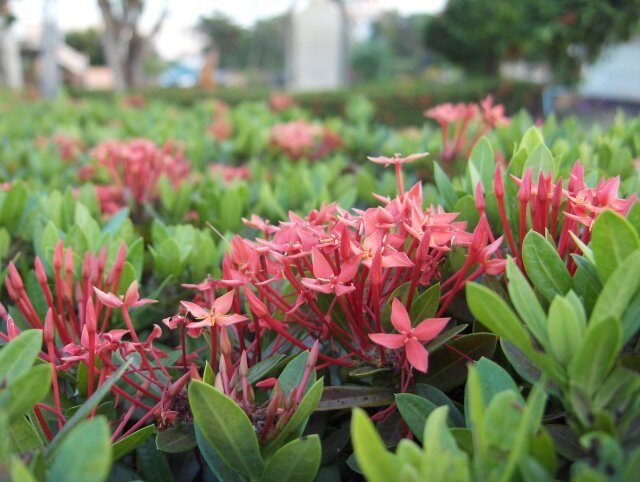
iNaturalist· cc-by-nc
(c) Rueangrit Promdam, some rights reserved (CC BY-NC)
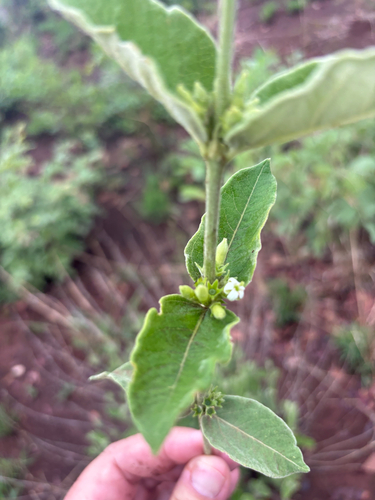
iNaturalist· cc-by-nc
(c) Yingyod Lapwong, some rights reserved (CC BY-NC)
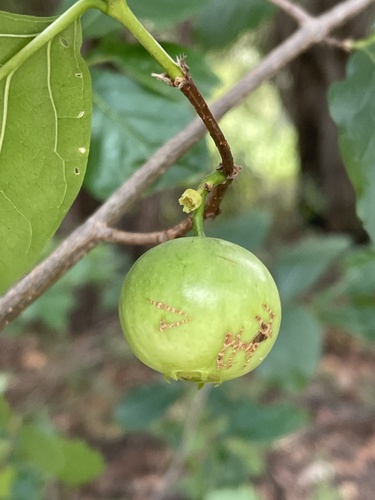
iNaturalist· cc-by-nc
(c) Rueangrit Promdam, some rights reserved (CC BY-NC)
Description
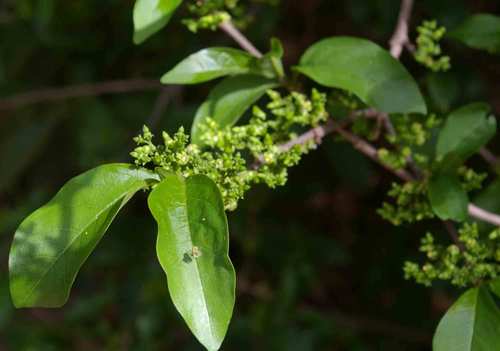
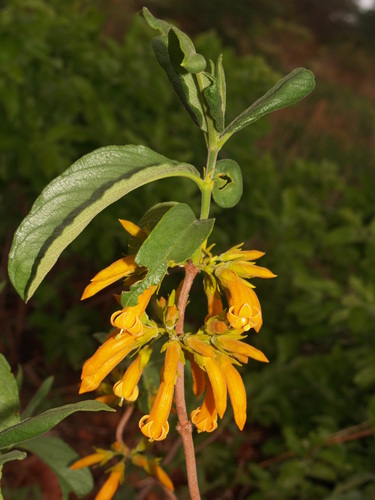
A shrub or small tree. It grows 5-11 m tall. The leaves are opposite and simple. The flowers are 12 mm across. They are orange to red. There is a long corolla tube. The flowers are in groups. The fruit are 1 cm across. They are red to purple.
Edible Uses
Flowers - cooked and used as a vegetable. The young flowers and the young fruits are both ingredients of a Thai mixed vegetable soup known as 'kaeng liang'.
Traditional Uses
The young flowers and young fruit are used in a vegetable soup.
This uses section is brief — help expand it
Medicinal Uses
Extracts of the plant have shown promising anti-tumour activity. The leaves and flowers are used in a 'cure-all' infusion.
Distribution
A tropical plant. It grows in forests up to 700 m above sea level. It is usually on hillsides but can be along rivers. It is usually on rich clay soils but can be on sandy and basic soils.
Where It Grows
Africa, Asia, Burkina Faso, Cambodia, Indochina, Indonesia, Laos, Malaysia, Myanmar, SE Asia, Thailand, West Africa,
Cultivation
Plants can be grown from seeds or stem cuttings.
Propagation
Seed - Cuttings of short-jointed, semi-ripe, non-flowering wood. Pot each cutting up singly and keep in a humid, shaded position at around 25°c until rooted. Air layering
Synonyms
Also Known As
Boyu bukit, Bunga jarung, Khem, Pkakroham, Ponna-yeik, Soka api hutan, Soka jawa
References (5)
- Facciola, S., 1998, Cornucopia 2: a Source Book of Edible Plants. Kampong Publications, p 212
- Prodr. 4:487. 1830
- Slik, F., www.asianplant.net
- Sukarya, D. G., (Ed.) 2013, 3,500 Plant Species of the Botanic Gardens of Indonesia. LIPI p 650
- Turreira Garcia, N., et al, 2017, Ethnobotanical knowledgeof the Kuy and Khmer people in Prey Lang, Cambodia. Cambodian Journal of Natural History 2017 (1): 76-101