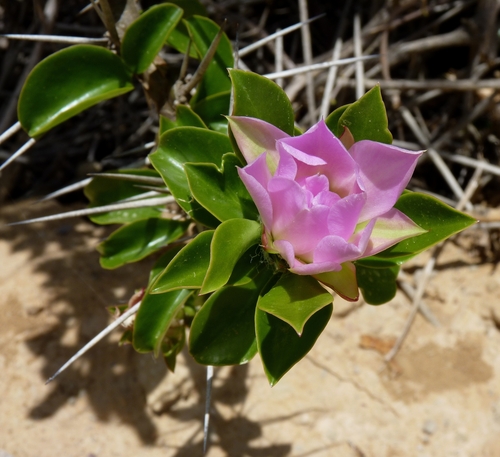
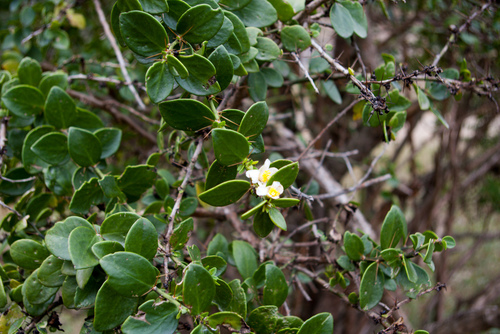
Ferocactus hamatacanthus
(Muehlenpf.) Britton & Rose
Mexican fruit cactus
iNaturalist· cc-by-nc
(c) Ad Konings, some rights reserved (CC BY-NC)
iNaturalist· cc-by-nc
(c) RainbowHummingbird, some rights reserved (CC BY-NC)
iNaturalist· cc-by-nc
(c) Joey Santore, some rights reserved (CC BY-NC)
Summary
Source: WikipediaFerocactus hamatacanthus, commonly named Turk's head, is a barrel cactus in the tribe Cacteae.
Description
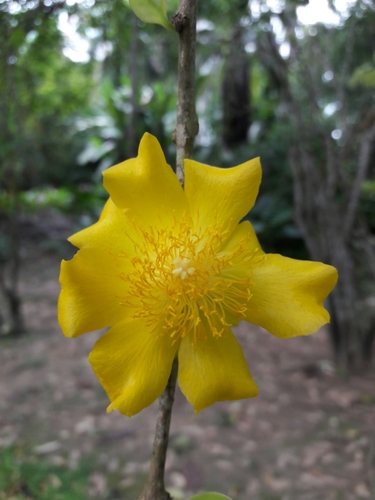
A cactus. Plants are usually single. They are round or cylinder shaped and 60 cm high by 30 cm across. There are 12-17 ribs. There are 4-8 central spines that are curved backwards and hooked at the tip. They can be twisted and are 8 cm long. There are 8-20 spines around these and they are straight and 1.5-8 cm long. The flowers are funnel shaped and yellow. They are 6-10 cm long. The fruit are oval and green to red. They are 2.5-5 cm long.
Edible Uses
The fruit serves as a lemon substitute for acid flavoring and is also dried and eaten as a sweetmeat. Unopened flower buds are soaked overnight then boiled or fried, and are harvested and canned commercially.
Traditional Uses
The fruit are used as a substitute for lemons as an acid flavouring. The fruit is dried and used as a sweetmeat. The unopened flower buds are soaked in water overnight then boiled or fried.
Distribution
It is a tropical plant. It grows in dry and open areas.
Where It Grows
Central America, Mexico*, North America, USA,
Cultivation
Plants can be grown from seeds.
Other Information
The buds are harvested and canned.
Synonyms
Also Known As
Anzuela, Biznaga de tuna, Huecomitl, Kaktus tong texas, Lemon cactus, Metzollin, Texas barrel cactus, Turk's-head barrel cactus, Turk's-head cactus, Viznaga, Viznaga barrel cactus
References (11)
- Anderson, E.F., 2001, The Cactus Family, Timber Press. p 331
- Astrada, E., et al, 2007, Ethnobotany in the Cumbres de Monterrey National Park, Nuevo Leon, Mexico. Journal of Ethnobiology and Ethnomedicine 3:8
- Facciola, S., 1998, Cornucopia 2: a Source Book of Edible Plants. Kampong Publications, p 64 (As Hamatocactus hamatacanthus)
- Fouqué, A. 1972. Espèces fruitières d'Amérique tropicale. Institut français de recherches fruitierès outre-mer
- Hedrick, U.P., 1919, (Ed.), Sturtevant's edible plants of the world. p 284 (As Echinocactus hamatocanthus)
Show all 11 references Hide references
- Kermath, B. M., et al, 2014, Food Plants in the Americas: A survey of the domesticated, cultivated and wild plants used for Human food in North, Central and South America and the Caribbean. On line draft. p 366
- Loughmiller, C & L., 1985, Texas Wildflowers. A Field Guide. University of Texas, Austin. p 28
- Piedra-Malagón, E. M. et al, 2022, Edible native plants of the Gulf of Mexico Province. Biodiversity Data Journal 10: e80565 p 15
- Segura, S. et al, 2018, The edible fruit species in Mexico. Genet Resour Crop Evol (2018) 65:1767–1793
- Sukarya, D. G., (Ed.) 2013, 3,500 Plant Species of the Botanic Gardens of Indonesia. LIPI p 1018
- World Checklist of Useful Plant Species 2020. Royal Botanic Gardens, Kew