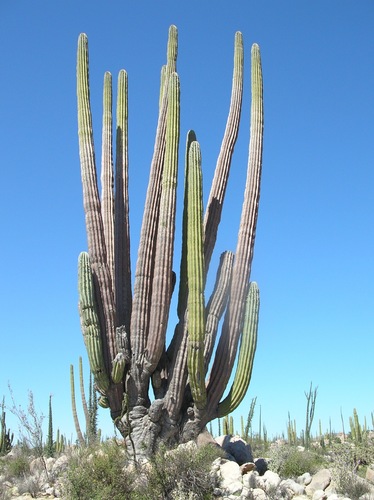
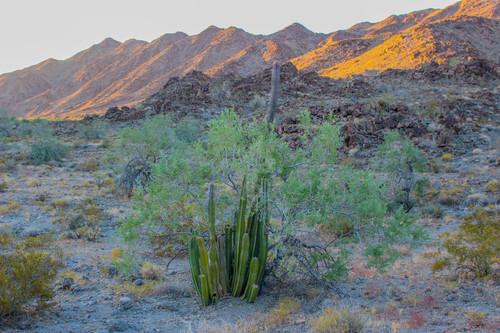
Escobaria vivipara
Haw.
Cushion cactus, Ball cactus
iNaturalist· cc-by-nc
(c) Kyla Rushton, some rights reserved (CC BY-NC), uploaded by Kyla Rushton
iNaturalist· cc0
no rights reserved, uploaded by Cecelia Alexander
iNaturalist· cc-by-nc
(c) Eric Keith, some rights reserved (CC BY-NC), uploaded by Eric Keith
Description
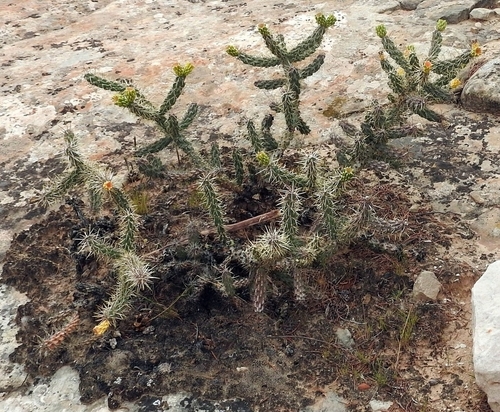
A small cactus. It is 3-9 cm high. It has clusters of 3-8 brownish spines. These are 14-20 mm long. The flowers are purplish-red. They are 40-50 mm across. The fruit are large and red. The fruit are the size of a grape and is green.
Edible Uses
The fruit is dried, boiled, and eaten, or boiled fresh and eaten, and can be made into jam. The flowers are eaten raw or cooked. The stems are cooked and eaten.
Traditional Uses
The fruit are dried, boiled and eaten. They are also boiled fresh and eaten. The fruit are made into jam. The flowers are eaten raw or cooked. The stems are cooked and eaten.
Medicinal Uses
The fruit are used in medicine.
Distribution
It is a temperate plant.
Where It Grows
Canada, North America, USA,
Notes
The fruit are used in medicine.
Synonyms
Also Known As
Bunch cactus, Golfball cactus, Spinystar
References (5)
- Anderson, E.F., 2001, The Cactus Family, Timber Press. p 313
- Cormack, R. G. H., 1967, Wild Flowers of Alberta. Commercial Printers Edmonton, Canada. p 207 (As Mamillaria vivipara)
- Hedrick, U.P., 1919, (Ed.), Sturtevant's edible plants of the world. p 400 (As Mammillaria vivipara)
- Kermath, B. M., et al, 2014, Food Plants in the Americas: A survey of the domesticated, cultivated and wild plants used for Human food in North, Central and South America and the Caribbean. On line draft. p 349
- Moerman, D. F., 2010, Native American Ethnobotany. Timber Press. p 228