Cyclopia genistoides
(L.) R. Br.
Bush tea, Honeybush tea
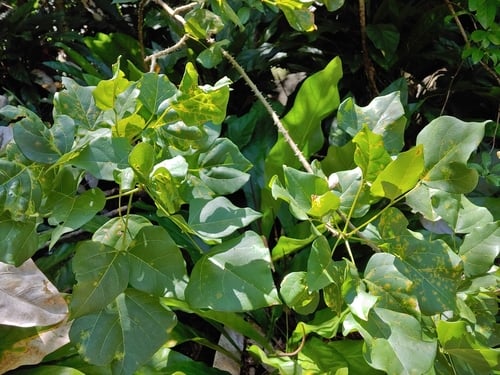
iNaturalist· cc-by-nc
(c) Andrew Massyn, some rights reserved (CC BY-NC), uploaded by Andrew Massyn
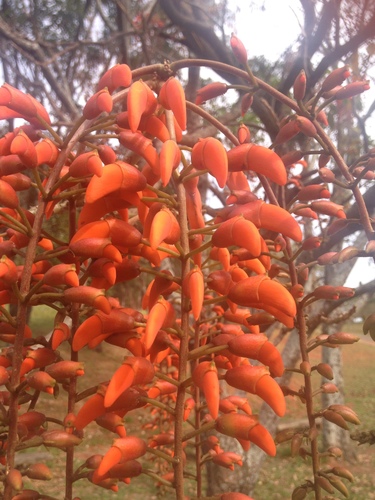
iNaturalist· cc-by-nc
(c) Nigel Forshaw, some rights reserved (CC BY-NC), uploaded by Nigel Forshaw
iNaturalist· cc-by-sa
(c) Chris Vynbos, some rights reserved (CC BY-SA), uploaded by Chris Vynbos
Description
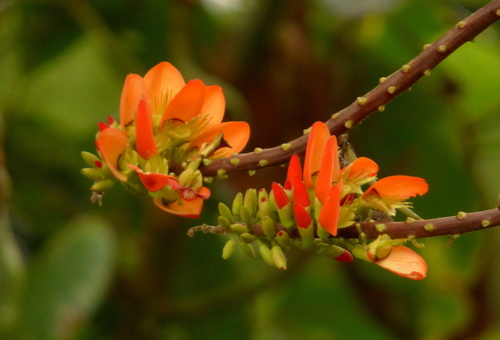
A shrub. The stems are yellowish. The leaves have 3 leaflets. They are on short stalks. The leaflets are oblong. The flowers are yellow. They have a sweet smell. The fruit are oblong pods.
Edible Uses
The stems, leaves, and flowers are used to make tea drinks, cold beverages, and as food flavoring.
Traditional Uses
The stems, leaves and flowers are all used to make tea drinks. They are also used for ice drinks and to flavour food.
This uses section is brief — help expand it
Distribution
It grows well in Mediterranean climates. It can grow in arid places.
Where It Grows
Africa, South Africa, Southern Africa,
Other Information
It is a cultivated food plant.
Nutrition
| Part | Moisture | kJ | kcal | Protein | Vit A | Vit C | Iron | Zinc |
|---|---|---|---|---|---|---|---|---|
| Leaves | 9.3 | 1024 | 245 | 6.5 | — | — | 7.6 | 0.9 |
Synonyms
Also Known As
Duinetee, Teeblommetjie, Wildetee
References (14)
- De Vynk, J. C., et al, 2016, Indigenous edible plant use by contemporary Khoe-San descendants of South Africa's Cape South Coast. South African Journal of Botany. 102 (2016) 60-69
- Facciola, S., 1998, Cornucopia 2: a Source Book of Edible Plants. Kampong Publications, p 104
- Fox, F. W. & Young, M. E. N., 1982, Food from the Veld. Delta Books. p 225
- Hedrick, U.P., 1919, (Ed.), Sturtevant's edible plants of the world. p 256
- ILDIS Legumes of the World http:www:ildis.org/Legume/Web
Show all 14 references Hide references
- Kew Plants of the World On line
- Royal Botanic Gardens, Kew (1999). Survey of Economic Plants for Arid and Semi-Arid Lands (SEPASAL) database. Published on the Internet; http://www.rbgkew.org.uk/ceb/sepasal/internet [Accessed 28th April 2011]
- Ruiters-Welcome, A. K., 2019, Food plants of southern Africa. Ph.D. thesis. Univ. of Johannesburg p 57
- van Wyk, B., 2005, Food Plants of the World. An illustrated guide. Timber press. p 167
- van Wyk, Be., & Gericke, N., 2007, People's plants. A Guide to Useful Plants of Southern Africa. Briza. p 104
- van Wyk, B-E., 2011, The potential of South African plants in the development of new food and beverage products. South African Journal of Botany 77 (2011) 857–868
- van Wyk, Ben-Erik, 2019, The diversity and multiple uses of southern African legumes. Australian Systematic Botany, 2019, 32, 519–546
- Wehmeyer, A. S, 1986, Edible Wild Plants of Southern Africa. Data on the Nutrient Contents of over 300 species
- Welcome, A. K. & Van Wyk, B.-E., 2019, An inventory and analysis of the food plants of southern Africa. South African Journal of Botany 122 (2019) 136–179