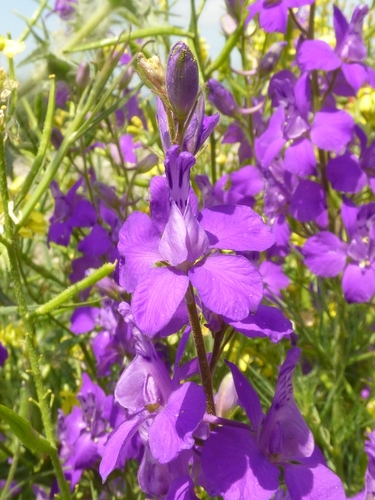
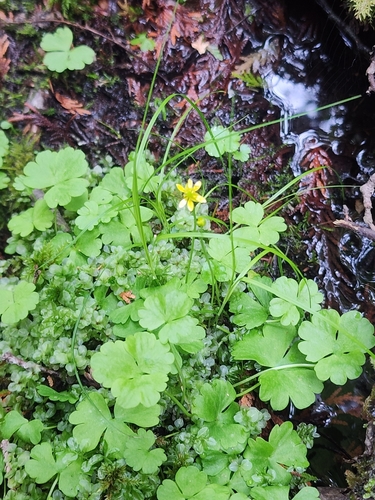
Aconitum napellus
L.
Soldier's cap, Turk's-cap
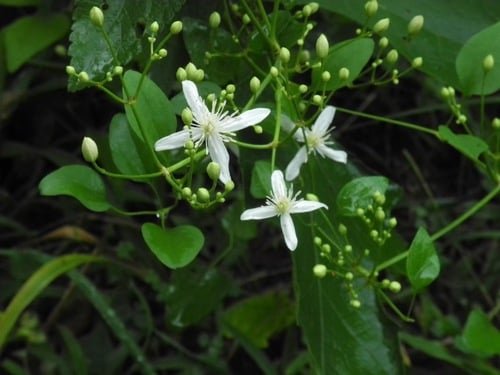
iNaturalist· cc-by-nc
(c) alpintist, some rights reserved (CC BY-NC)
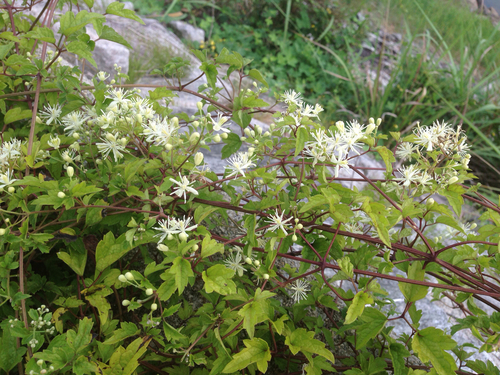
iNaturalist· cc-by-nc
(c) Ina Siebert, some rights reserved (CC BY-NC), uploaded by Ina Siebert
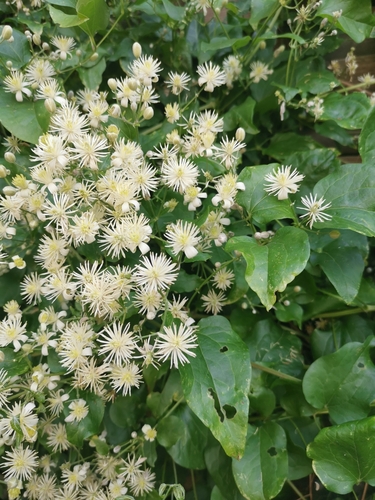
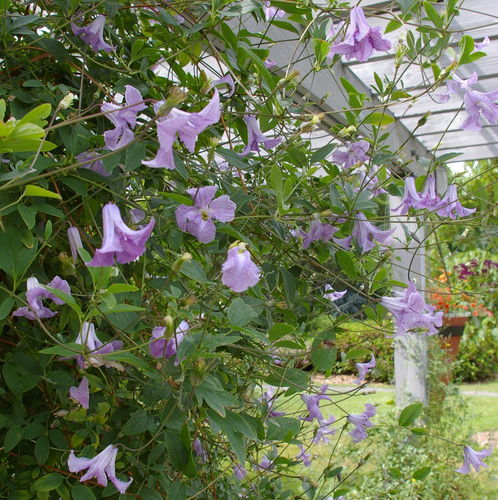
iNaturalist· cc-by-nc
(c) fahrenheit_66, some rights reserved (CC BY-NC), uploaded by fahrenheit_66
Summary
Source: WikipediaAconitum napellus, monkshood, aconite, Venus' chariot or wolfsbane, is a species of highly toxic flowering plants in the genus Aconitum of the family Ranunculaceae, native and endemic to western and central Europe. A perennial plant, it is herbaceous and grows to 1 m (3 ft 3 in) tall, with hairless stems and leaves. The leaves are rounded, 5–10 cm (2.0–3.9 in) diameter, palmately divided into five to seven deeply lobed segments. The flowers are dark purple to bluish-purple, narrow oblong helmet-shaped, 1–2 cm (0.39–0.79 in) tall. Plants native to Asia and North America formerly listed as A. napellus are now regarded as separate species. The plant is extremely poisonous in both ingestion and body contact. It is the most poisonous plant in all of Europe.
Description
A shrub or small tree. It grows 5 m tall. There are prickles along the stem. The leaves are twice divided and there are 8-18 pairs of pinnae. There are up to 50 pairs of pinnules on each pinnae. The flowers are yellow. They are in large clusters at the ends of branches. The pods are flattened.
Edible Uses
Some reports suggest the root is edible if cooked, but given the highly toxic nature of this plant, these reports should be treated with extreme caution.
Traditional Uses
CAUTION: Aconitums are usually very poisonous. They contain toxic alkaloids including aconitine. It affects the nerves and heart. THEY SHOULD NOT BE EATEN. The tubers are eaten as a tonic.
Medicinal Uses
Aconite has been used since ancient times, including as an antidote to poisoning, though the entire plant is itself highly toxic and any medicinal use should be supervised by a skilled practitioner. All parts of the plant have medicinal applications. The root is the most important; it is harvested once the plant dies down in autumn and dried before use. It is analgesic, anodyne, antirheumatic, diaphoretic, diuretic, irritant, and sedative. Because of its toxic nature it is not normally used internally, though it has been applied in the treatment of fevers. Externally, it is applied to unbroken skin to treat rheumatism, painful bruises, neuralgia, and similar conditions. All parts except the root are harvested when the plant is in flower and used fresh to prepare a homeopathic medicine, which is analgesic and sedative and used especially for fevers, inflammation, bronchitis, and neuralgia.
Known Hazards
Like other species in the genus, A. napellus contains several poisonous compounds, including enough cardiac poison that it was used on spears and arrows for hunting and battle in ancient times. Persian physician Avicenna (980–1037) wrote that arrows dipped in the sap were used to kill, and Dr Antonio Guaineri, in one of the first medical dictionaries 'Practica', wrote that arrows that had the poison from roots of the plant were used to kill wild goats in Italy. A. napellus has a long history of use as a poison, with cases going back thousands of years. During the ancient Roman period of European history, the plant was often used to eliminate criminals and enemies, and by the end of the period it was banned and anyone growing A. napellus could have been legally sentenced to death. Aconites have been used more recently in murder plots; they contain the chemical alkaloids aconitine, mesaconitine, hypaconitine and jesaconitine, which are highly toxic. It was also used in a recent Sherlock Holmes book plot. Marked symptoms may appear almost immediately, usually not later than one hour, and "with large doses, death is almost instantaneous". Death usually occurs within two to six hours in fatal poisoning (20 to 40 mL of tincture may prove fatal). The initial signs are gastrointestinal including nausea, vomiting, and diarrhea. This is followed by a sensation of burning, tingling, and numbness in the mouth and face, and of burning in the abdomen. In severe poisonings pronounced motor weakness occurs and cutaneous sensations of tingling and numbness spread to the limbs. Cardiovascular features include hypotension, sinus bradycardia, and ventricular arrhythmias. Other features may include sweating, dizziness, difficulty in breathing, headache, and confusion. The main causes of death are ventricular arrhythmias and asystole, paralysis of the heart or of the respiratory center. The only post-mortem signs are those of asphyxia. Treatment of poisoning is mainly supportive. All patients require close monitoring of blood pressure and cardiac rhythm. Gastrointestinal decontamination with activated charcoal can be used if given within one hour of ingestion. The major physiological antidote is atropine, which is used to treat bradycardia. Other drugs used for ventricular arrhythmia include lidocaine, amiodarone, bretylium, flecainide, procainamide, and mexiletine. Cardiopulmonary bypass is used if symptoms are refractory to treatment with these drugs. Successful use of charcoal hemoperfusion has been claimed in patients with severe aconite poisoning. Poisoning may also occur following picking the leaves without wearing gloves; the aconitine toxin is absorbed easily through the skin. In this event, there will be no gastrointestinal effects. Tingling will start at the point of absorption and extend up the arm to the shoulder, after which the heart will start to be affected. The tingling will be followed by unpleasant numbness. Treatment is similar to poisoning caused by oral ingestion and even handling the plant without gloves has been reported to result in multi-organ failure and death. The plant's chief toxic component, aconitine, is a potent neurotoxin that opens tetrodotoxin sensitive sodium channels. It increases the influx of sodium through these channels and delays repolarization, thus increasing excitability and promoting ventricular dysrhythmias.
Distribution
It is a temperate plant. It suits hardiness zones 5-9.
Where It Grows
Andorra, Asia, Australia, Austria, Belgium, Canada, Czech Republic, Denmark, Europe, Ginland, France, Germany, India, Myanmar, North America, Norway, Portugal, SE Asia, Slovenia, Spain, Sweden, Switzerland, USA, Yugoslavia,
Cultivation
Thrives in most soils and in the light shade of trees. Grows well in heavy clay soils. Prefers a moist soil in sun or semi-shade. Plants only thrive in a sunny position if the soil remains moist throughout the growing season. Prefers a calcareous soil. Tolerates a pH in the range 4.5 to 7.5. Plants take 2 - 3 years to flower when grown from seed. Grows well in open woodlands. The flowers are very attractive to bees. Members of this genus seem to be immune to the predations of rabbits and deer. Although the plant is a perennial, individual roots only live for one year and die after flowering. Each root produces a number of 'daughter' roots before it dies and these can be used for propagating the plant. A greedy plant, inhibiting the growth of nearby species, especially legumes. An aggregate species which is divided by some botanists into many species.
Propagation
Sow seed as soon as it is ripe in a cold frame. Seed can be stratified and sown in spring, but germination will be slow. Prick seedlings out into individual pots once large enough to handle, grow on in a cold frame through their first winter, and plant out in late spring or early summer. Division is best done in spring, though autumn works too. Some sources recommend autumn or late winter for dividing, as plants come into growth very early in the year.
Other Uses
None known
Notes
There are about 100 Aconitum species.
Synonyms
Also Known As
Aconite, Ah-seik, Bear's foot, Friar's-cap, Helmut-flower, Luckie's mutch, Monkshood, Repičasta preobjeda
References (9)
- Biocyclopedia Edible Plant Species biocyclopedia.org
- Bircher, A. G. & Bircher, W. H., 2000, Encyclopedia of Fruit Trees and Edible Flowering Plants in Egypt and the Subtropics. AUC Press. p 7
- Brown, D., 2002, The Royal Horticultural Society encyclopedia of Herbs and their uses. DK Books. p 101
- Cundall, P., (ed.), 2004, Gardening Australia: flora: the gardener's bible. ABC Books. p 94
- Hedrick, U.P., 1919, (Ed.), Sturtevant's edible plants of the world. p 24
Show all 9 references Hide references
- Heywood, V.H., Brummitt, R.K., Culham, A., and Seberg, O. 2007, Flowering Plant Families of the World. Royal Botanical Gardens, Kew. p 275
- Kew Plants of the World Online
- Slocum, P.D. & Robinson, P., 1999, Water Gardening. Water Lilies and Lotuses. Timber Press. p 106
- Sp. pl. 1:532. 1753