Ranunculus multifidus
Forssk.
African buttercup
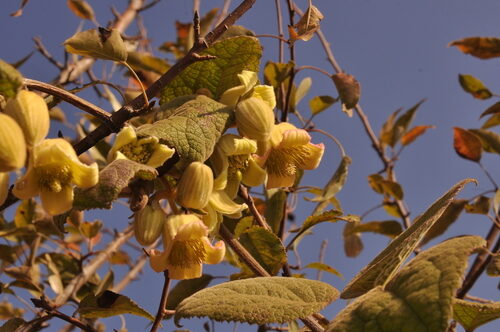
iNaturalist· cc-by-sa
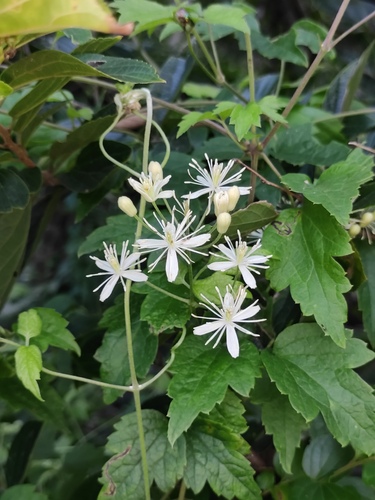
(c) Tony Rebelo, some rights reserved (CC BY-SA), uploaded by Tony Rebelo
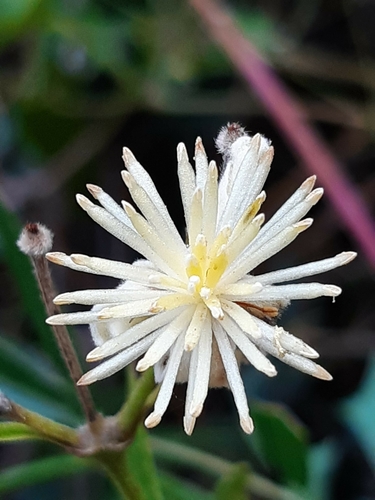
iNaturalist· cc-by-sa
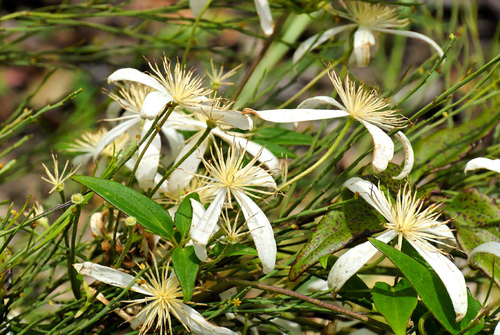
(c) Tony Rebelo, some rights reserved (CC BY-SA), uploaded by Tony Rebelo
iNaturalist· cc-by-nc-nd
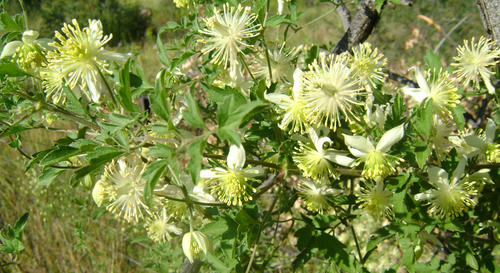
(c) Brendan Cole, some rights reserved (CC BY-NC-ND), uploaded by Brendan Cole
Summary
Source: WikipediaRanunculus multifidus, called the common buttercup in South Africa, is a widespread species of flowering plant in the family Ranunculaceae. It is native to Sub‑Saharan Africa (except West Africa), Madagascar, and the Arabian Peninsula. It grows in wet areas. It is used in traditional medicine to treat sores and toothaches.
Description
A herb. It keeps growing from year to year. It has swollen tubers. The stems are erect. It grows 1 m high. The leaves are mostly in a ring at the base. The leaves are twice divided and the leaflets have irregular teeth. The flowers are small and bright yellow. They are 2 cm across. They are on long branched, hollow stems.
Edible Uses
The leaves are occasionally cooked and eaten as a vegetable. The roots are eaten raw, and the tubers are also edible.
Traditional Uses
The leaves are occasionally cooked and eaten. The roots are eaten raw by boys.
This uses section is brief — help expand it
Distribution
A tropical plant. It grows in damp places. It grows in wet grassland and along river banks. In Zimbabwe it grows up to 2,000 m above sea level.
Where It Grows
Africa, Arabia, Botswana, East Africa, Egypt, Eswatini, Ethiopia, Madagascar, Malawi, Middle East, Mozambique, Nigeria, North Africa, Rwanda, South Africa, Southern Africa, Swaziland, West Africa, Zambia, Zimbabwe,
Notes
There are about 400 Ranunculus species.
Synonyms
Also Known As
Kapupuba, Kazibannyo, Khobedi, Sansamwa
References (15)
- Burkill, H. M., 1985, The useful plants of west tropical Africa, Vol. 4. Kew.
- Fl. aegypt.-arab. 102. 1775
- Fowler, D. G., 2007, Zambian Plants: Their Vernacular Names and Uses. Kew. p 53
- Grubben, G. J. H. and Denton, O. A. (eds), 2004, Plant Resources of Tropical Africa 2. Vegetables. PROTA, Wageningen, Netherlands. p 564
- Jardin, C., 1970, List of Foods Used In Africa, FAO Nutrition Information Document Series No 2.p 97
Show all 15 references Hide references
- Martin, F.W. & Ruberte, R.M., 1979, Edible Leaves of the Tropics. Antillian College Press, Mayaguez, Puerto Rico. p 215
- Molla, A., Ethiopian Plant Names. http://www.ethiopic.com/aplants.htm
- Peters, C. R., O'Brien, E. M., and Drummond, R.B., 1992, Edible Wild plants of Sub-saharan Africa. Kew. p 165
- Pickering, H., & Roe, E., 2009, Wild Flowers of the Victoria Falls Area. Helen Pickering, London. p 100
- Ruiters-Welcome, A. K., 2019, Food plants of southern Africa. Ph.D. thesis. Univ. of Johannesburg p 93
- Swaziland's Flora Database http://www.sntc.org.sz/flora
- Vinnicombe, 1976,
- Welcome, A. K. & Van Wyk, B.-E., 2019, An inventory and analysis of the food plants of southern Africa. South African Journal of Botany 122 (2019) 136–179
- Williamson, J., 2005, Useful Plants of Malawi. 3rd. Edition. Mdadzi Book Trust. p 213
- World Checklist of Useful Plant Species 2020. Royal Botanic Gardens, Kew