Withania somnifera
(L.) Dunal
Withania, Winter cherry
iNaturalist· cc-by-nc
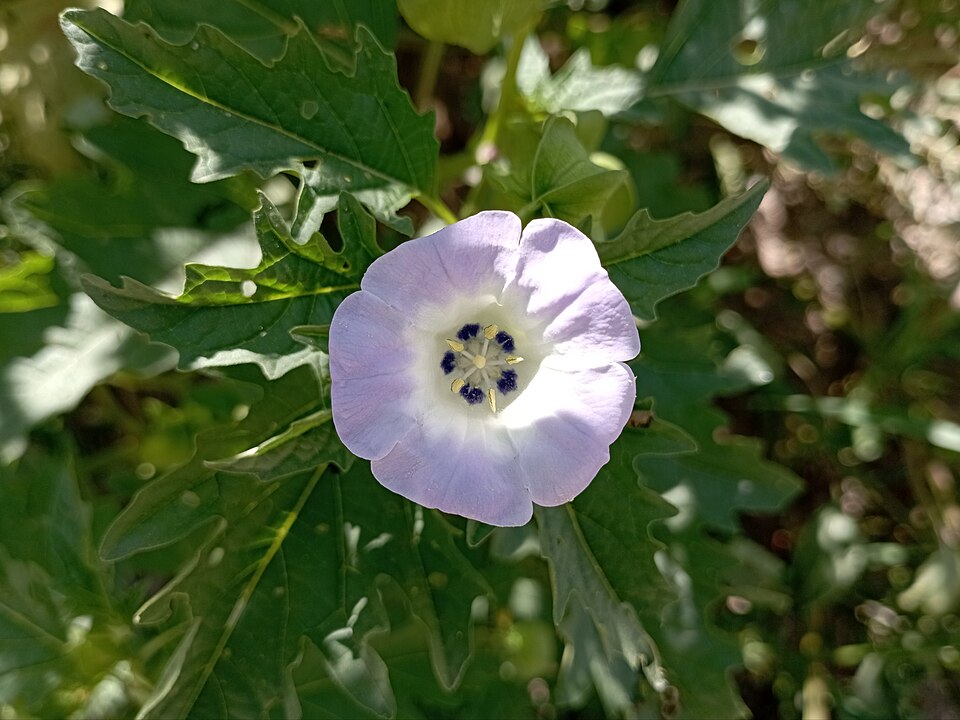
(c) Surabhi Suman Patel, some rights reserved (CC BY-NC), uploaded by Surabhi Suman Patel
iNaturalist· cc-by-sa
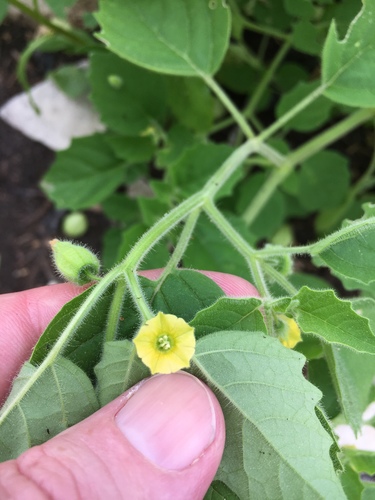
(c) Nicola van Berkel, some rights reserved (CC BY-SA), uploaded by Nicola van Berkel
iNaturalist· cc-by-nc
(c) Soliman Mohammed Toto, some rights reserved (CC BY-NC), uploaded by Soliman Mohammed Toto
Summary
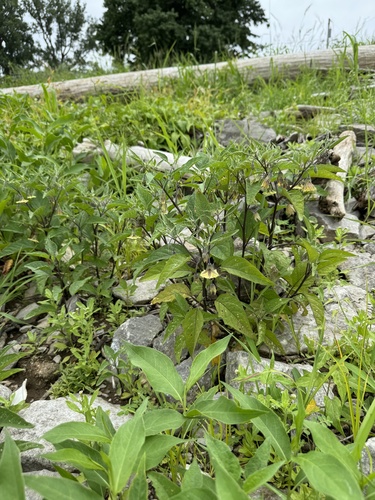
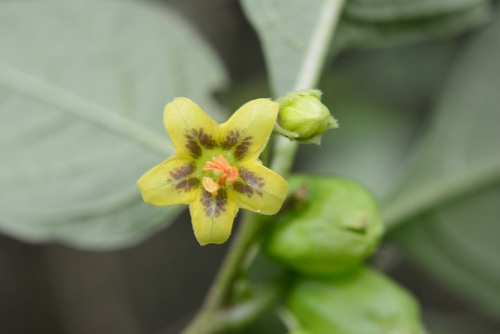
Source: WikipediaWithania somnifera, known commonly as ashwagandha, is an evergreen shrub in the Solanaceae family that is native to the Middle East and North Africa, other African regions, southern Europe, Indian subcontinent, and across Southeast Asia. Several other species in the genus Withania are morphologically similar. Other common names include Indian ginseng and winter cherry. W. somnifera is a short shrub 35–75 cm (14–30 in) tall with tomentose branches, dull green elliptic leaves up to 10–12 cm (3.9–4.7 in) long, small green bell-shaped flowers, and orange-red ripe fruit. It is affected by various pests and diseases in India, which can damage plant health and reduce its secondary metabolite content. The plant, particularly its root powder, has been used for centuries in traditional Indian medicine. W. somnifera is commonly sold as a dietary supplement containing root or leaf powder or extracts. It is undergoing research for potential effects on stress, anxiety, and sleep, but current clinical evidence is insufficient to confirm its safety or efficacy. The primary phytochemicals in W. somnifera are withanolides—structurally similar to ginsenosides in Panax ginseng—along with alkaloids and sitoindosides, leading to its nickname, Indian ginseng. W. somnifera is generally well tolerated for up to about three months with mostly mild side effects. It should be avoided during pregnancy or in people with hormone-sensitive conditions. It has been linked to rare cases of liver injury, particularly in people with preexisting liver conditions.
Description
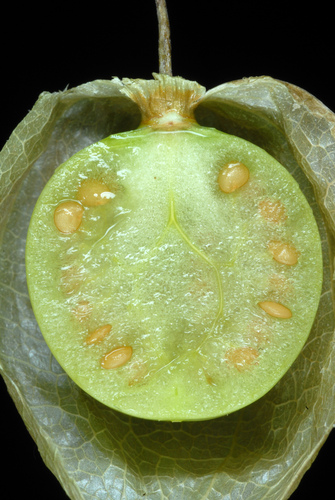
A small erect shrub. It grows 1.5 m high. It is woody in the lowest parts. The stems have few branches. The leaves are oval or oblong and have a wedge-shaped base. They have a short stalk and do not have teeth. The leaves are covered in star-shaped hairs. The flowers are greenish or yellow and are 5 mm across. They are bell shaped. They are usually in clusters of 4-6 on side shoots. The fruit is a shiny red berry 5-8 mm across. The seeds are pear or kidney shaped.
Edible Uses
The seeds are used as a curdling agent for plant milks in the making of vegetarian cheeses.
Traditional Uses
The tender shoots are eaten as a vegetable. The powdered roots are made into a tonic with warm milk, raw sugar, honey, long pepper and basmati rice. The seeds are used to coagulate milk. The fruit are used as a flavouring and preservative. CAUTION: It is reported to be poisonous. The plant is rich in alkaloids.
Medicinal Uses
Ashwagandha is one of India's most important adaptogenic and tranquillising herbs, holding a place comparable to ginseng in Chinese medicine. It acts primarily on the reproductive and nervous systems, improving physical and mental health, increasing longevity and vitality, and aiding recovery after chronic illness. Pharmacochemical analysis has revealed numerous bioactive compounds, including alkaloids, steroidal lactones, and glycosides. Aqueous alcohol root extracts have demonstrated cardioprotective and hepatoprotective effects. A group of glycosides called sitoindosides, isolated from the roots, showed significant antidepressant and anxiety-relieving properties. In comparative testing for chronic stress, a root extract performed similarly to a Panax ginseng extract across several stress markers, but without causing ginseng abuse syndrome, indicating a different mode of action. Cognition-enhancing tests of an aqueous ethanol extract containing withaferin A and sitoindosides showed a positive effect on cholinergic signal transduction in the forebrain, and the plant has been shown to reverse memory deficits and consolidate memory. Its neurological effects may also offer leads toward treatments for Parkinson's disease. Aqueous alcohol root extracts showed positive effects on cartilage in osteoarthritis patients both in vitro and in vivo. The immunomodulatory effects of the withanolides, a group of steroidal lactones, have been extensively studied; reported effects include enhanced white blood cell counts and activity, and inhibition of delayed-type hypersensitivity. Glyco-withanolides including sitoindosides IX and X have been shown to increase platelet, red blood cell, and white blood cell counts, and to boost activity of peritoneal macrophages and lysosomal enzymes. Root extracts show considerable promise in cancer therapy, with antitumour effects correlated with antioxidant activity. In addition to affecting tumour growth directly, extracts have shown positive adjuvant effects alongside radiation and chemotherapy. In vitro, the steroidal lactone withaferin A inhibited growth in human cell lines of breast, central nervous system, colon, and lung cancer. A chloroform extract prevented cell proliferation by disrupting mitosis and inhibiting angiogenesis. Adding root powder to the diet has produced hypoglycaemic effects. Although used as an aphrodisiac, root powder added to the diet has also been shown to impair libido and sexual performance. Methanolic root extract has demonstrated significant antibacterial activity against a range of bacteria. Research into anti-snake-venom properties found that a glycoprotein isolated from an aqueous plant extract neutralised the toxic effects of phospholipase A2 from cobra venom, though its mode of action may be too slow for practical pharmacological development. Side effects from medicinal use are rarely reported, but one case of thyrotoxicosis linked to its use was documented in the Netherlands; symptoms resolved when use was discontinued. The whole plant, and especially the leaves and root bark, are abortifacient, adaptogenic, antibiotic, aphrodisiac, deobstruent, diuretic, narcotic, strongly sedative, and tonic. Internally it is used to tone the uterus after miscarriage, treat post-partum difficulties, nervous exhaustion, debility, insomnia, wasting diseases, failure to thrive in children, impotence, infertility, and multiple sclerosis. Externally, the plant has been applied as a poultice to boils, wounds, swellings, and other painful areas, and an ointment made from the leaves is applied to wounds and bedsores. The root is harvested in autumn and dried for later use. Some caution is advised in using this plant as it is toxic. The fruit is diuretic. The seed is diuretic and hypnotic.
Known Hazards
W. somnifera may cause adverse effects if taken alone or together with prescription drugs. The most common side effects include diarrhea, headache, sedation, and nausea. Ashwagandha may increase testosterone levels, which could adversely interact with cancer medications. W. somnifera can cause hepatotoxicity, and its use as a supplement has been linked to herb-induced liver injury, particularly in people with preexisting liver conditions. Use of W. somnifera is not recommended during pregnancy or in people with hormone-sensitive prostate cancer.
Distribution
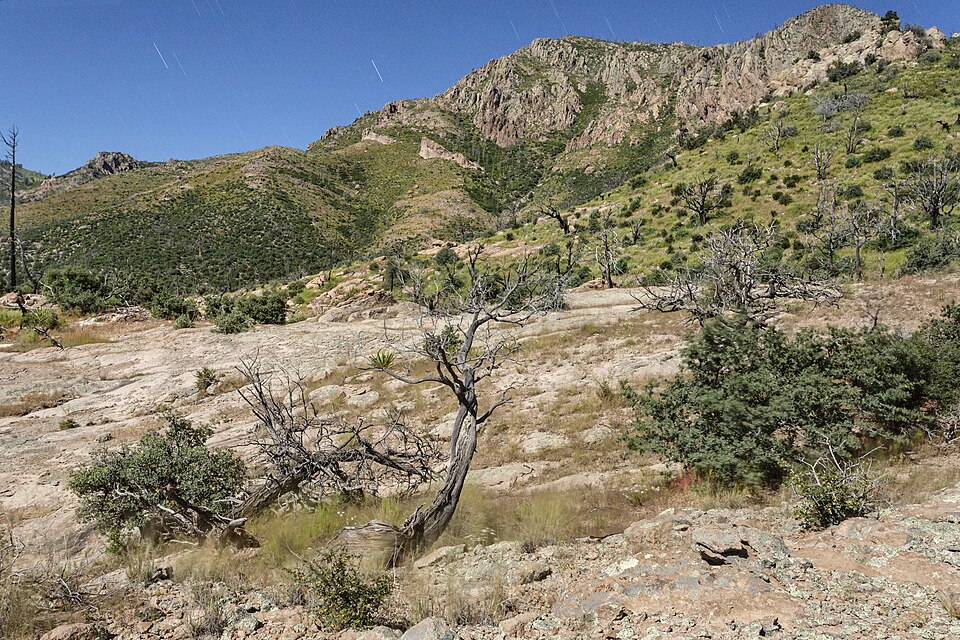
It grows in the subtropics. It grows along roadside and in waste places and in the Mediterranean at low altitudes. It can grow up to 1,700 m altitude. It cannot stand waterlogging. In Pakistan it grows to 2,300 m altitude. Hobart Botanical Gardens 1. In Yunnan.
Where It Grows
Afghanistan, Africa, Arabia, Asia, Australia, Botswana, Canary Islands, China, East Africa, Eswatini, Ethiopia, Europe, Greece, Himalayas, India, Iran, Iraq, Liberia, Malawi, Mali, Mediterranean, Mexico, Middle East, Mozambique, Myanmar, Nepal, Nigeria, North Africa, North America, Northeastern India, Pakistan, Palestine, Saudi Arabia, SE Asia, Sikkim, Somalia, South Africa, Southern Africa, South Sudan, Spain, Sri Lanka, Sudan, Swaziland, Syria, Tasmania, Turkey, Türkiye, West Africa, Zambia, Zimbabwe,
Cultivation
Plants are grown by seed. The seeds can be sown directly or put in a nursery and transplanted. Seeds germinate in one week. They can also be grown from greenwood cuttings with a heel.
Propagation
Sow seed in early spring in a greenhouse; germination rates are typically high and usually occur within 2 weeks. Prick out seedlings into individual pots once large enough to handle and plant out after the last expected frost. Consider providing protection such as a cloche until plants are well established.
Other Uses
The fruit is rich in saponins and can be used as a soap substitute. The leaves are used as an insect repellent. In Africa, the dried root is crushed, placed in a container, and heated to produce smoke that is used to ward off large animals such as lions.
Notes
There are about 10 Withania species. It has alkaloids with sedative properties.
Synonyms
Also Known As
Aksan, Asgand, Ashwagandha, Cheese tree, Dahat-tha-gaing, Ganda, Gisewa, Indian ginseng, Karama anta, Kuaak, Kuak, Kuthmithi, Punir, Winter cherry, Zafua
References (21)
- Ajain, M., Ali, T., & Siddiqui, M.F., 2015, A Survey of Ethnobotanically Important Herbaceous Plants of Tehsil Jatoi,District Muzaffar Garh, Punjab, Pakistan. Int. J. Biol. Res., 3(2): 87-92, 2015.
- Al-Sodany, Y. M., et al, 2013, Medicinal Plants in Saudi Arabia: I. Sarrwat Mountains at Taif, KSA. Academic Journal of Plant Sciences 6 (4): 134-145
- Ambasta, S.P. (Ed.), 2000, The Useful Plants of India. CSIR India. p 690
- Blamey, M and Grey-Wilson, C., 2005, Wild flowers of the Mediterranean. A & C Black London. p 404
- Burkill, H. M., 1985, The useful plants of west tropical Africa, Vol. 5. Kew.
Show all 21 references Hide references
- A. L. P. P. de Candolle, Prodr. 13(1):453. 1852
- Facciola, S., 1998, Cornucopia 2: a Source Book of Edible Plants. Kampong Publications, p 238
- Flora of Pakistan. www.eFloras.org
- Fowler, D. G., 2007, Zambian Plants: Their Vernacular Names and Uses. Kew. p 61
- Grubben, G. J. H. and Denton, O. A. (eds), 2004, Plant Resources of Tropical Africa 2. Vegetables. PROTA, Wageningen, Netherlands. p 566
- Masoodi, H. U. R. & Sundriyal, R. C., 2020, Richness of non-timber forest products in Himalayan communities—diversity, distribution, use pattern and conservation status. Journal of Ethnobiology and Ethnomedicine 16:56
- Molla, A., Ethiopian Plant Names. http://www.ethiopic.com/aplants.htm
- Hibbert, M., 2002, The Aussie Plant Finder 2002, Florilegium. p 310
- Rajendra, K.C., 2014. Prominent Non-Wood Forest Products of Te- rai and Siwalik Regions in Nepal. Food and Agriculture Organization, Kathmandu, Nepal. p 31
- Ruiters-Welcome, A. K., 2019, Food plants of southern Africa. Ph.D. thesis. Univ. of Johannesburg p 104
- Samuels, J., 2015, Biodiversity of Food Species of the Solanaceae Family: A Preliminary Taxonomic Inventory of Subfamily Solanoideae. Resources 2015, 4. 277-322
- Swaziland's Flora Database http://www.sntc.org.sz/flora
- van Wyk, B-E., 2011, The potential of South African plants in the development of new food and beverage products. South African Journal of Botany 77 (2011) 857–868
- Welcome, A. K. & Van Wyk, B.-E., 2019, An inventory and analysis of the food plants of southern Africa. South African Journal of Botany 122 (2019) 136–179
- Wild edible plants of Himachal Pradesh
- World Checklist of Useful Plant Species 2020. Royal Botanic Gardens, Kew