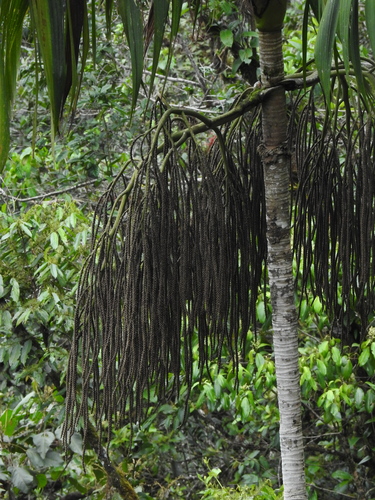
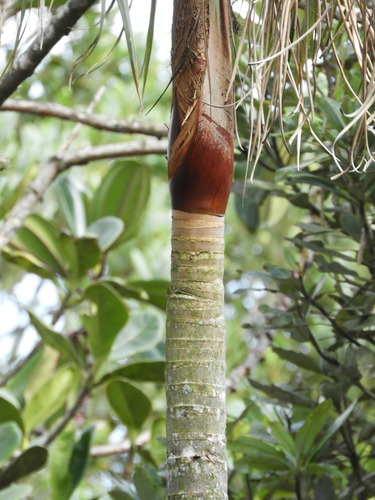
Chamaedorea macrospadix
Oerst.
wikimedia· cc-by-sa
Wikimedia Commons - Photo by David J. Stang
wikimedia· cc-by-sa
Wikimedia Commons - Photo by David J. Stang
Description
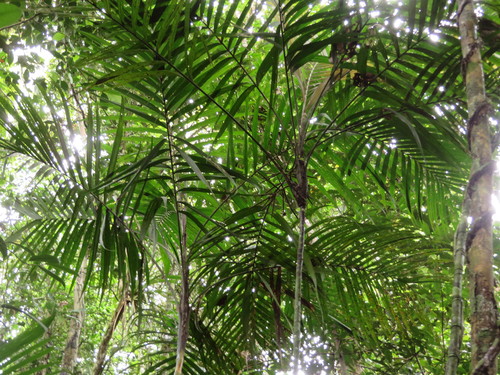
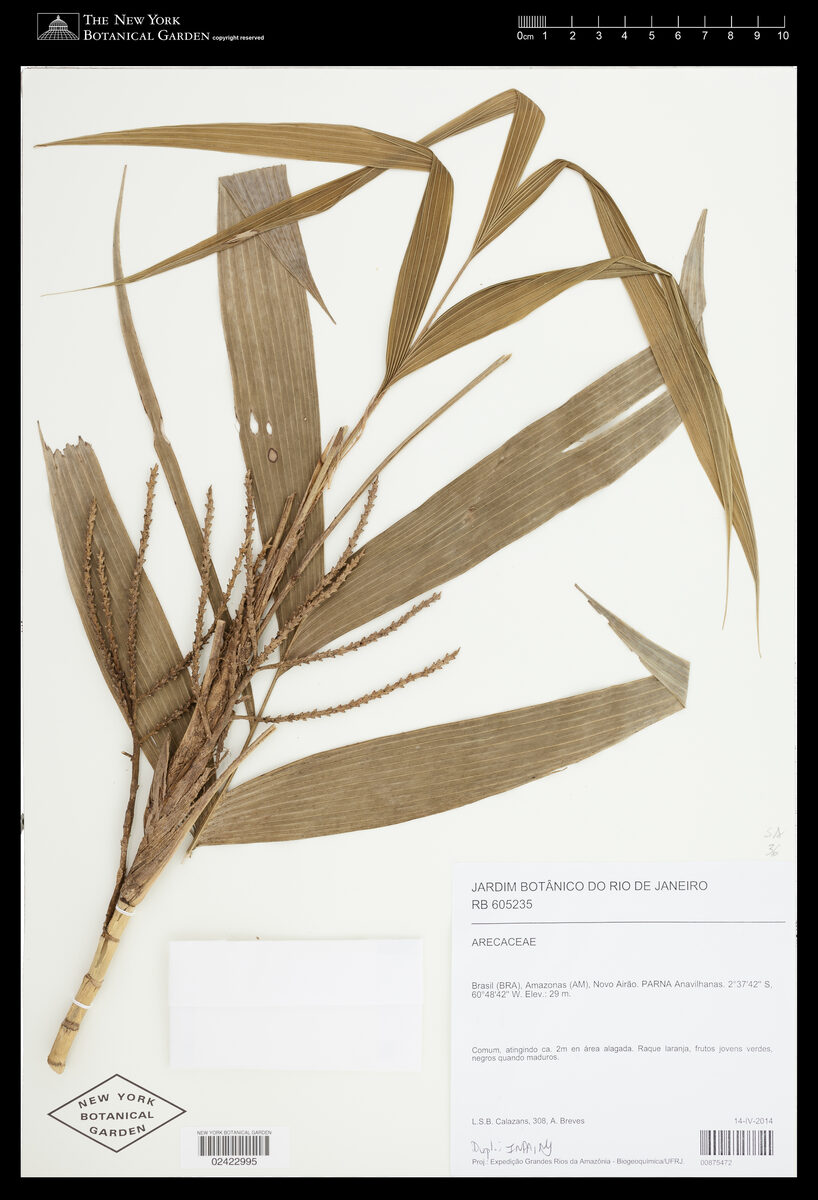
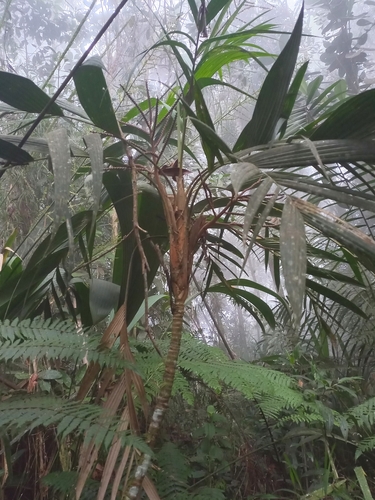
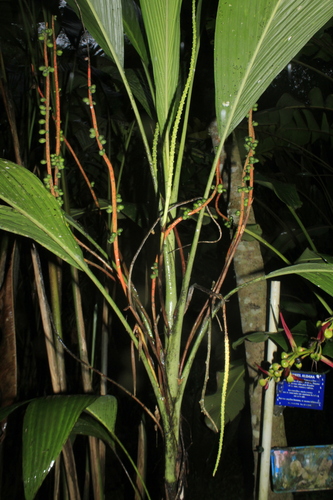
A palm. It has a single stem. It grows 3 m tall and 1.5-2.5 cm across. It can grow erect or be creeping. There are 3-7 leaves and they have leaflets along the stalk. There are 7-13 leaflets on each side. They are narrowly sword shaped and 37 cm long by 5 cm wide. They are glossy underneath. The flowering stalk is erect and on a long stalk. The male stalks have 10-25 flowering branches and the female stalks have 8-15 branches. The fruit are oblong and 0.7-1 cm long by 6-8 mm wide. They are black.
Edible Uses
Young flowers can be fried, cooked in soups, or eaten in salads.
Traditional Uses
The young flowers can be fried, cooked in soups or eaten in salads.
This uses section is brief — help expand it
Distribution
A tropical plant. It grows in lowland and mountain rainforest. It is often on limestone soils. It grows between 100-1300 m altitude.
Where It Grows
Central America, Costa Rica,
Notes
There are about 100 Chamaedorea species. They are mostly in Central America. There are 77 species in tropical America.
Synonyms
References (2)
- Balick, M.J. and Beck, H.T., (Ed.), 1990, Useful palms of the World. A Synoptic Bibliography. Colombia p 658
- Henderson, A., Galeano, G and Bernal, R., 1995, Field Guide to the Palms of the Americas. Princeton. p 97