Urochloa mosambicensis
(Hack.) Dandy
Bushveld signal grass, Sabi grass, Gonya grass
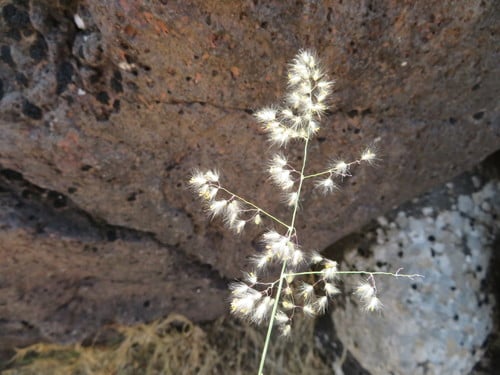
iNaturalist· cc-by-nc
(c) michaelkalisek, some rights reserved (CC BY-NC)
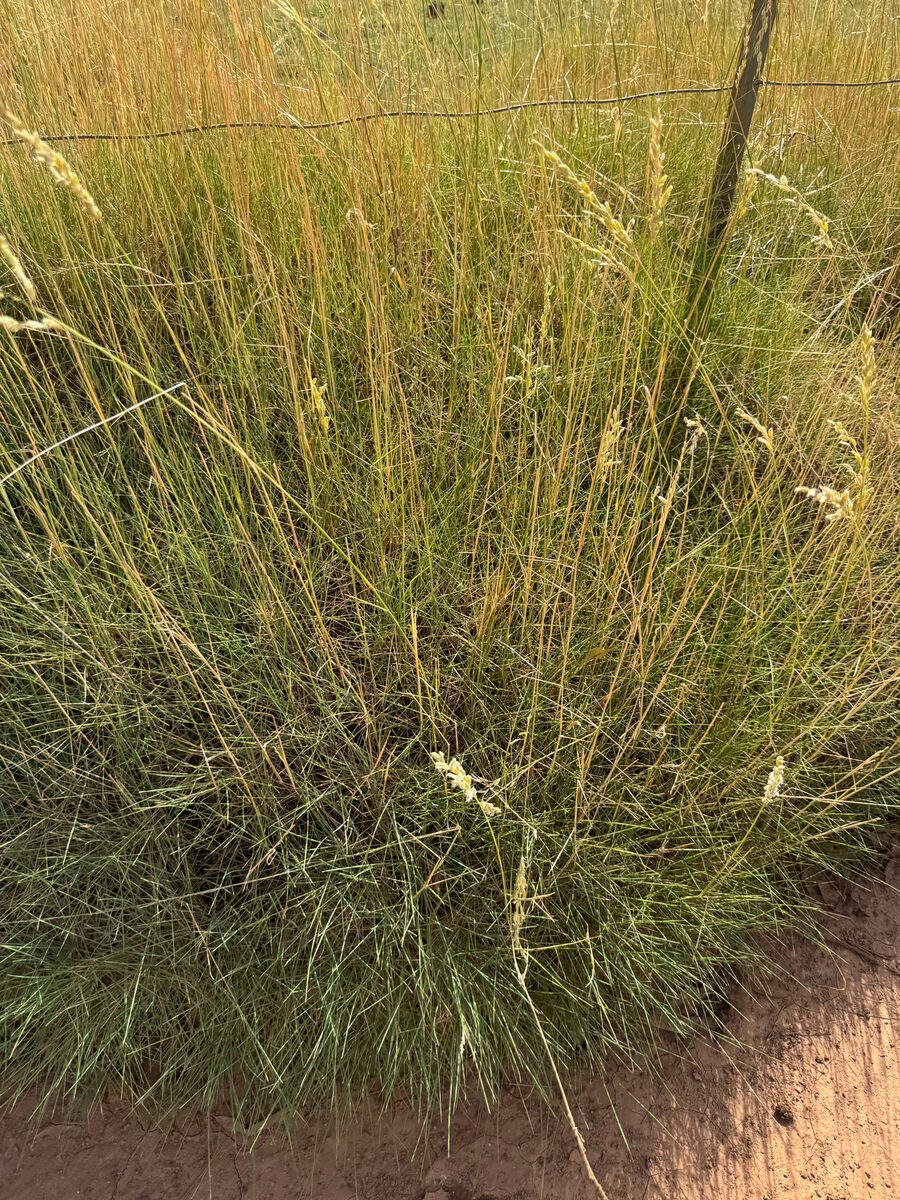
iNaturalist· cc-by-nc
(c) michaelkalisek, some rights reserved (CC BY-NC)
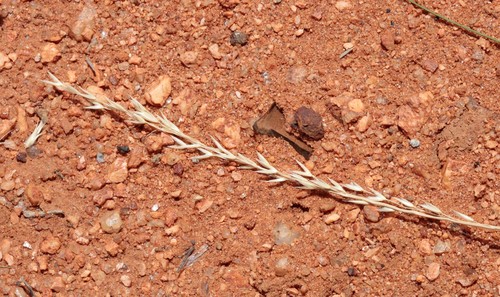
iNaturalist· cc-by-nc
(c) michaelkalisek, some rights reserved (CC BY-NC)
Summary
Source: WikipediaA perennial grass growing 1.2 m tall at a fast rate, hardy to UK zone 10. Reproduces apomictically and is self-fertile. Adapts to light sandy, medium loamy, and heavy clay soils, preferring well-drained conditions and tolerating nutritionally poor soil. Tolerates pH from very acid to very alkaline including saline soils. Grows in semi-shade or full sun, prefers moist soil, and resists drought and strong winds but not maritime exposure.
Description
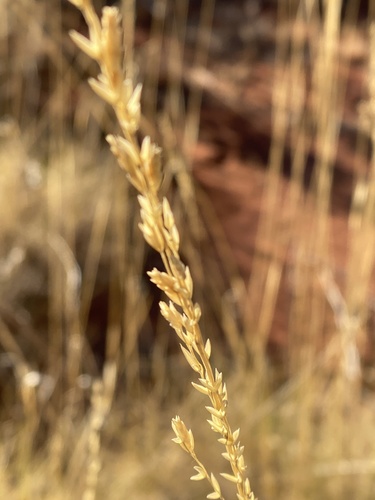
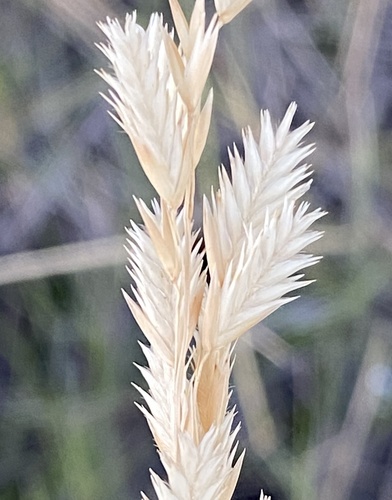
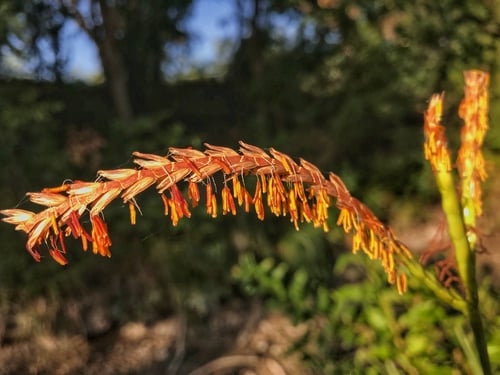
A grass. It keeps growing from year to year. It grows 1 to 1.3 m high. It forms tufts. The leaves are broad and have a sharp point. The flowering shoots consist of 4 to 10 dense, one-sided spikes. These are grey and are near the tip of the stems. The spikelets are 5 mm long.
Edible Uses
The seed is cooked and used as a cereal, usually ground into flour and eaten as a porridge.
Medicinal Uses
None known
Distribution
It is a tropical plant. It grows in wooded grassland and deciduous bushland. It cannot tolerate frost. It grows in areas with an annual rainfall between 400-1,200 mm. It grows in well drained soils. It can grow in salty and alkaline soils. It can re-grow after fire. It grows between sea level and 1,400 m above sea level. It can grow in arid places.
Where It Grows
Africa, Angola, Argentina, Asia, Australia, Botswana, Central Africa, East Africa, Eswatini, Ghana, Hawaii, India, Kenya, Malawi, Mozambique, Myanmar, SE Asia, South Africa, Southern Africa, South America, Swaziland, Tanzania, Uganda, West Africa, Zambia, Zimbabwe,
Cultivation
In its natural habitat Urochloa mosambicensis occurs at elevations up to 1,600 metres in regions with a mean annual rainfall of 400 - 1,200mm, exceptionally to 1,600mm, and a dry season of 5 - 9 months. Plants have tolerated light frosts, but are checked by anything more than this. Prefers a sunny position, but tolerates light shade. It will grow in a wide range of soils, from clay loams to sands, but appears to be more suitable for lighter soils with relatively high fertility. It can tolerate both acid and alkaline soils. Established plants are drought tolerant. In northern Australia the plant has escaped from cultivation and becomes dominant after fires.However, the plant is considered to be too palatable and insufficiently aggressive to become a serious weed. The seeds germinate early in the wet season and vegetative growth continues until soil water is exhausted. Flowering starts 3 - 4 weeks after the start of the rainy season and continues until growth ceases. Seed matures in 3 - 4 weeks. Plants are often short-lived, dying after 3 - 4 years. Urochloa mosambicensis is an obligate apomict. The plant follows the C4 photosynthetic pathway. To obtain the grain, the inflorescences are picked when still slightly green and spread out in the sun to dry. When dry, the grains are easily rubbed from the stalks. Annual grain yields of 100 - 300 kilos per hectare have been recorded from Australia.
Propagation
Fresh seed has dormancy that breaks down after 9–12 months of storage. Dormancy can also be broken by hammer-milling, which destroys the hard lemma. In India the plant is also propagated vegetatively using rooted cuttings.
Other Uses
The plant is effective for erosion control and in situations requiring rapid establishment and good ground cover. In Australia it is used in mine site rehabilitation. It performs well in intercropping with leguminous pasture plants and is commonly grown alongside Stylosanthes spp.
Other Information
It is sometimes cultivated as a food plant.
Synonyms
Also Known As
Bunga, Chequenchi, Gonya grass, Imbabu, Impunga, M'pande, Mwe-zok-myet, Namape, Phoka, Shibanane, Tunga, Wayon-myet
References (18)
- Ambasta, S.P. (Ed.), 2000, The Useful Plants of India. CSIR India. p 663 (As Urochloa pullulans)
- Burkill, H. M., 1985, The useful plants of west tropical Africa, Vol. 2. Kew.
- Fowler, D. G., 2007, Zambian Plants: Their Vernacular Names and Uses. Kew. p 73
- Grivetti, L. E., 1980, Agricultural development: present and potential role of edible wild plants. Part 2: Sub-Saharan Africa, Report to the Department of State Agency for International Development. p 73
- Herb., E. A., 1981,
Show all 18 references Hide references
- Jackes, B. R., 2010, Plants of Magnetic Island. 3rd Edition. James Cook University, Australia. p 39
- JSTOR Global Plants edible
- Long, C., 2005, Swaziland's Flora - siSwati names and Uses http://www.sntc.org.sz/flora/
- National Research Council, 1996, Lost crops of Africa. Volume 1 grains, p 271
- Neudeck, L. et al, 2012, The Contribution of Edible Wild Plants to Food Security, Dietary Diversity and Income of Households in Shorobe Village, Northern Botswana. Ethnobotany Research & Applications 10:449-462
- Peters, C. R., O'Brien, E. M., and Drummond, R.B., 1992, Edible Wild plants of Sub-saharan Africa. Kew. p 29
- D. Prain, Fl. trop. Afr. 9:590. 1920 - an illegitimate, superfluous name (ICBN Art. 52) for Panicum mosambicense Hack.
- Royal Botanic Gardens, Kew (1999). Survey of Economic Plants for Arid and Semi-Arid Lands (SEPASAL) database. Published on the Internet; http://www.rbgkew.org.uk/ceb/sepasal/internet [Accessed 4th June 2011]
- Ruiters-Welcome, A. K., 2019, Food plants of southern Africa. Ph.D. thesis. Univ. of Johannesburg p 90
- Scudder, 1962,
- Swaziland's Flora Database http://www.sntc.org.sz/flora
- van Wyk, Be, & Gericke, N., 2007, People's plants. A Guide to Useful Plants of Southern Africa. Briza. p 14
- Welcome, A. K. & Van Wyk, B.-E., 2019, An inventory and analysis of the food plants of southern Africa. South African Journal of Botany 122 (2019) 136–179