Scleria scrobiculata
Nees & Meyen ex Nees
Nut rush
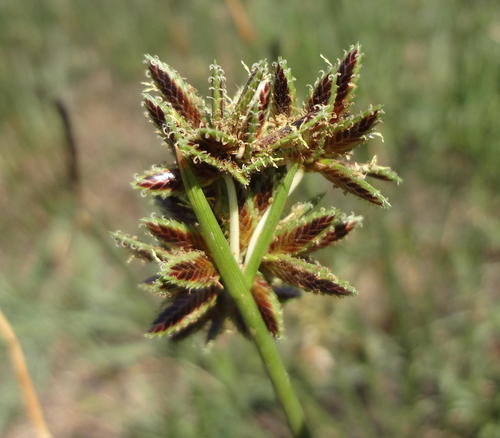
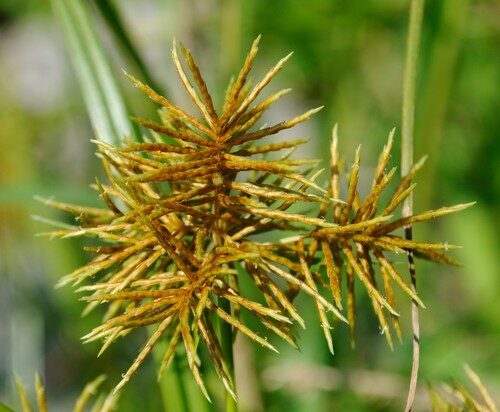
iNaturalist· cc-by-nc
(c) CliffChen, some rights reserved (CC BY-NC), uploaded by CliffChen
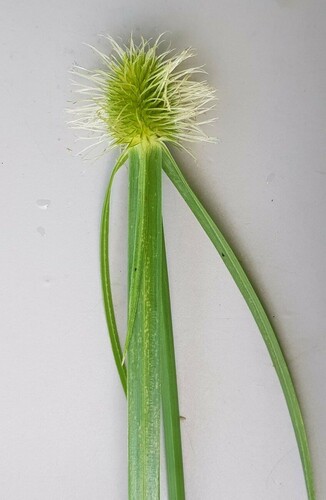
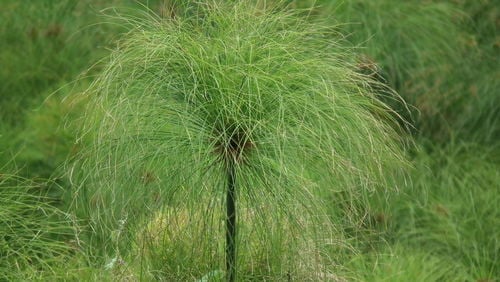
iNaturalist· cc-by-nc
(c) JODY HSIEH, some rights reserved (CC BY-NC)
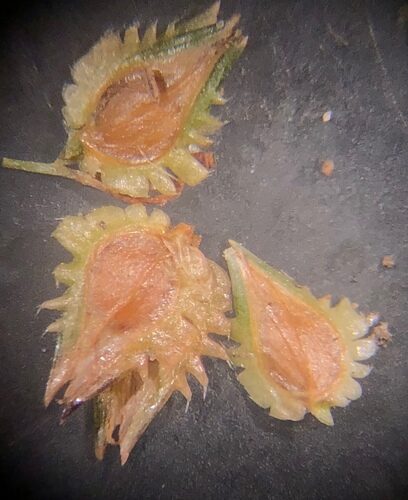
iNaturalist· cc-by-nc
(c) JODY HSIEH, some rights reserved (CC BY-NC)
Description
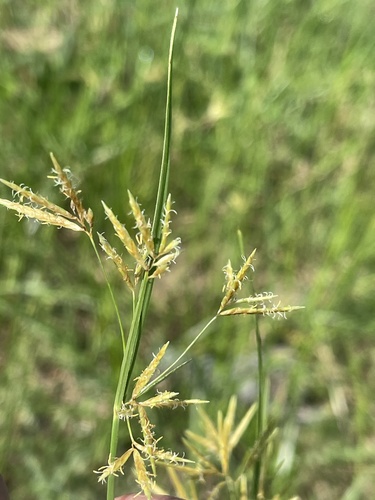
A sedge. These grow in clumps and have grass like leaves and solid stalks. The stalks are 1-2.5 m tall and 4-10 mm thick. They are 3 sided. The leaves are in rings of 2-5 in the middle of the stalk. The sheaths are 4-6 cm long. The leaf blade is 40 cm long by 1 cm wide. The flowering shoots are branched panicles with 2-3 spikelets in a cluster. The nutlets are white and round and 2-3 mm long. They are slightly 3 sided.
Edible Uses
The young tops and fruit are eaten.
Traditional Uses
The young tops and fruit are eaten.
This uses section is brief — help expand it
Distribution
It is a tropical plant. In south China it grows in broad-leaved evergreen forests between 100-300 m above sea level.
Where It Grows
Asia, Australia, China, East Timor, India, Indochina, Indonesia, Laos, Malaysia, Pacific, Papua New Guinea, PNG, Philippines, Samoa, SE Asia, Taiwan, Thailand, Timor-Leste, Vietnam,
Synonyms
Also Known As
Tafatolu
References (4)
- Ambasta S.P. (Ed.), 2000, The Useful Plants of India. CSIR India. p 561
- Cowie, I, 2006, A Survey of Flora and vegetation of the proposed Jaco-Tutuala-Lore National Park. Timor-Lests (East Timor) www.territorystories.nt/gov.au p 46
- Parham, B. E. V., 1972, Plants of Samoa. New Zealand Department of Scientific and Industrial Research. Information Series. No. 85 p 115
- World Checklist of Useful Plant Species 2020. Royal Botanic Gardens, Kew