Cyperus usitatus
Burch.
Boesman uintjie
iNaturalist· cc-by-nc
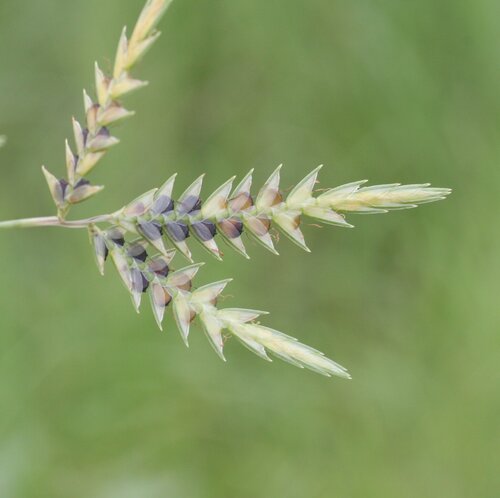
(c) lorainevdb, some rights reserved (CC BY-NC), uploaded by lorainevdb
iNaturalist· cc-by-sa
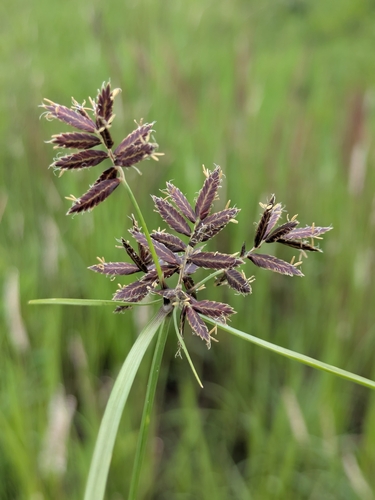
(c) Brian du Preez, some rights reserved (CC BY-SA), uploaded by Brian du Preez
iNaturalist· cc-by-nc-sa
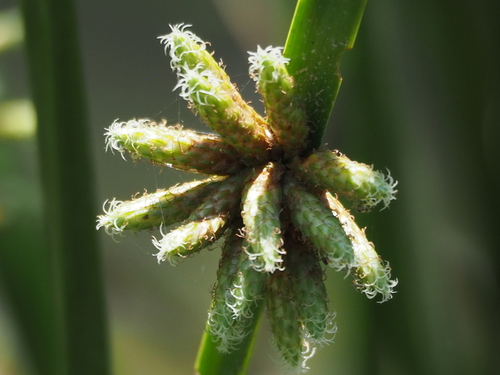
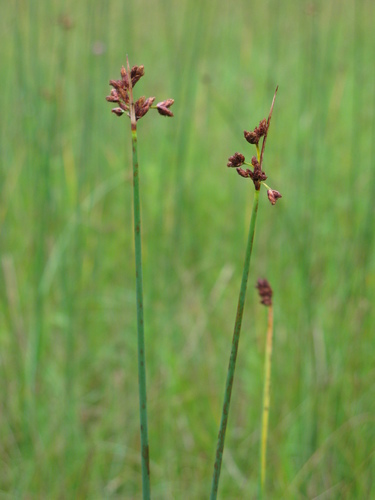
(c) David Hoare, some rights reserved (CC BY-NC-SA), uploaded by David Hoare
Summary
Source: WikipediaCyperus usitatus is a species of sedge that is native to eastern and southern Africa, ranging from Ethiopia to South Africa.
Description
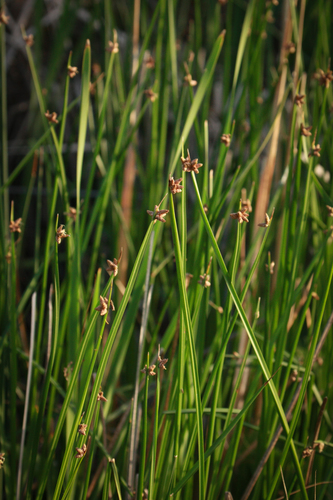
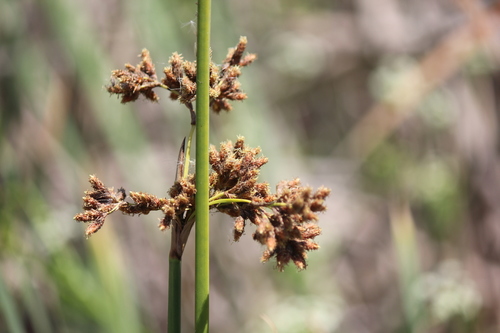
A herb or sedge. It keeps growing from year to year. It has runners. It grows 45 cm high. The stalks are 10-30 cm long and 5-12 mm wide and triangle shaped. The leaf blades are 5-20 cm long by 2-6 mm wide. They are flat and rather thick. The bulbs are 6-10 mm across. They have a few thin scaled. The flowers are in crowded spikes.
Edible Uses
The bulbs are eaten raw or cooked, and are used in soups and vegetable dishes, though they are bitter unless cooked.
Traditional Uses
The bulb is eaten raw. It is also cooked and eaten. It is used in soups and vegetable dishes. The bulbs are bitter unless cooked.
This uses section is brief — help expand it
Known Hazards
The bulbs taste bitter when raw.
Distribution
It is a subtropical plant. It grows in hot arid areas with a marked dry season. It can be in shallow, sandy and seasonally waterlogged soils. It grows between 900-2,225 m above sea level. It can grow in arid places.
Where It Grows
Africa, Botswana, East Africa, Ethiopia, Lesotho, Namibia, South Africa, Southern Africa, Tanzania, Uganda, Zambia, Zimbabwe,
Other Information
It is a famine food.
Nutrition
| Part | Moisture | kJ | kcal | Protein | Vit A | Vit C | Iron | Zinc |
|---|---|---|---|---|---|---|---|---|
| Bulb | 76.2 | — | — | 2.5 | — | — | — | — |
Also Known As
Allaado, Engicha, Monakalali, Ozeu, Uintjie
References (12)
- Fox, F. W. & Young, M. E. N., 1982, Food from the Veld. Delta Books. p 179
- Grivetti, L. E., 1980, Agricultural development: present and potential role of edible wild plants. Part 2: Sub-Saharan Africa, Report to the Department of State Agency for International Development. p 65
- Lulekal, E., et al, 2011, Wild edible plants in Ethiopia: a review on their potential to combat food insecurity. Afrika Focus - Vol. 24, No 2. pp 71-121
- Peters, C. R., O'Brien, E. M., and Drummond, R.B., 1992, Edible Wild plants of Sub-saharan Africa. Kew. p 15
- Peters and Maguire, 1981,
Show all 12 references Hide references
- Royal Botanic Gardens, Kew (1999). Survey of Economic Plants for Arid and Semi-Arid Lands (SEPASAL) database. Published on the Internet; http://www.rbgkew.org.uk/ceb/sepasal/internet [Accessed 16th April 2011]
- Ruiters-Welcome, A. K., 2019, Food plants of southern Africa. Ph.D. thesis. Univ. of Johannesburg p 51
- Simpson, D. A. & Inglis, C. A., 2001, Cyperaceae of Economic, Ethnobotanical and Horticultural Importance: A checklist. Kew Bulletin Vol. 56, No. 2 (2001), pp. 257-360
- Sina, B. & Degu, H. D., 2015, Knowledge and use of Wild Edible Plants in the Hula District of the Sidama Zone. International Journal of Bio-resource and Stress Management 6(3):352-365
- Welcome, A. K. & Van Wyk, B.-E., 2019, An inventory and analysis of the food plants of southern Africa. South African Journal of Botany 122 (2019) 136–179
- World Checklist of Useful Plant Species 2020. Royal Botanic Gardens, Kew
- Youngblood, D., 2004, Identification and Quantification of Edible Plant Foods in the Upper (Nama) Karoo, South Africa. Economic Botany 58 (Supplement) :S43-S65