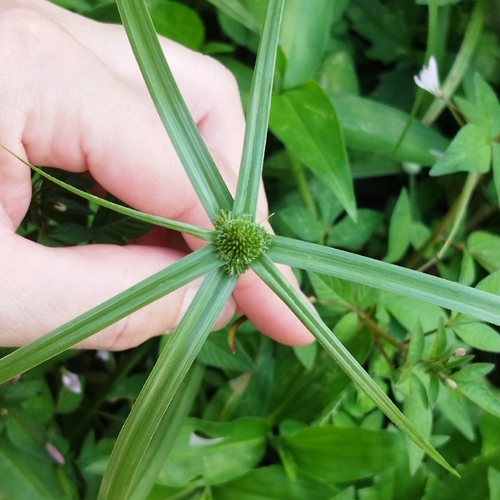
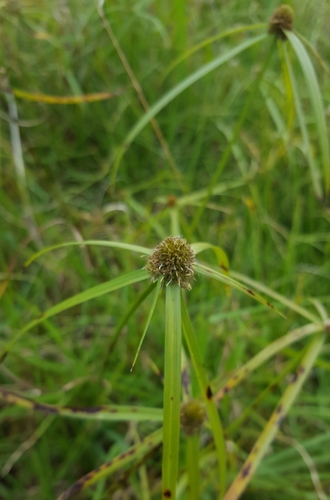
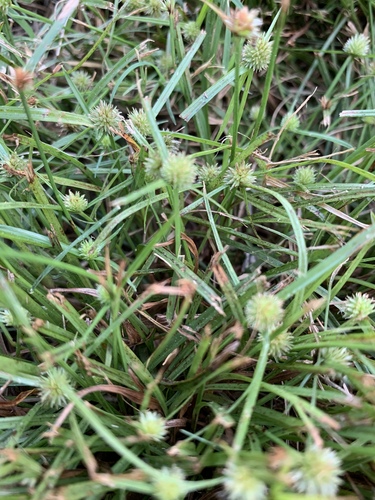
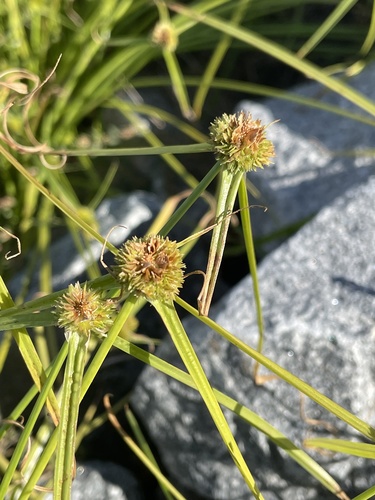
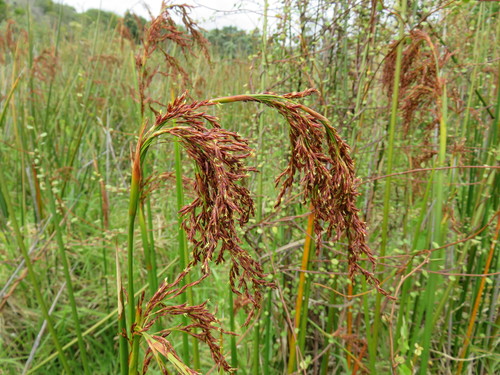
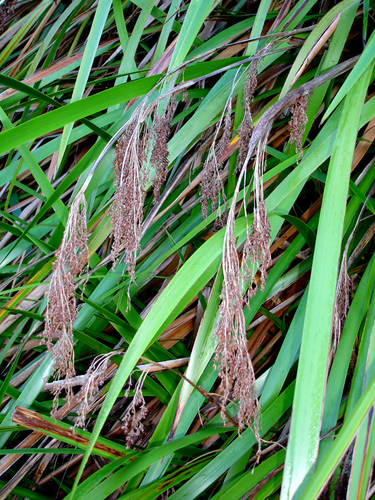
Cyperus victoriensis
C. B. Clarke
Bush onion, Yelka
iNaturalist· cc-by-nc
(c) Russell Cumming, some rights reserved (CC BY-NC), uploaded by Russell Cumming
iNaturalist· cc-by-nc
(c) Russell Cumming, some rights reserved (CC BY-NC), uploaded by Russell Cumming
Summary
Source: WikipediaCyperus victoriensis, also known as channel nut grass is a sedge of the family Cyperaceae that is native to all the states and territories of mainland Australia.
Description
A sedge. These grow in clumps and have grass like leaves and solid stalks. It keeps growing from year to year. It grows 60 cm high.
This description is brief — help expand it
Edible Uses
The tubers formed on the rhizome are cooked as a vegetable.
Traditional Uses
The tubers formed on the rhizome are cooked as a vegetable.
This uses section is brief — help expand it
Medicinal Uses
It is used as a famine food.
Distribution
A tropical plant. It grows on flood plains and near rivers. It is on open grasslands on clay.
Where It Grows
Australia*,
Cultivation
It can be grown using seed.
Other Information
It is a famine food.
Notes
There are 550 Cyperus species.
References (6)
- Cherikoff V. & Isaacs, J., The Bush Food Handbook. How to gather, grow, process and cook Australian Wild Foods. Ti Tree Press, Australia p 189
- Hunter, J. T. & Sheringham, P., 2006, Vegetation and Floristics of Melville Range Nature Reserve. A Report to the New South Wales Parks and Wildlife Service. p 165
- Lazarides, M. & Hince, B., 1993, Handbook of Economic Plants of Australia, CSIRO. p 75
- Paczkowska, G. & Chapman, A.R., 2000, The Western Australian Flora. A Descriptive Calatogue. Western Australian Herbarium. p 46
- Romanowski, N., 2007, Edible Water Gardens. Hyland House. p 56
Show all 6 references Hide references
- Simpson, D. A. & Inglis, C. A., 2001, Cyperaceae of Economic, Ethnobotanical and Horticultural Importance: A checklist. Kew Bulletin Vol. 56, No. 2 (2001), pp. 257-360