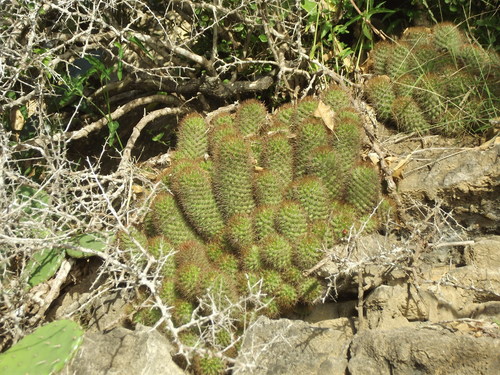
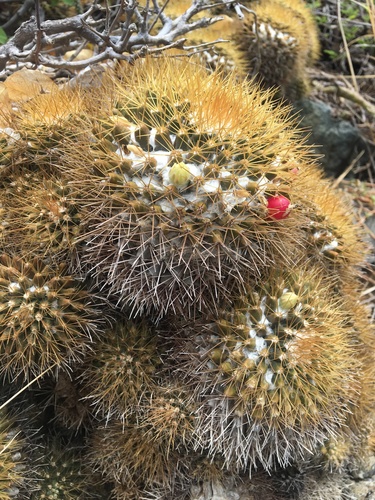
Echinocereus triglochidiatus
Engelmann
Claret cup cactus
iNaturalist· cc0
no rights reserved
iNaturalist· cc-by-nc
(c) Chandler Sonafrank, some rights reserved (CC BY-NC)
iNaturalist· cc-by-nc
(c) Chandler Sonafrank, some rights reserved (CC BY-NC)
Summary
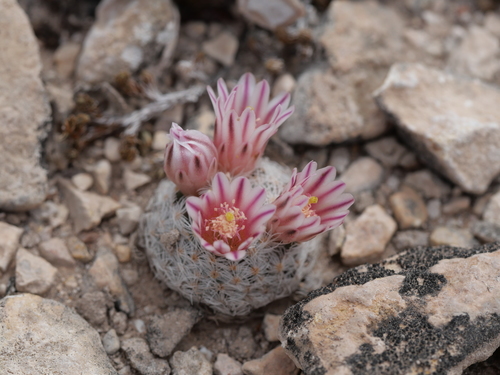
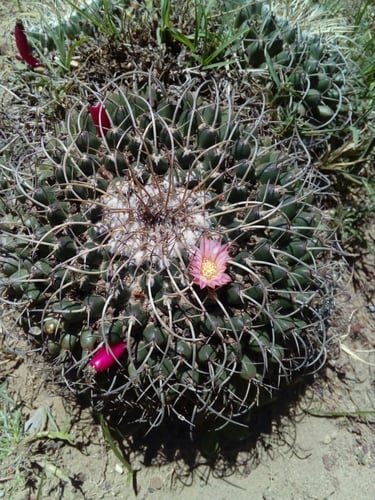
Source: WikipediaEchinocereus triglochidiatus is a species of hedgehog cactus known by several common names, including kingcup cactus, claret cup cactus, red-flowered hedgehog cactus and Mojave mound cactus. This cactus is native to the southwestern United States and northern Mexico, where it is a resident of varied habitats from low desert to rocky slopes, scrub, and mountain woodland. E. triglochidiatus is the official state cactus of Colorado.
Description
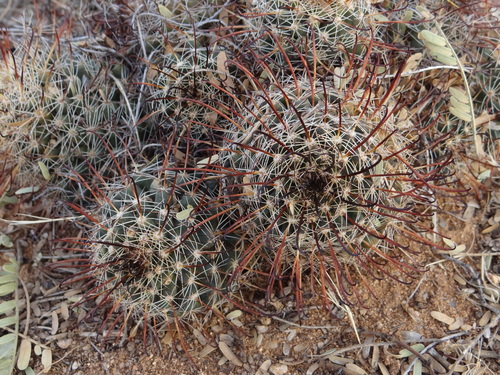
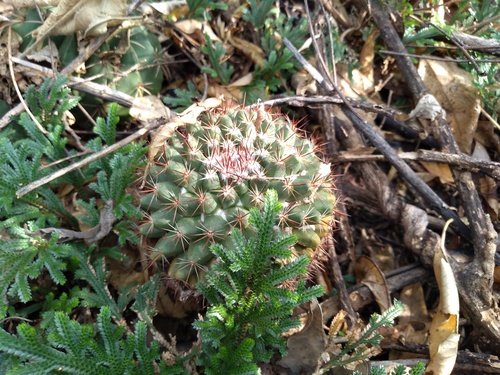
A cactus. It forms clumps or clusters. It grows 30-40 cm high and spreads 20-50 cm wide. The stems are cylinder shaped and can be 15-20 cm long. They are 5 cm wide. They can occur singly or in clumps. They have about 10 ribs. They have short spine in a ring around a central spine. This central one can be 7 cm long. The flowers are red and long tubes. They can be 5 cm across. Some different varieties occur. The fruit is round and pink or red. It has spines which fall off.
Edible Uses
Fruits are edible and often considered among the best of hedgehog cacti; reliability remains the major constraint. Edible Uses & Rating. Fruits; rating: excellent potential fruit quality, low-to-moderate harvest reliability depending on local ant pressure and fruit set. Taste, Processing & Kitchen Notes. The best strategy is fresh eating with minimal processing: brush off spines, open, inspect, eat. Any attempt at batch processing should begin with inspection, because empty fruits waste time and contaminate your workflow with dry shells and spines. Seasonality (Phenology). Blooms in spring and typically fruits in early to mid-summer, with strong year-to-year variability driven by moisture and site conditions (consistent with your genus-level description). Safety & Cautions (Food Use). Mechanical spine hazard; local protections may apply. In some areas claretcup forms are conservation-sensitive, so treat harvest as inappropriate unless you are certain collection is legal and sustainable. Harvest & Processing Workflow. Harvest ripe fruits, brush, open to confirm intact pulp and seeds, then eat fresh. If you strain pulp, do so only after you have fully de-spined and you can keep spines out of the edible stream. Cultivar/Selection Notes. This is widely used ornamentally; many garden selections focus on flower color and cold tolerance. For foraging outcomes, the practical “selection” is finding sites where fruits are not routinely excavated by ants. Look-Alikes & Confusion Risks. Claretcup is recognizable as a hedgehog cactus by ribbed stems and lateral flowers/fruits; confusion is mainly among closely related Echinocereus species and varieties. Traditional/Indigenous Use Summary. Claretcup-type hedgehog fruits sit within the broader tradition of Southwest cactus fruit use, typically as seasonal treats rather than bulk staples.
Traditional Uses
The fruit are eaten fresh or made into preserves. The fruit pulp is sliced and baked like squash. It can be baked in sugar to make a sweet pickle.
This uses section is brief — help expand it
Medicinal Uses
Echinocereus triglochidiatus, commonly known as the Kingcup or Claret Cup cactus, has documented traditional medical uses and nutritional benefits among indigenous peoples in the southwestern United States. Key information regarding its medical and practical applications includes: Ethnobotanical/Medicinal Use: The Navajo have historically used this cactus as a heart medication and, in some contexts, it has been noted for having poisonous properties if not used correctly. Nutritional Value: The plant produces juicy, edible red fruits that are safe for human consumption and have a mildly sweet taste. Other Uses: It is primarily known as an ornamental plant in rock gardens and for its ability to attract pollinators like hummingbirds. Note: While some sources mention potential hallucinogenic or intoxicating effects within this genus (Echinocereus/similar cacti), the primary recorded uses for E. triglochidiatus are medicinal (heart-related) and nutritional.
Known Hazards
Mechanical spine hazard; local protections may apply. In some areas claretcup forms are conservation-sensitive, so treat harvest as inappropriate unless you are certain collection is legal and sustainable.
Distribution
It is a temperate plant. Desert. It needs a temperature above 10°C. It can grow in arid places. It suits hardiness zones 6-11.
Where It Grows
Australia, Central America, Mexico, North America, USA,
Cultivation
Claretcup hedgehog cactus is one of the most rewarding hedgehog cacti aesthetically and potentially one of the best for fruit flavor, but its food value is fundamentally opportunistic because ants and variability often win the harvest. Growing Conditions. Full sun, dry air, very sharp drainage; notable cold tolerance when crowns are kept dry. Habitat & Range. Rocky deserts and pinyon–juniper edges across the Southwest and adjacent regions, with variety-level distributions. Size & Landscape Performance. Low clumps that can widen; strong structural accent and a major spring bloom event; good container plant where drainage is controlled. Cultivation (Horticulture). Gritty soils, minimal watering once established, and strong drainage; raised beds or slopes are ideal. Pests & Problems. Ant excavation is the signature “food problem”; rot is the signature cultivation problem in wet soils. Identification & Habit. Ribbed, non-jointed stems; spines not hooked; flowers lateral; fruits spiny and small. Pollinators. Claretcup hedgehog cactus is well documented as an important hummingbird plant in parts of its range, with hummingbirds acting as primary pollinators while bees also visit the flowers. Kingcup or Claretcup Hedgehog Cactus (Echinocereus triglochidiatus). Family: Cactus family (Cactaceae). Genus: Echinocereus. Common names: Kingcup cactus, claretcup hedgehog cactus. USDA Hardiness Zones and size: Commonly cited as cold hardy into Zone 5, typically about 15–30 cm tall with clumps spreading about 30–90+ cm (approximate).
Propagation
Seed and offsets; seed is best for maintaining locally adapted, cold-hardy traits.
Notes
There are about 60 Echinocereus species.
Synonyms
Also Known As
Clear-up cactus, Black-spine claret-cup cactus, King's crown cactus, Red hedgehog-cactus, Robust claret-cup hedgehog, Rose's claret-cup cactus, Rose's hedgehog, Spineless hedgehog, White-spined claret-cup hedgehog
References (17)
- Anderson, E.F., 2001, The Cactus Family, Timber Press p 250
- Beckstrom-Sternberg, Stephen M., and James A. Duke. "The Foodplant Database." http://probe.nalusda.gov:8300/cgi-bin/browse/foodplantdb.(ACEDB version 4.0 - data version July 1994)
- Beckstrom-Sternberg, Stephen M., and James A. Duke. "The Foodplant Database." http://probe.nalusda.gov:8300/cgi-bin/browse/foodplantdb.(ACEDB version 4.0 - data version July 1994) (As Echinocereus gonacanthus)
- Benson, L., 1969, The Native Cacti of California. Stanford University Press. p 178
- Brickell, C. (Ed.), 1999, The Royal Horticultural Society A-Z Encyclopedia of Garden Plants. Convent Garden Books. p 388
Show all 17 references Hide references
- Cundall, P., (ed.), 2004, Gardening Australia: flora: the gardener's bible. ABC Books. p 527
- Facciola, S., 1998, Cornucopia 2: a Source Book of Edible Plants. Kampong Publications, p 63
- Hibbert, M., 2002, The Aussie Plant Finder 2002, Florilegium. p 91
- Innes, C. and Glass, C., 1997, The Illustrated Encyclopedia of Cacti. Sandstone Books. p 78
- Kermath, B. M., et al, 2014, Food Plants in the Americas: A survey of the domesticated, cultivated and wild plants used for Human food in North, Central and South America and the Caribbean. On line draft. p 329
- Kiple, K.F. & Ornelas, K.C., (eds), 2000, The Cambridge World History of Food. CUP p 1836
- Loughmiller, C & L., 1985, Texas Wildflowers. A Field Guide. University of Texas, Austin. p 26
- MacMahon, J.A., 1990, Deserts. Audubon Society Nature Guides. Knopf. p 357 Plate 42
- Martin, F. W., et al, 1987, Perennial Edible Fruits of the Tropics. USDA Handbook 642 p 86
- Moerman, D. F., 2010, Native American Ethnobotany. Timber Press. p 206
- Uphof,
- F. A. Wislizenus, Mem. tour N. Mexico 93. 1848