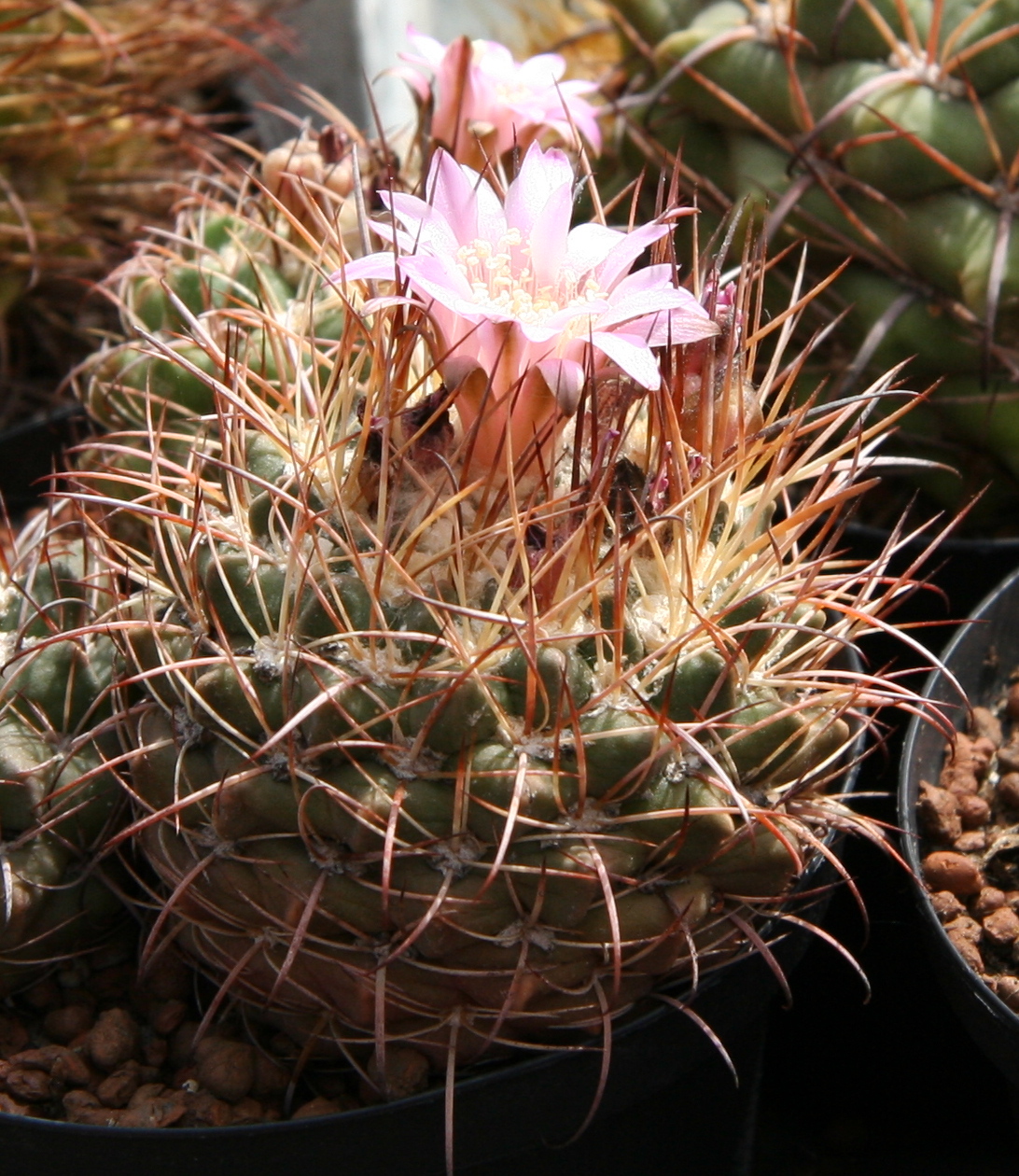
Echinocereus stramineus
(Engelm.) F. Seitz
Mexican strawberry, Porcupine hedgehog cactus
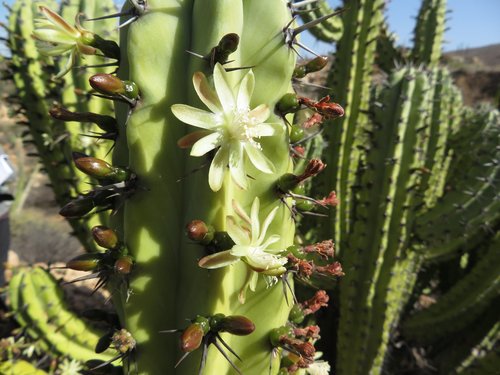
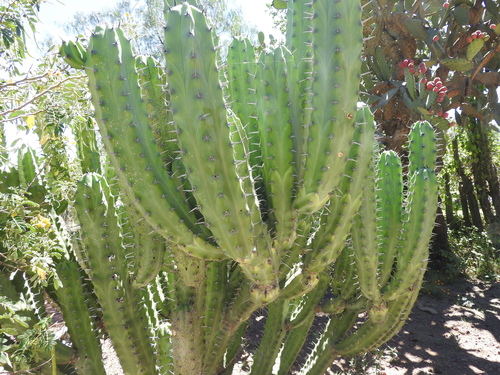
iNaturalist· cc-by-nc
(c) Ad Konings, some rights reserved (CC BY-NC), uploaded by Ad Konings
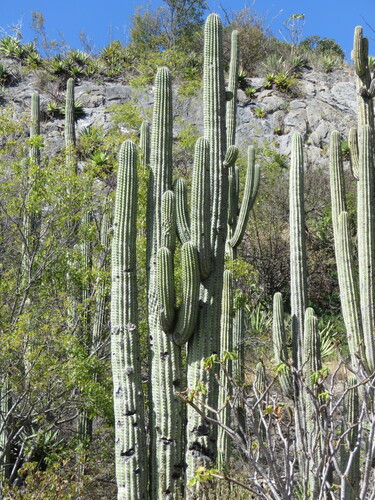
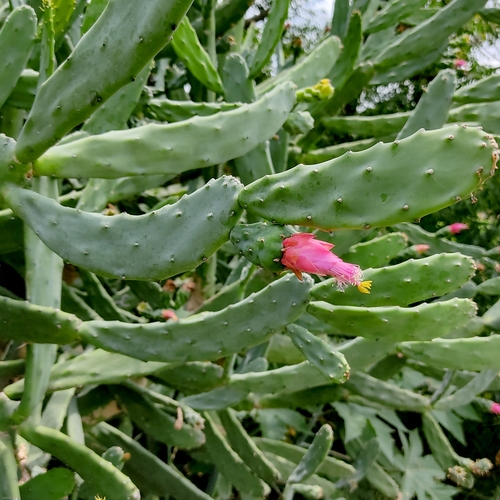
iNaturalist· cc-by-nc
(c) Oswaldo ZZ, some rights reserved (CC BY-NC)
Summary
Source: WikipediaEchinocereus stramineus is a species of cactus, with stramineus meaning made of straw. There are various common names such as strawberry cactus, porcupine hedgehog cactus, straw-color hedgehog, and pitaya. The straw-colored spines distinguishes this particular plant from other Echinocereus. The aged spines may turn white in color and are very fragile.
Description
A cactus which forms clumps. It grows 30-45 cm high and spreads 0.4-2 m wide. The stems are pale green. They are 25 cm long by 8 cm wide at the base. There are 10-13 lumpy ribs with deep furrows. The spine spots are round and small and white. They are about 1.5 cm apart. There are 7-14 spines which radiate out and they are white and 3 cm long. In the centre there are 1-4 spines which are 4-8.5 cm long. The flowers are purple-pink. They are funnel shaped and 6-12 cm long and wide. The fruit are very fleshy and smell and taste like strawberries.
Edible Uses
The fruits are eaten raw and have a slightly acid taste.
Traditional Uses
The fruit are eaten raw. They are slightly acid.
This uses section is brief — help expand it
Distribution
It needs good light. It suits limestone soils. It needs a temperature above 10°C. It suits hardiness zones 8-11.
Where It Grows
Australia, Mexico, North America, USA,
Notes
There are about 60 Echinocereus species.
References (19)
- Anderson, E.F., 2001, The Cactus Family, Timber Press p 249
- Astrada, E., et al, 2007, Ethnobotany in the Cumbres de Monterrey National Park, Nuevo Leon, Mexico. Journal of Ethnobiology and Ethnomedicine 3:8
- Beckstrom-Sternberg, Stephen M., and James A. Duke. "The Foodplant Database." http://probe.nalusda.gov:8300/cgi-bin/browse/foodplantdb.(ACEDB version 4.0 - data version July 1994)
- Cundall, P., (ed.), 2004, Gardening Australia: flora: the gardener's bible. ABC Books. p 527
- Facciola, S., 1998, Cornucopia 2: a Source Book of Edible Plants. Kampong Publications, p 63
Show all 19 references Hide references
- Facciola, S., 1998, Cornucopia 2: a Source Book of Edible Plants. Kampong Publications, p 63 (As Echinocereus conglomeratus)
- Fouqué, A. 1972. Espèces fruitières d'Amérique tropicale. Institut français de recherches fruitierès outre-mer (As Echinocereus conglomeratus)
- Hibbert, M., 2002, The Aussie Plant Finder 2002, Florilegium. p 91
- Innes, C. and Glass, C., 1997, The Illustrated Encyclopedia of Cacti. Sandstone Books. p 77
- Kermath, B. M., et al, 2014, Food Plants in the Americas: A survey of the domesticated, cultivated and wild plants used for Human food in North, Central and South America and the Caribbean. On line draft. p 328 (As Echinocereus conglomeratus)
- Kiple, K.F. & Ornelas, K.C., (eds), 2000, The Cambridge World History of Food. CUP p 1836
- Kiple, K.F. & Ornelas, K.C., (eds), 2000, The Cambridge World History of Food. CUP p 1836 (As Echinocerus conglomeratus)
- Loughmiller, C & L., 1985, Texas Wildflowers. A Field Guide. University of Texas, Austin. p 24
- Martin, F. W., et al, 1987, Perennial Edible Fruits of the Tropics. USDA Handbook 642 p 86 (As Echinocereus conglomeratus)
- Piedra-Malagón, E. M. et al, 2022, Edible native plants of the Gulf of Mexico Province. Biodiversity Data Journal 10: e80565 p 15
- Segura, S. et al, 2018, The edible fruit species in Mexico. Genet Resour Crop Evol (2018) 65:1767–1793
- Subik, R., & Kunte, L., 2003, The Complete Encyclopedia of Cacti. Rebo publishers. p 43
- Uphof, (As Echinocereus conglomeratus)
- World Checklist of Useful Plant Species 2020. Royal Botanic Gardens, Kew