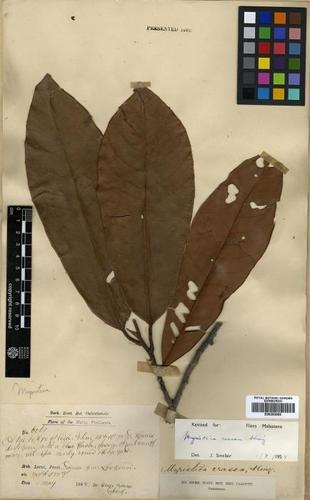
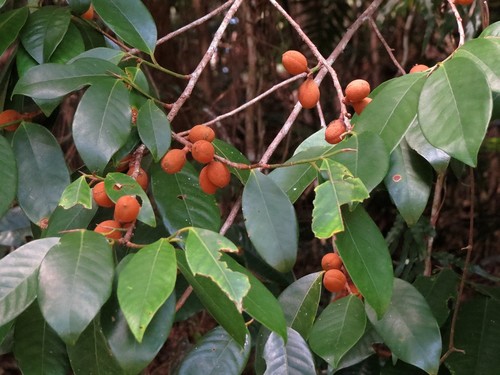
Horsfieldia kingii
(Hook.f.) Warb.
iNaturalist· cc-by-nc
(c) 刘光裕 Liu Guangyu, some rights reserved (CC BY-NC), uploaded by 刘光裕 Liu Guangyu
iNaturalist· cc-by
(c) Jyotsna Nag, some rights reserved (CC BY)
Summary
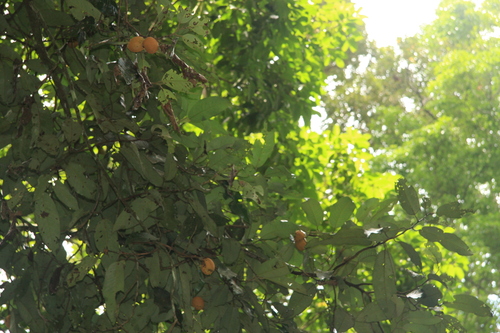
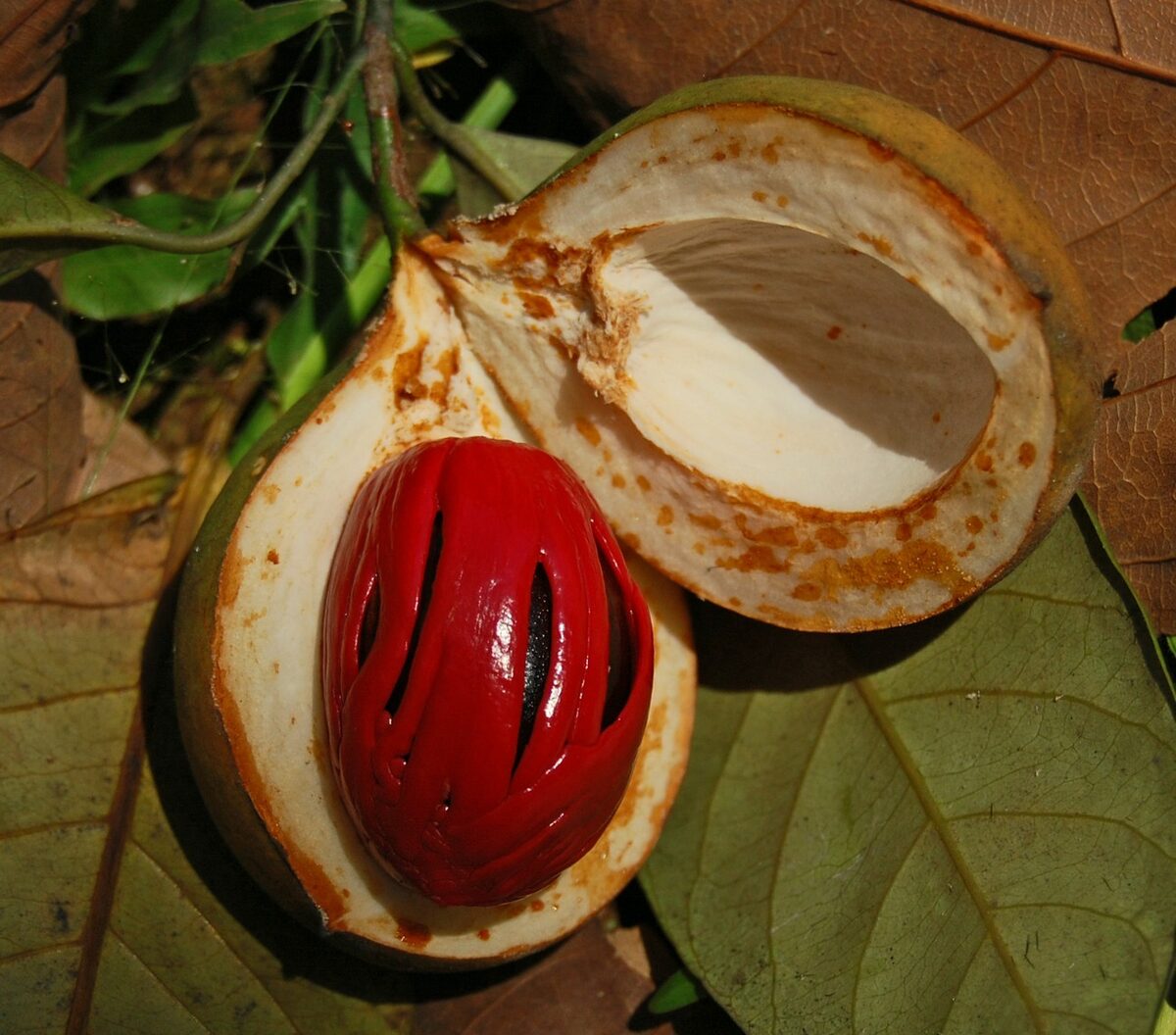
Source: WikipediaHorsfieldia kingii is a dioecious tree of the family Myristicaceae. It grows up to 20 m tall and has large seeds that are dispersed by frugivores such as hornbills and imperial pigeons. The fruiting period is from February to May. The fruit is an arillate capsule and is bi-coloured. The plant is referred to as ramtamul in Assamese language and is sometimes used as a substitute for betelnut. However, they could be mildly intoxicating to humans. The leaves form a part of the diet of the endangered capped langur.
Description
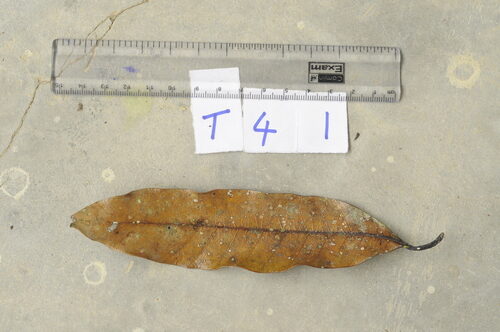
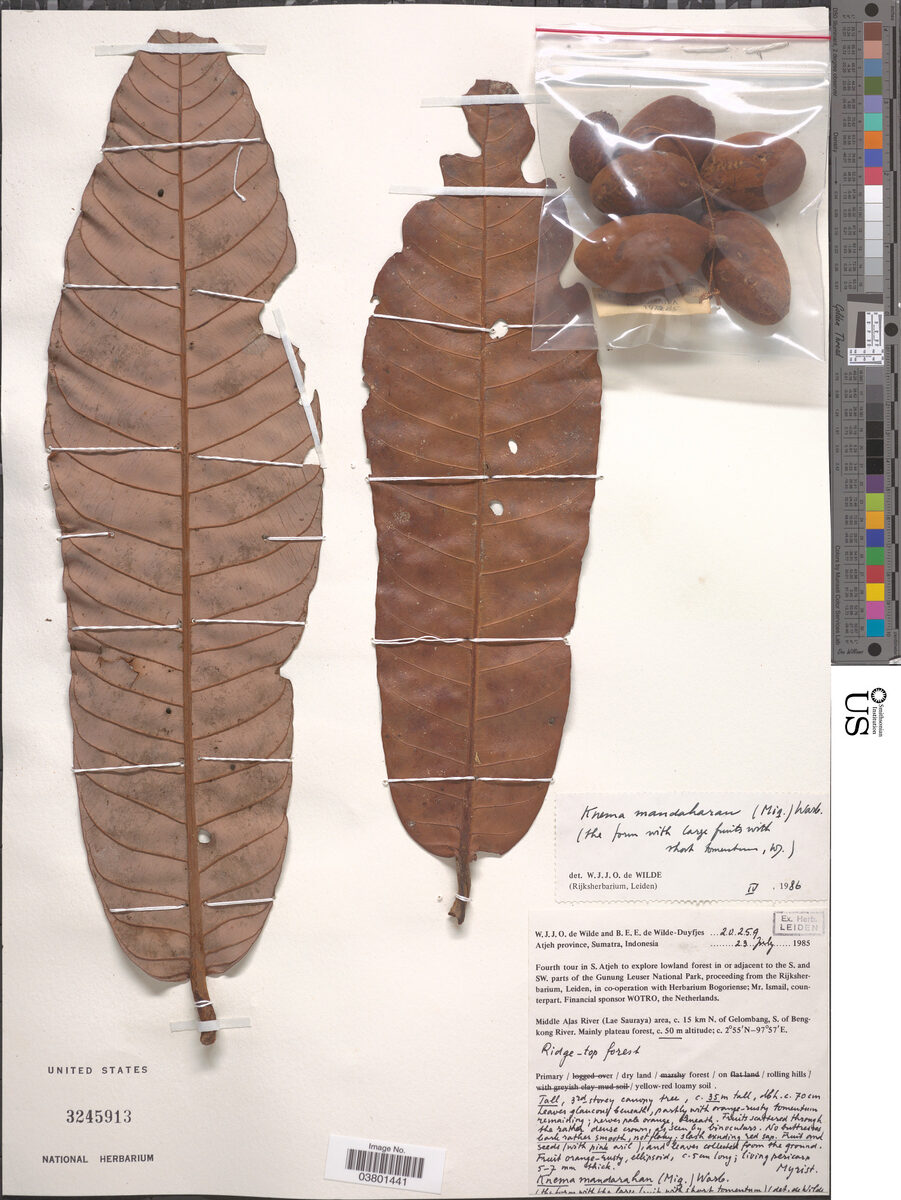
A tree. The young shoots are hairy. The bark has shallow cracks and breaks into square flakes. It is reddish. The leaves are oval and taper to a blunt tip. The flowers are small. The fruit are about 2.5 cm long. There is a fleshy layer around the seed.
Edible Uses
The fruits are eaten fresh or used for jam and pickles. The seeds are used as a substitute for betel nut.
Traditional Uses
The fruit are eaten. (They can cause intoxication). The fruit are also used for jam and pickles. The seeds are used as a substitute for betel nut.
This uses section is brief — help expand it
Known Hazards
The fruit can cause intoxication.
Distribution
A tropical plant. In Sikkim it grows between 400-900 m above sea level. It grows in dense forests in ravines between 800-1,200 m in southern China.
Where It Grows
Asia, Bhutan, China, Himalayas, India, Indochina, Nepal, Northeastern India, SE Asia, Sikkim, Thailand, Vietnam,
Production
In southern China it flowers in April to August and fruits in October to December. In Sikkim January to April.
Notes
There are about 88 Horsfieldia species.
References (11)
- Ambasta, S.P. (Ed.), 2000, The Useful Plants of India. CSIR India. p 274
- Dangol, D. R. et al, 2017, Wild Edible Plants in Nepal. Proceedings of 2nd National Workshop on CUAOGR, 2017.
- Gautam, R. S., et al, 2020, Wild Edible Fruits of Nepal. Int. J. Appl. Sci. Biotechnol. Vol 8(3): 289-304
- Ghimeray, A. K., Lamsal, K., et al, 2010, Wild edible angiospermic plants of the Illam Hills (Eastern Nepal) and their mode of use by local community. Korean J. Pl. Taxon. 40(1)
- Mukhia, P.K., et al, 2013, Wild plants as Non Wood Forest Products used by the rural community of Dagana, a southern foothill district of Bhutan, SAARC Journal, 27 pages
Show all 11 references Hide references
- Patiri, B. & Borah, A., 2007, Wild Edible Plants of Assam. Geethaki Publishers. p 120
- Sarma, H., et al, 2010, Updated Estimates of Wild Edible and Threatened Plants of Assam: A Meta-analysis. International Journal of Botany 6(4): 414-423
- Savita, et al, 2006, Studies on wild edible plants of ethnic people in east Sikkim. Asian J. of Bio Sci. (2006) Vol. 1 No. 2 : 117-125
- Singh, V. B., et al, (Ed.) Horticulture for Sustainable Income and Environmental Protection. Vol. 1 p 217
- Sundriyal, M., et al, 1998, Wild edibles and other useful plants from the Sikkim Himalaya, India. Oecologia Montana 7:43-54
- Sundriyal, M., et al, 2004, Dietary Use of Wild Plant Resources in the Sikkim Himalaya, India. Economic Botany 58(4) pp 626-638