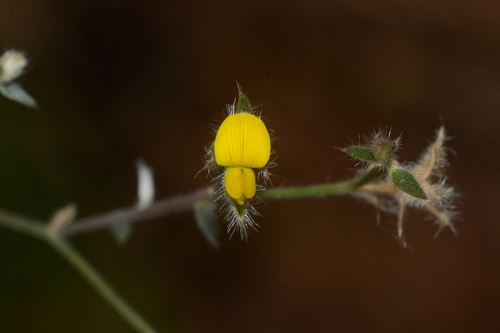
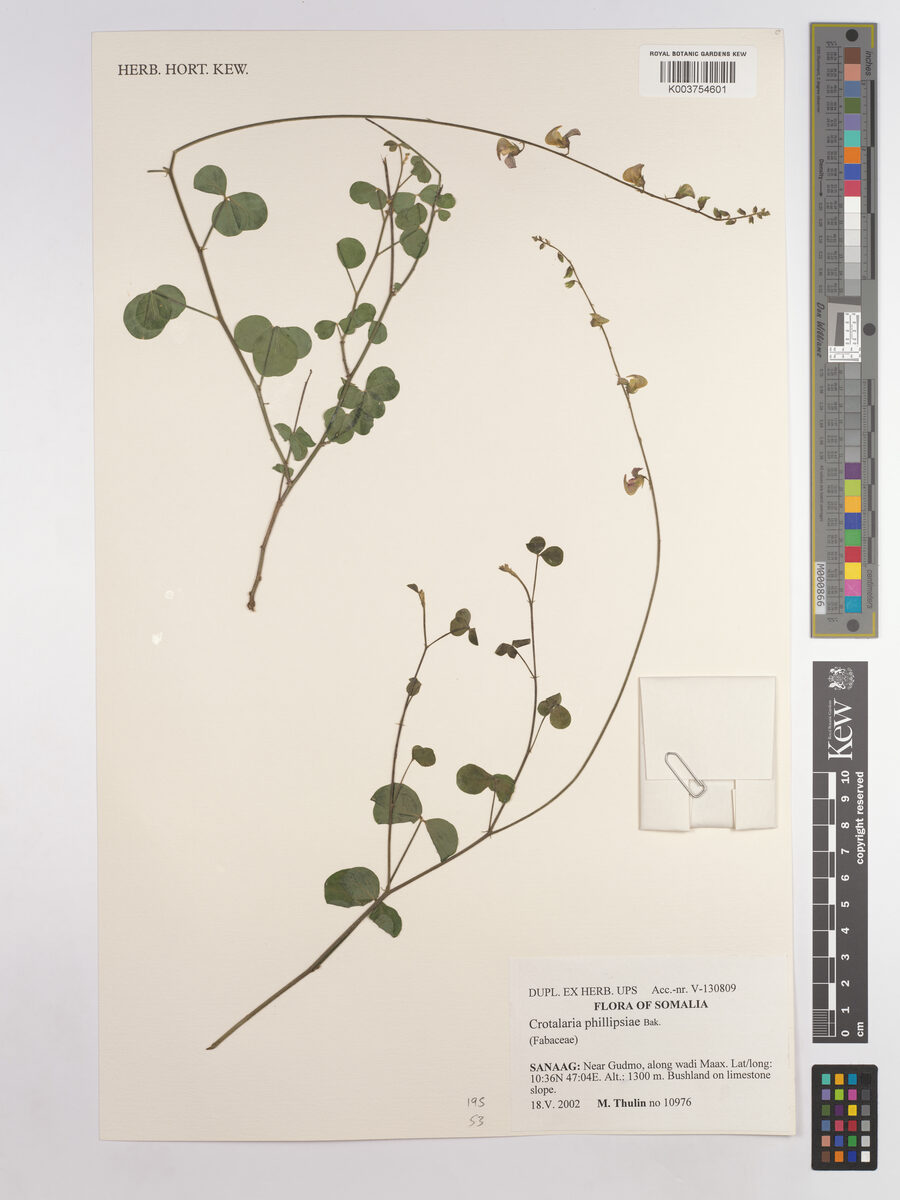
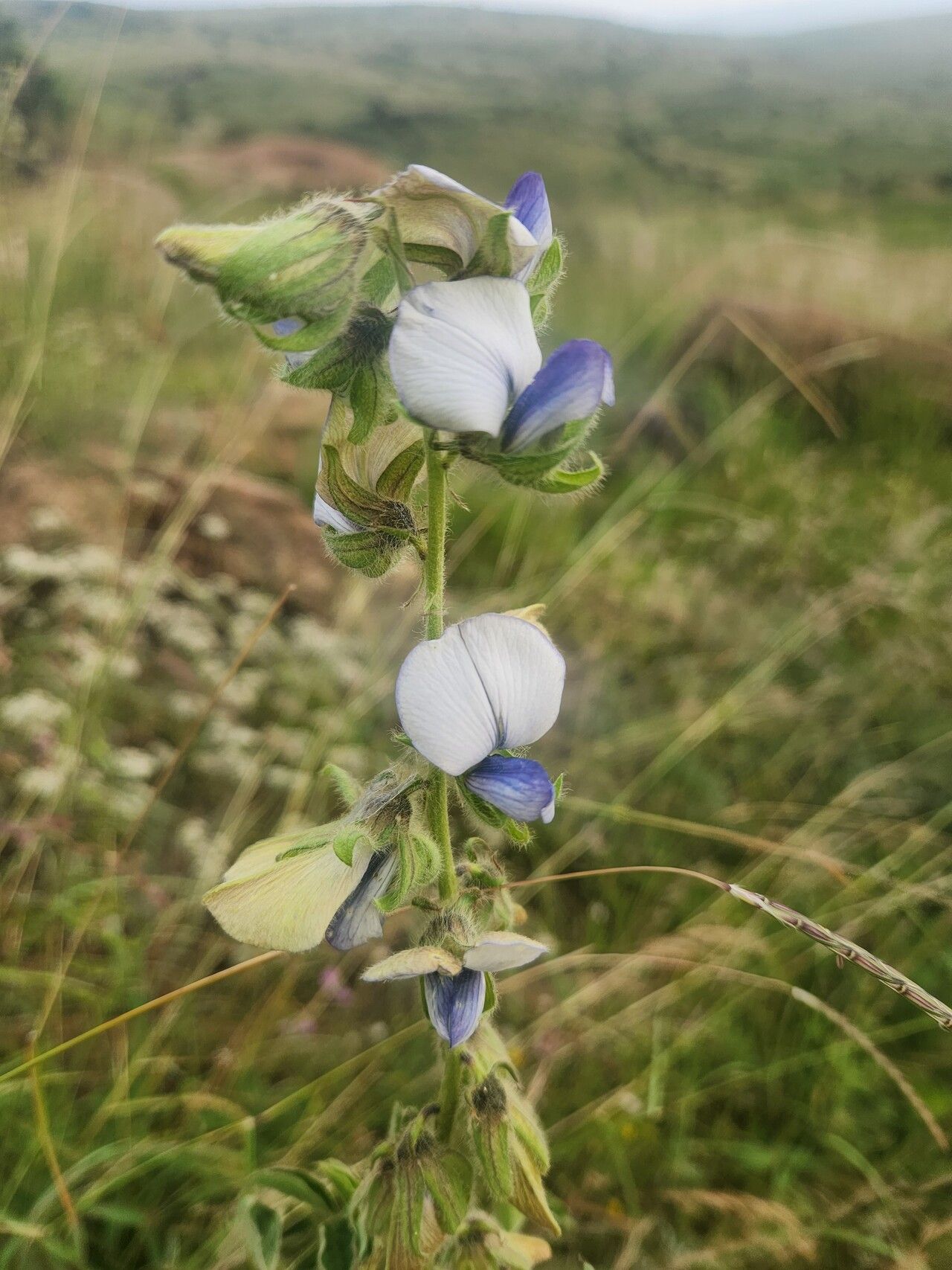
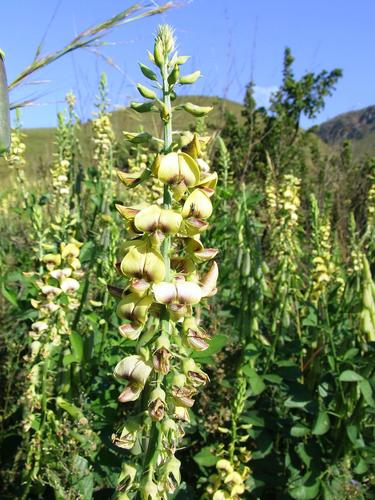
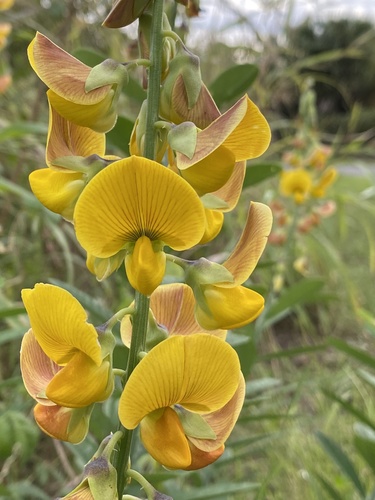
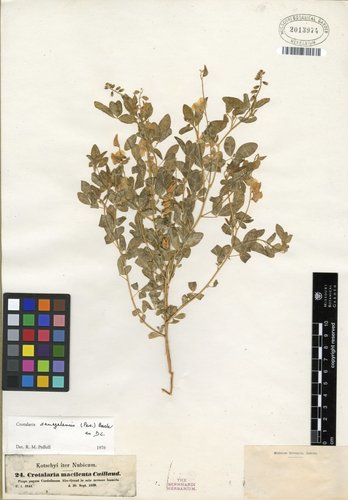
Caragana ambigua
Stocks
Shinalak
wikimedia· cc-by-sa
Wikimedia Commons - Schubbay
gbif· cc0
President and Fellows of Harvard College
gbif· cc0
President and Fellows of Harvard College
Summary
Source: WikipediaCaragana ambigua is a species of flowering plant in the family Fabaceae. It is traditionally used in Southwest Pakistan for the treatment of diabetes.
Description
A low growing shrub. The branches are hairy. The leaves have leaflets along the stalk. There are 4-10 leaflets. They are narrowly oval with a tip at the end. They are hairy. The fruit are curved sideways. They are 2 cm long and 5-6 mm wide.
Edible Uses
Both the flowers and pods are edible; the flowers are eaten raw or cooked, traditionally eaten by children.
Traditional Uses
The flowers are eaten raw or cooked.
This uses section is brief — help expand it
Distribution
It is a temperate plant. In Pakistan it grows between 1,600 - 2,900 m altitude. It grows in valleys.
Where It Grows
Asia, India, Pakistan,
Other Information
The flowers are eaten by children.
Notes
There are about 80 Caragana species. They grow in temperate continental climates.
Also Known As
Baiphli, Jangli phali, Zaray
References (7)
- Ahmad, K. & Pieroni, A., 2016, Folk knowledge of wild food plants among the tribal communities of Thakht-e-Sulaiman Hills, North-West Pakistan. Journal of Ethnobiology and Ethnomedicine, 12:17
- Ambasta S.P. (Ed.), 2000, The Useful Plants of India. CSIR India. p 103
- Bircher, A. G. & Bircher, W. H., 2000, Encyclopedia of Fruit Trees and Edible Flowering Plants in Egypt and the Subtropics. AUC Press. p 82
- Flora of Pakistan. www.eFloras.org
- Hedrick, U.P., 1919, (Ed.), Sturtevant's edible plants of the world. p 154
Show all 7 references Hide references
- Hooker's J. Bot. Kew Gard. Misc. 4:145. 1852
- Majeed, M., et al, 2021, Gathered Wild Food Plants among Diverse Religious Groups in Jhelum District, Punjab, Pakistan. Foods 2021, 10, 594.