Erianthus arundinaceus
(Retz.) Jeswiet ex Heyne;
iNaturalist· cc-by-nc
(c) djwu, some rights reserved (CC BY-NC)
iNaturalist· cc-by-nc
(c) symlpocos, some rights reserved (CC BY-NC)
iNaturalist· cc-by-nc
(c) Hong, some rights reserved (CC BY-NC)
Description
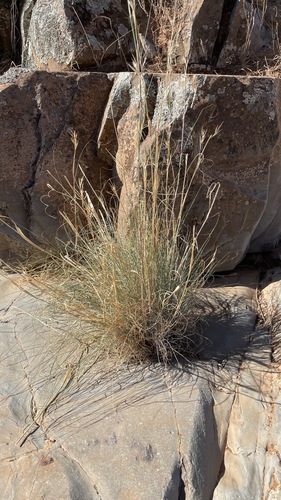
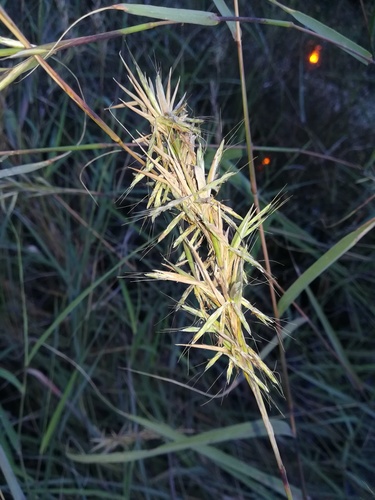
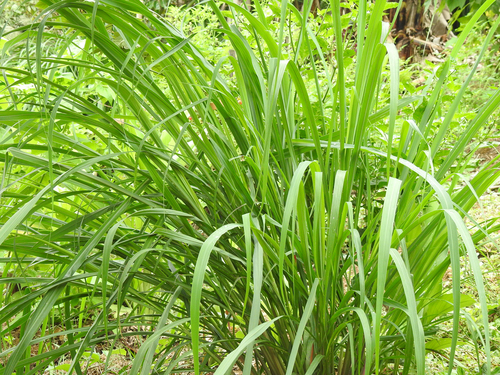
A tall grass. It can grow 6 m high. The canes can be 2.5 cm across. The flowers are white and feather like.
This description is brief — help expand it
Edible Uses
The young leaf buds and shoots are eaten in salads, especially by children.
Traditional Uses
The young leaf bud is eaten in salads.
This uses section is brief — help expand it
Distribution
A tropical plant. It forms thick beds on river banks.
Where It Grows
Asia, India, Indochina, Indonesia, Laos, Malaysia, SE Asia,
Other Information
It is eaten especially by children.
Synonyms
Also Known As
Buloh teberau, Galunggang, Glonggang, Riong, Tabarau, Teberau, Tebu salah, Tiberau, Timbarau
References (5)
- Ambasta, S.P. (Ed.), 2000, The Useful Plants of India. CSIR India. p 200
- Arch. Suikerindustr. Ned.-Indies 33:399. 1925
- Burkill, I.H., 1966, A Dictionary of the Economic Products of the Malay Peninsula. Ministry of Agriculture and Cooperatives, Kuala Lumpur, Malaysia. Vol 2 (I-Z) p 1958 (As Saccharum arundinaceum)
- Crevost and Lemarie, 1917, p 188 (As Saccharum arundinaceum)
- Delang, C. O., 2007, Ecological Succession of Usable Plants in an Eleven-Year Fallow Cycle in North Lao P.D.R., Ethnobotany Research and Applications. Vol. 5:331-350