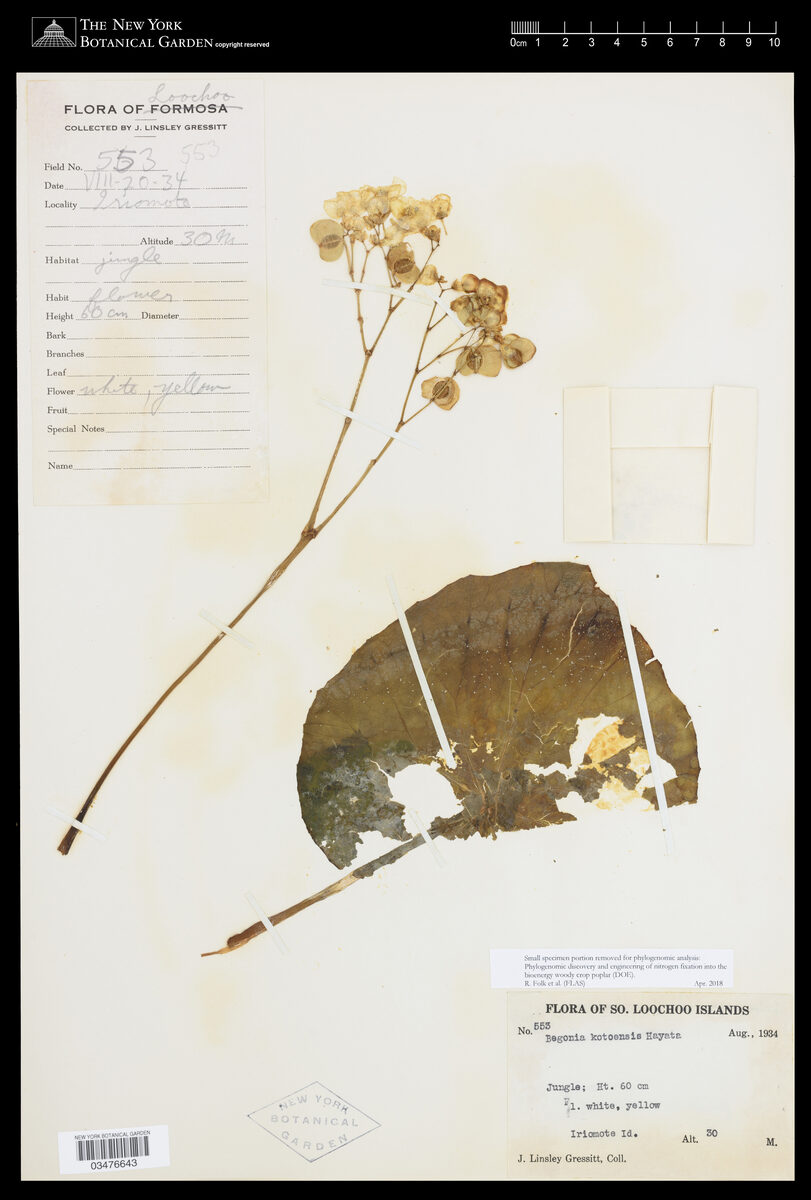
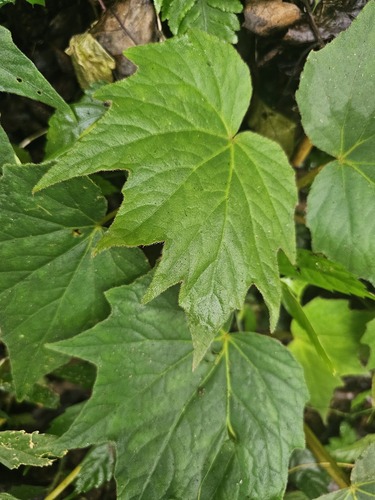
Begonia spp.
wikimedia· cc-by-sa
Wikimedia Commons - Yercaud-elango
wikimedia· cc-by-sa
Wikimedia Commons - Yercaud-elango
Description
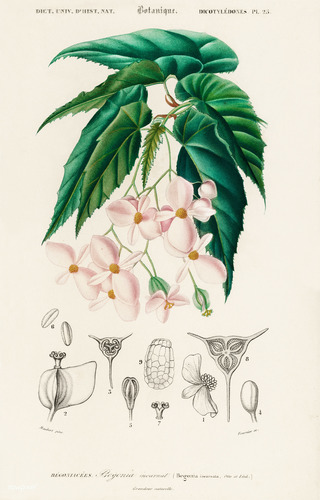
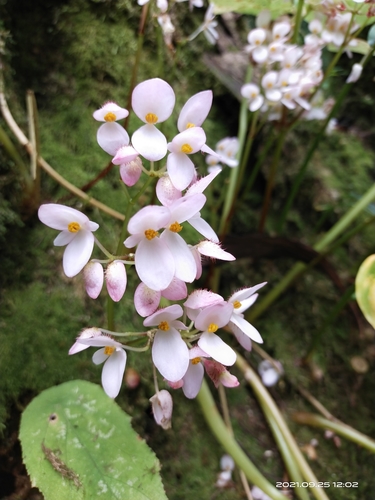
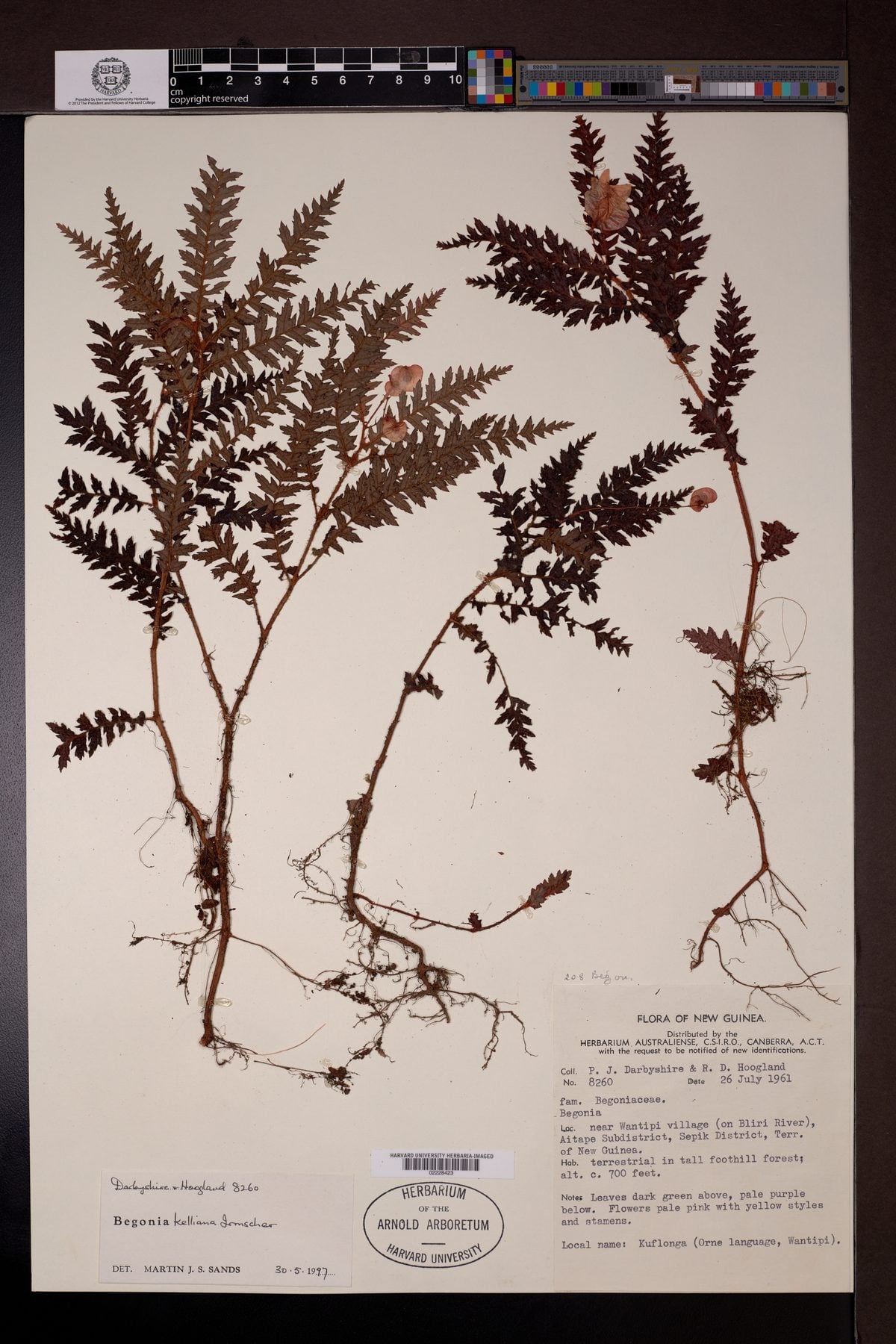
A succulent creeping herb. The stems are often small. The leaves are alternate, entire and toothed. They are usually unequal on different sides. The flowers are white or pink and in the axils of leaves. The flowers are large. The fruit are usually winged and angular and bear many very small seeds.
Edible Uses
The sour leaves and stems are cooked in meat and fish dishes, and the leaves are used for flavouring. The stalks of some species are eaten and occasionally chewed fresh in Papua New Guinea.
Traditional Uses
The sour leaves and stems are cooked and eaten in meat and fish dishes. The stalks of some kinds are eaten. The leaves are also used for flavouring. (Some kinds are used for medicine.)
Medicinal Uses
Some kinds are used for medicine.
Distribution
A tropical plant. They are found throughout the forests of the Philippines. It occurs in the highlands and prefers part shade for growing.
Where It Grows
Asia, Pacific, Papua New Guinea, PNG, Philippines, SE Asia,
Other Information
The stalks of some species are harvested from the wild and chewed occasionally in Papua New Guinea.
Notes
There are 900-1,000-1,500 Begonia species.
References (2)
- Brown, W.H., 1920, Wild Food Plants of the Philippines. Bureau of Forestry Bulletin No. 21 Manila. p 122
- Monsalud, M.R., Tongacan, A.L., Lopez, F.R., & Lagrimas, M.Q., 1966, Edible Wild Plants in Philippine Forests. Philippine Journal of Science. p 445