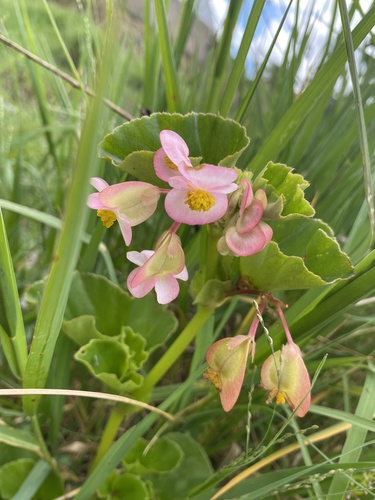
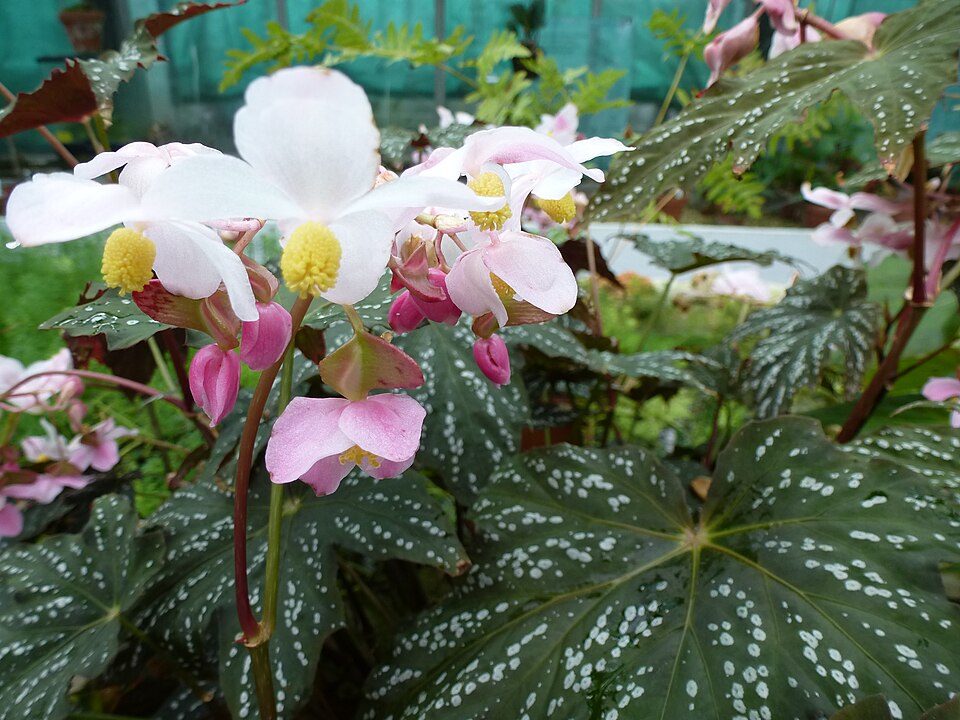
Begonia incarnata
Link and Otto
Metallic begonia
iNaturalist· cc-by
(c) Free Public Domain Illustrations by rawpixel, some rights reserved (CC BY)
iNaturalist· cc-by
(c) Averater, some rights reserved (CC BY)
iNaturalist· cc-by-sa
(c) Raffi Kojian, some rights reserved (CC BY-SA)
Summary
Source: WikipediaBegonia incarnata is a species of plant in the family Begoniaceae, native to Brazil. It is a shrublike evergreen perennial growing to 1 metre (39 in), bearing large, asymmetrical green leaves with a metallic sheen, and dark green veins. It produces small hairy pink flowers. As it does not tolerate temperatures below 10 °C (50 °F), in temperate regions it must be grown under glass. This plant has gained the Royal Horticultural Society's Award of Garden Merit under the synonym Begonia metallica.
Description
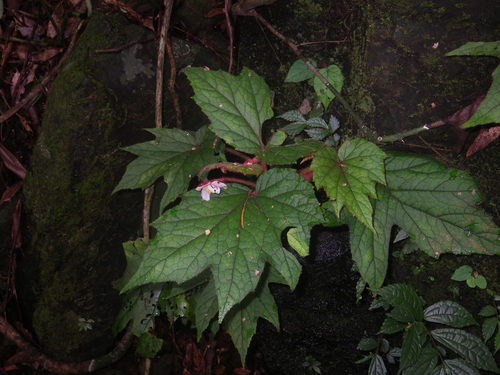
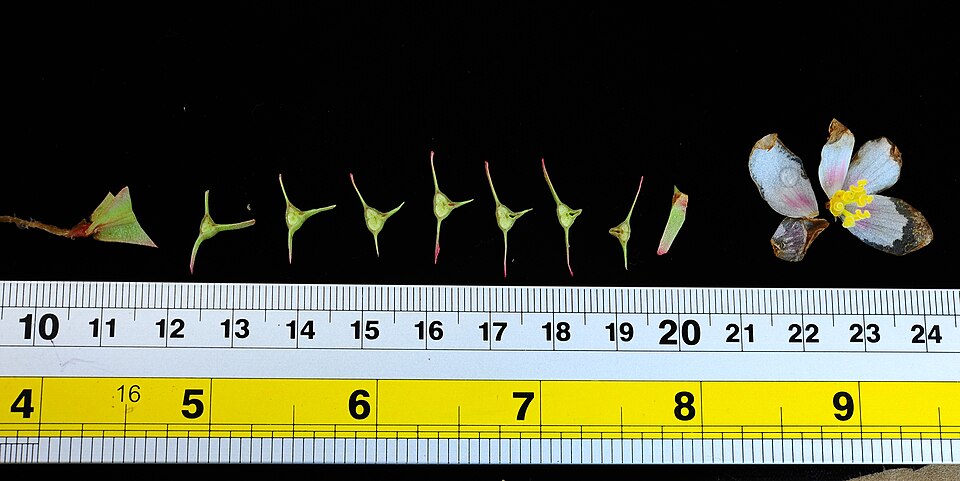
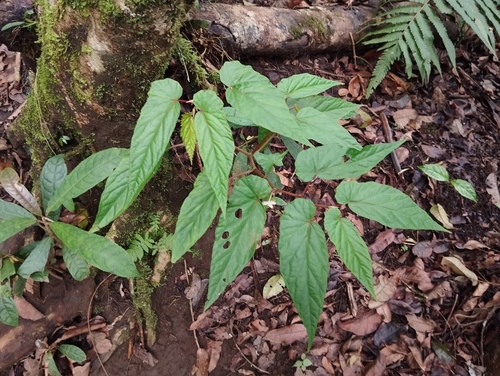
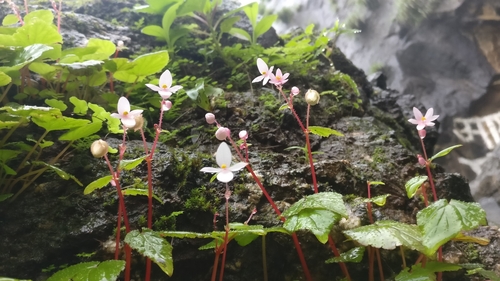
A herb. It grows 1 m tall. It is erect and like a shrub. The leaves are oval and oblique. They are 5-9 cm long by 4-8 cm wide. The base is heart shaped. There are sharp teeth along the edge. They are shiny metallic green with purple veins on the upper surface and pale green underneath. The leaf stalk is 6 cm long. The flowers are pink and in the axils of leaves. The fruit is an oval capsule 1 cm long.
Edible Uses
The leaf stalks are eaten and are sold in markets.
Distribution
It is a tropical plant. It grows in humid forests up to 1,800 m above sea level. In Mexico it grows at about 1,600 m altitude.
Where It Grows
Asia, Brazil*, Cuba, Dominican Republic, Haiti, Indonesia, Mexico, North America, SE Asia, West Indies,
Cultivation
Plants can be grown from seeds or stem or leaf cuttings.
Other Information
Leaf stalks are sold in markets.
Also Known As
Begonia metalik, Quiquiriqui
References (6)
- Basurti-Pena, F., et al, 2003, Edible Begonias from the North of Puebla, Mexico. Economic Botany, Vol. 57, No. 1, pp. 48-53
- Kermath, B. M., et al, 2014, Food Plants in the Americas: A survey of the domesticated, cultivated and wild plants used for Human food in North, Central and South America and the Caribbean. On line draft. p 120
- Mapes, C. & Basurto, F., 2016, Biodiversity and Edible Plants of Mexico. Chapter 5 in R. Lira, et al. (eds.), Ethnobotany of Mexico, Ethnobiology, Springer. p 114
- Pena, F. B., et al, 1998, Los quelites de la Sierra Norte de Puebla, Mexico: Inventory Y Formas de Preparacion. Bol. Soc. Bot. Mexico 62:49-62
- Plants of Haiti Smithsonian Institute http://botany.si.edu
Show all 6 references Hide references
- Sukarya, D. G., (Ed.) 2013, 3,500 Plant Species of the Botanic Gardens of Indonesia. LIPI p 1075