Madhuca longifolia var. latifolia
(Koen.) MacBride, (Roxb.) Chevalier
Mowra buttertree, Honey tree
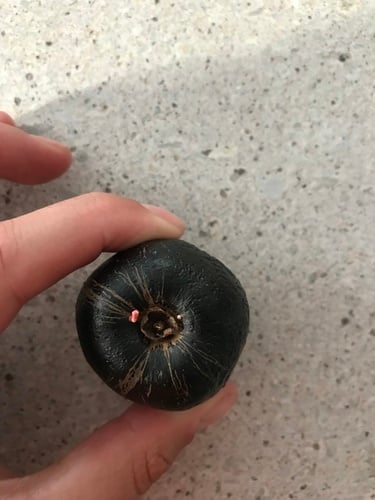
iNaturalist· cc-by-nc
(c) Rujuta Vinod, some rights reserved (CC BY-NC), uploaded by Rujuta Vinod
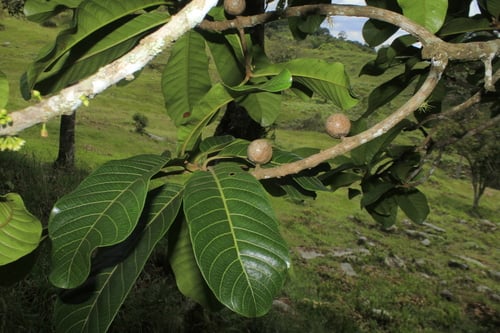
iNaturalist· cc-by-nc
(c) Bhalchandra Pujari, some rights reserved (CC BY-NC), uploaded by Bhalchandra Pujari
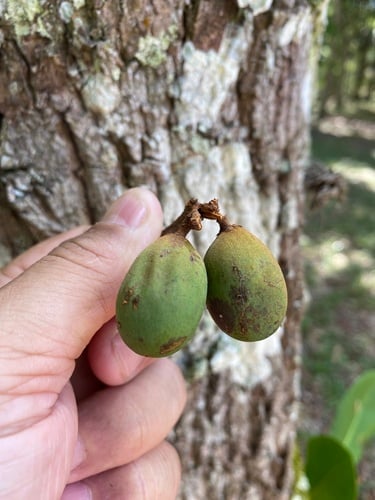
iNaturalist· cc-by-nc-sa
(c) c michael hogan, some rights reserved (CC BY-NC-SA), uploaded by c michael hogan
Summary
Source: WikipediaMadhuca longifolia is an Indian tropical tree found largely in the central, southern, north Indian plains and forests, Bangladesh, Nepal, Myanmar and Sri Lanka. It is commonly known as madhūka, mahura, madkam, mahuwa, Butter Tree, mahura, mahwa, mahua, mohulo, Iluppai, Mee or Ippa-chettu. It is a fast-growing tree that grows to approximately 20 meters in height, possesses evergreen or semi-evergreen foliage, and belongs to the family Sapotaceae. It is adaptable to arid environments, being a prominent tree in tropical mixed deciduous forests in India in the states of Maharashtra, Odisha, Chhattisgarh, Jharkhand, Uttar Pradesh, Bihar, Andhra Pradesh, Madhya Pradesh, Kerala, Gujarat, West Bengal and Tamil Nadu.
Description
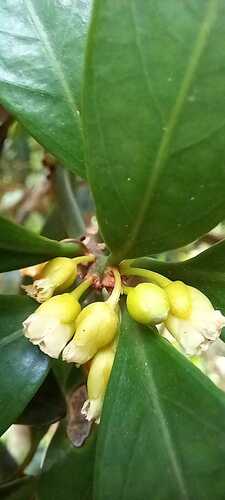
A large deciduous tree. It grows 15 m tall. The trunk is gnarled. The bark is grey brown and rough. It becomes lightly cracked. The tree has a milky sap. The crown is spreading. The leaves are firm and 13-25 cm long. They are broadly oval with a pointy tip. The leaves are clustered near the ends of the small branches. They turn yellow before they fall. New leaves are pink. The flowers are creamy-white. They are in dense clusters near the ends of the twigs. The flowers are on short stalks about 3 cm long. The petals form a long tube and 15 mm long. The flowers are sweet and edible. The fruit is olive shaped and fleshy. It is 2-5 cm long and orange when ripe.
Edible Uses
It is cultivated in warm and humid regions for its oleaginous seeds (producing between 20 and 200 kg of seeds annually per tree, depending on maturity), flowers and wood. The fat (solid at ambient temperature) is used for the care of the skin, to manufacture soap or detergents, and as a vegetable butter. It can also be used as a fuel oil. The seed cakes obtained after extraction of oil constitute very good fertilizer. The flowers are used to produce an alcoholic drink in tropical India. This drink is also known to affect animals. Several parts of the tree, including the bark, are used for their medicinal properties. It is considered holy by many tribal communities because of its usefulness. The leaves of Madhuca indica (= M. longifolia) are fed on by the moth Antheraea paphia, which produces tassar silk, a form of wild silk of commercial importance in India. Leaves, flowers and fruits are also lopped to feed goats and sheep. The seed oil of 'Madhuca indica' can be utilize to synthesize polymer resin. In one of the attempts, it has been used to prepare alkyd type of polyurethane resins, which are used as a good source of anticorrosion organic coatings. The Tamils have several uses for M. longifolia (iluppai in Tamil). The saying "aalai illaa oorukku iluppaip poo charkkarai" indicates when there is no cane sugar available, the flower of M. longifolia can be used, as it is very sweet. However, Tamil tradition cautions that excessive use of this flower will result in imbalance of thinking and may even lead to lunacy. The alkaloids in the press cake of mahura seeds is reportedly used in killing fishes in aquaculture ponds in some parts of India. The cake serves to fertilise the pond, which can be drained, sun dried, refilled with water and restocked with fish fingerlings.
Traditional Uses
The fruit are eaten ripe or unripe. The mature fruit are cooked and eaten as a vegetable. The unripe fruit are used for pickles and chutney. The flowers are eaten raw of sun dried. The flowers are rich in honey and are used to flavour food. The seeds yield mahua butter used in cooking. The seeds yield oil and it is a substitute for ghi.
Distribution
It grows on stony ground. It grows in dry deciduous forest. It is drought hardy but does best with a rainfall of 500-1500 mm per year. It is sensitive to frost when young.
Where It Grows
Asia, Europe, Himalayas, India*, Mediterranean, Myanmar, Nepal, SE Asia,
Production
It is a long lived tree. A large tree can produce 300 kg of flowers in a season. The flowers fall at night and are collected and dried. In north India plants plants flower in March to July.
Other Information
The flowers are an important food product.
Nutrition
| Part | Moisture | kJ | kcal | Protein | Vit A | Vit C | Iron | Zinc |
|---|---|---|---|---|---|---|---|---|
| Seeds | 9.8 | 2 | 559 | 9 | — | — | 7.3 | 1.3 |
Synonyms
Also Known As
Epie, Idukmada, Illipe Nut, Illupe nut, Mahoua, Mahu, Mahua, Mahula, Mahulo, Mahuva, Mau, Maul, Mehuwa, Moa, Mowra butter, Yallah-oil plant
References (21)
- Bajpai, O., et al, 2015, Tree species of the Himalayan Terai region of Uttar Pradesh, India: a checklist. Check List 11(4): 1718
- Banerjee, A., et al, 2013, Ethnobotanical Documentation of Some Wild Edible Plants in Bankura District, West Bengal, India. The Journal of Ethnobiology and Traditional Medicine. Photon 120 (2013) 585-590 (As Madhuca latifolia)
- Brouk, B., 1975, Plants Consumed by Man. Academic Press, London. p 230 (As Madhuca latifolia)
- Burkill, I.H., 1966, A Dictionary of the Economic Products of the Malay Peninsula. Ministry of Agriculture and Cooperatives, Kuala Lumpur, Malaysia. Vol 2 (I-Z) p 1411 (As Madhuca latifolia)
- Chandrakumar, P., et al, 2015, Ethnobotanical studies of wild edible plants of Gond, Halba and Kawar tribes of Salekasa Taluka, Gondia District, Maharashtra State, India. International Research Journal of Pharmacy 6(8)
Show all 21 references Hide references
- Chaudhary, L. B., et al, 2014, Tree Resources of Katerniaghat Wildlife Sanctuary, Uttar Pradesh, India with especial emphasis on Conservation Status, Phenology and Economic Values. International Journal of Environment. 3(1)
- Chowdhury, M. & Mukherjee, R., 2012, Wild Edible Plants Consumed by Local Communities of Maldah of West Bengal, India. Indian J.Sci.Res.3(2) : 163-170 (As Bassia latifolia)
- Contr. Gray Herb. 53:17. 1918 (As Madhuca latifolia)
- Garner, R.J., and Chaudhri, S.A., (Ed.) 1976, The Propagation of Tropical fruit Trees. FAO/CAB. p 491 (As Madhuca latifolia)
- Hedrick, U.P., 1919, (Ed.), Sturtevant's edible plants of the world. p 94 (As Madhuca latifolia)
- Joshi, N., et al, 2007, Traditional neglected vegetables of Nepal: Their sustainable utilization for meeting human needs. Tropentag 2007. Conference on International Agricultural Research for Development. (As Bassia latifolia)
- Kahlon, L. K. & Singh, R., 2019, Traditional knowledge & Dynamics of edible plants of primitive tribal group ‘Paudi Bhuyan’ with changing demography migration patterns in Northern Odisha. Indian Journal of Traditional Knowledge Vol 18(1), pp 7-15
- Krishen P., 2006, Trees of Delhi, A Field Guide. DK Books. p 140
- Kuhnlein, H. V., et al, 2009, Indigenous Peoples' food systems. FAO Rome p 214 (As Bassia latifolia)
- Macmillan, H.F. (Revised Barlow, H.S., et al), 1991, Tropical Planting and Gardening. Sixth edition. Malayan Nature Society. Kuala Lumpur. p 356 (As Madhuca latifolia)
- Menninger, E.A., 1977, Edible Nuts of the World. Horticultural Books. Florida p 29 (As Madhuca latifolia)
- Misra S. & Misra M., 2016, Ethnobotanical and Nutritional Evaluation of Some Edible Fruit Plants of Southern Odisha, India. International Journal of Advances in Agricultural Science and Technology, Vol.3 Issue.1, March- 2016, pg. 1-30
- Pandey, K. C. & Pande, N., 2016, Ethnobotanical Documentation of Wild Edible Plants used by Gujjar Community of Tarai West Forest Division Ramnagar, Nainital, India, Current World Environment. Vol. 11(3), 808-818
- Saidulu, P. et al, 2015, Ethnobotanical Knowledge Studied in Pocharam Wildlife Sanctuary, Telangana, India. Not Sci Biol, 2015, 7(2):164 -170
- Sharma, B.D., & Lakshminarasimhan, P., 1986, Ethnobotanical Studies on the Tribals of Nasik District (Maharashtra). J. Econ. Tax. Bot. Vol. 8 No. 2 pp 439-446
- www.worldagroforestrycentre.org/treedb/ (As Madhuca latifolia)