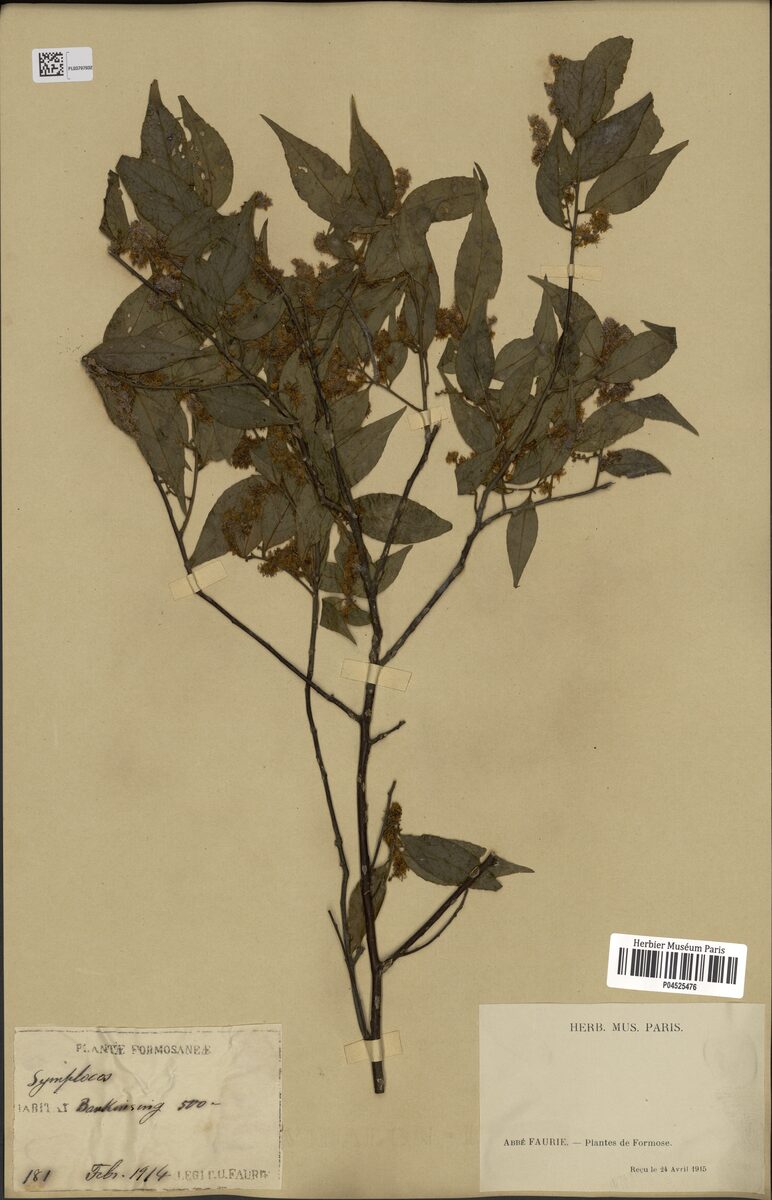
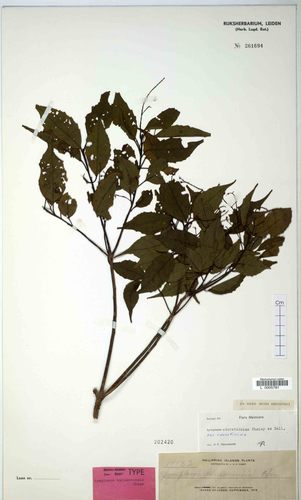
Symplocos sumuntia
Buch.-Ham. ex G.Don
Singan
iNaturalist· cc-by-nc
(c) 小铖/Smalltown, some rights reserved (CC BY-NC), uploaded by 小铖/Smalltown
iNaturalist· cc-by-nc
(c) JODY HSIEH, some rights reserved (CC BY-NC), uploaded by JODY HSIEH
iNaturalist· cc-by-nc
(c) Ryan Yue Wah Chan, some rights reserved (CC BY-NC), uploaded by Ryan Yue Wah Chan
Summary
Source: WikipediaEvergreen tree reaching 6 m tall with persistent foliage and extended flowering from February to October. Seeds mature June to December. Hermaphroditic but requires cross-pollination. Grows in light sandy to heavy clay soils with good drainage and consistent moisture. Prefers mildly acid to neutral pH. Needs full sun.
Description
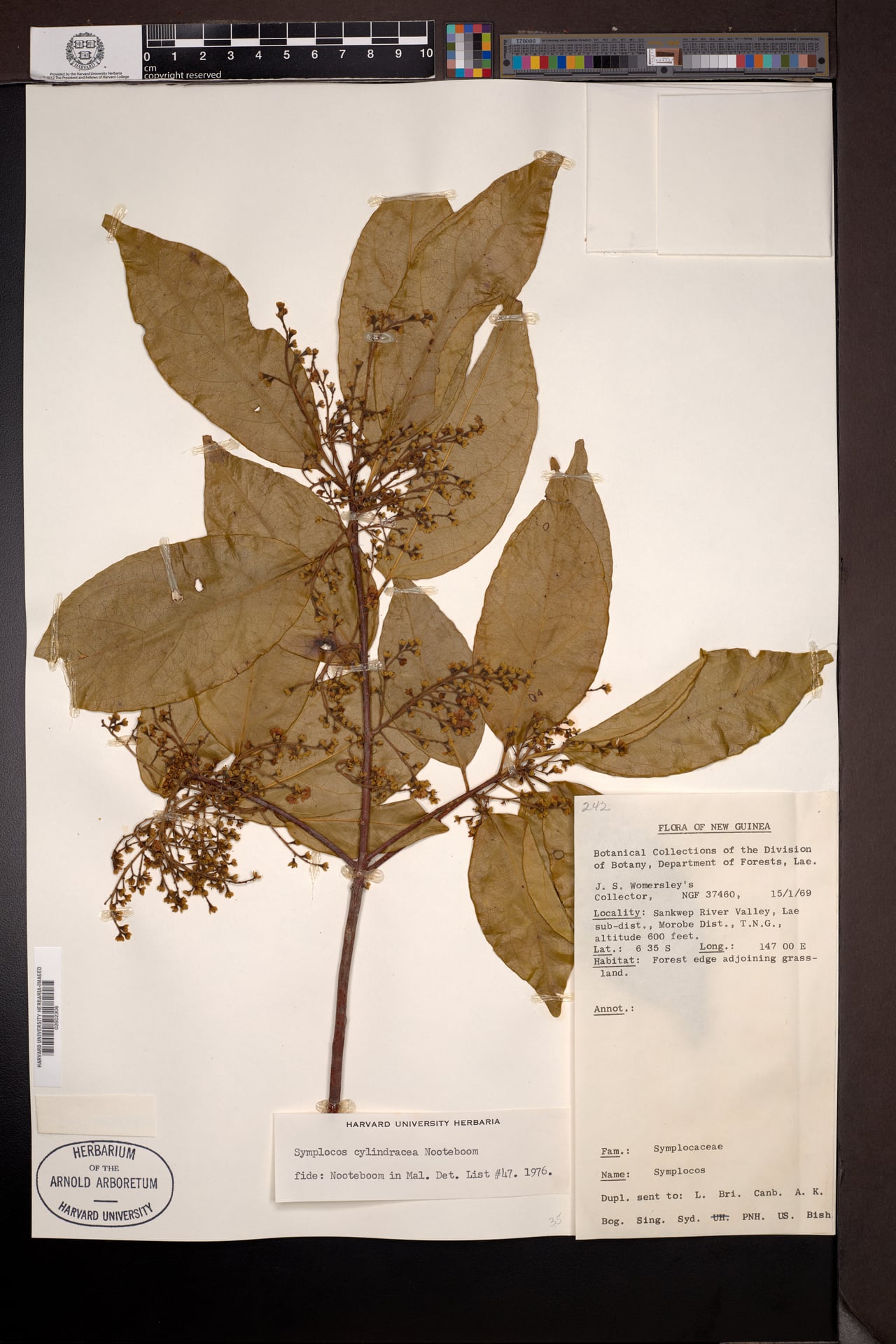
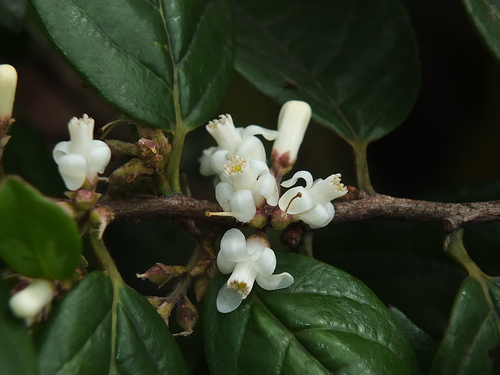
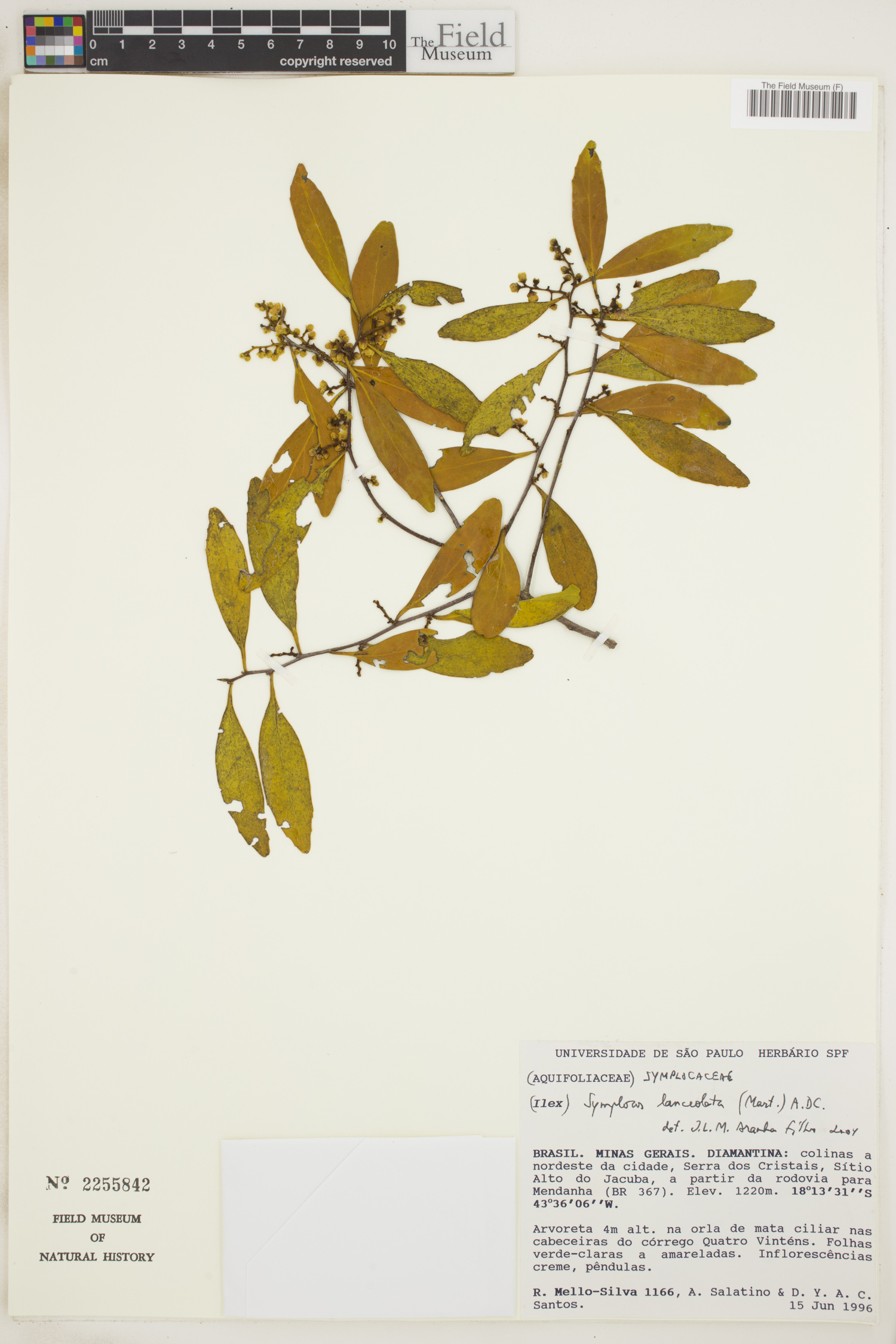
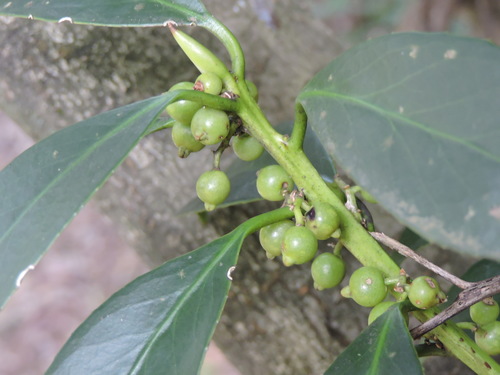
A tree. The leaves are narrowly oval and 2-10 cm long by 1-5 cm wide. The flowers are white or yellow. The fruit are oval and 6-10 mm long by 3-6 mm wide.
Edible Uses
The leaves are edible cooked and have a sweetish, slightly sour taste. They are also used as a food colouring and a flavouring. The seed is also edible, though no further details are available.
Traditional Uses
Oil is extracted from the seeds and used with food.
This uses section is brief — help expand it
Medicinal Uses
The leaves are used in the treatment of dysentery.
Distribution
It is a tropical plant. It grows in mixed forests between 100-1,800 m above sea level in southern China. In Sichuan and Yunnan.
Where It Grows
Asia, Bhutan, Cambodia, China, Himalayas, India, Indochina, Japan, Korea, Laos, Malaysia, Myanmar, Nepal, Northeastern India, SE Asia, Sikkim, Taiwan, Thailand, Vietnam,
Cultivation
We have very little information on this species and do not know if it will be hardy in Britain, though judging by its native range it could succeed outdoors in many parts of this country. The following notes are based on the general needs of the genus. Succeeds in a sunny position in any well-drained fertile neutral to acid soil. Self-sterile, it needs cross-pollination with a different plant in the same species if seed and fruit are to be produced. Plants in this genus are notably resistant to honey fungus.
Propagation
Sow seed in a cold frame as soon as it is ripe. Stored seed requires stratification and is best sown in a cold frame in late winter; germination can take up to 12 months. Prick out seedlings into individual pots when large enough to handle and grow on in the cold frame through their first winter. Plant out in late spring or early summer. Cuttings of half-ripe wood, 7–10cm with a heel, can be taken in July or August and placed in individual pots in a cold frame; roots form in about 4 weeks with a good success rate.
Other Uses
A purplish-black dye is obtained from the plant without the need for a mordant; it is likely derived from the leaves, though no further details are given. A decoction combined with ginger acts as a parasiticide and is effective against fleas, though the specific plant part used is not stated. While no specific information is available for this species, many plants in the Symplocos genus contain alum and can be used as mordants in dyeing.
Synonyms
Also Known As
Chum one, Dung lua, Kharane, Singan, Tawgyi-thitkauk
References (4)
- Ambasta, S.P. (Ed.), 2000, The Useful Plants of India. CSIR India. p 612 and p 609 (As Symplocos caudata)
- Krishna, B., & Singh, S., 1987, Ethnobotanical Observations in Sikkim. J. Econ. Tax. Bot. Vol. 9 No. 1 pp 1-7
- Plants for a Future database, The Field, Penpol, Lostwithiel, Cornwall, PL22 0NG, UK. http://www.scs.leeds.ac.uk/pfaf/ (As Symplocos caudata)
- Sundriyal, M. & Sundriyal, R. C., 2004, Structure, Phenology, Fruit Yield, and Future Prospects of some Prominent Wild Edible Plant Species of the Sikkim Himalaya, India. Journal of Ethnobiology 24(1): 113-138